
Catalogue Search | MBRL


Are you sure you want to remove the book from the shelf?

{{itemTitle}}
87
result(s) for
"Islamic fundamentalism France."
Sort by:

Wandering Souls
In September 2014 the French government entrusted Tobie Nathan with the task of counselling radicalized young people who had been drawn to jihadism. In this book he recounts his experiences, and shows that the history of radicalizations is not the history of 'natures' but of metamorphoses.
Book

Integrating Islam
Nearly five million Muslims call France home, the vast majority from former French colonies in North Africa. While France has successfully integrated waves of immigrants in the past, this new influx poses a new variety of challenges -much as it does in neighboring European countries. Alarmists view the growing role of Muslims in French society as a form of \"reverse colonization\"; they believe Muslim political and religious networks seek to undermine European rule of law or that fundamentalists are creating a society entirely separate from the mainstream. Integrating Islam portrays the more complex reality of integration's successes and failures in French politics and society. From intermarriage rates to economic indicators, the authors paint a comprehensive portrait of Muslims in France. Using original research, they devote special attention to the policies developed by successive French governments to encourage integration and discourage extremism. Because of the size of its Muslim population and its universalistic definition of citizenship, France is an especially good test case for the encounter of Islam and the West. Despite serious and sometimes spectacular problems, the authors see a \"French Islam\" slowly replacing \"Islam in France\"-in other words, the emergence of a religion and a culture that feels at home in, and is largely at peace with, its host society. Integrating Islam provides readers with a comprehensive view of the state of Muslim integration into French society that cannot be found anywhere else. It is essential reading for students of French politics and those studying the interaction of Islam and the West, as well as the general public.
eBook
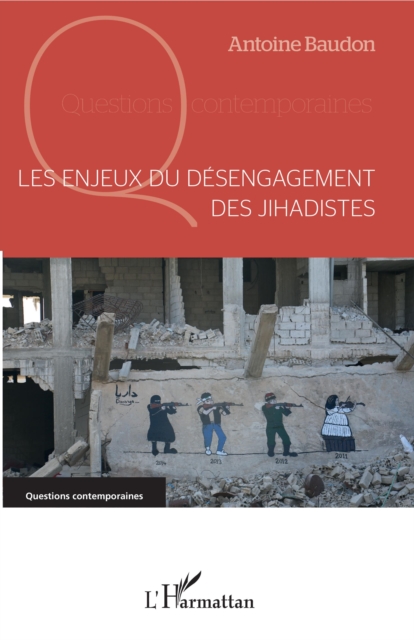
Les enjeux du désengagement des jihadistes
Les jihadistes français morts au combat ou connus des services de renseignement ne sont que la partie émergée de l'iceberg. Qu'en est-il de tous ceux qui se sont engagés d'une autre manière, sans aller dans la zone de combat ou être fichés ? La plupart des ouvrages sur le jihad emploient les termes de radicalisation et de terrorisme. Mais comment peuvent-ils expliquer un phénomène de société et y répondre en utilisant des concepts biaisés ? Cet essai considère tout soutien comme un engagement et toute cessation de soutien comme un désengagement. Au lieu de définir le jihad à travers la radicalisation d'individus français, il explique l'engagement d'individus français par une analyse globale de l'islamisme et du jihad depuis les années 1960. Il examine aussi l'évolution de la lutte antiterroriste française et en tire des leçons de désengagement permettant d'y proposer un cadre et de continuer à combattre le phénomène constant du jihad.
eBook
Terror in France
\"On Jan. 7, [2015] two gunmen opened fire on Parisian satirical newspaper Charlie Hebdo. The assailants left 12 victims dead, including one police officer. One of the paper's surviving cartoonists, Corinne Rey, told BBC News the shooters forced her to let them into the building.\" (Chicago Tribune) Read more about the terrorist attack at the Charlie Hebdo office in France.
Newspaper Article

France's Islamist Challenge: Burqas, Niqabs, and \Living Together\
Addressing both houses of the French parliament on Jun 22, 2009--the first such speech by the head of state in one hundred and fifty years--President Nicolas Sarkozy stated that the burqa--an Islamic garment that conceals the face with the exception of the eyes--was not welcome on the territory of the French Republic. This was not the first time that the contentious issue of religion's appropriate place in society, notably the extent to which public display of religious symbols ought to be tolerated, came to the forefront of French politics. Six years earlier, another ban had roiled French society, leading to a public uproar and sparking a string of debates on questions pertaining to Islam, religious accommodation, religious identity, citizenship, Republicanism, and, most notably, laicite (secularism). No notion in French society has been addressed as frequently, as fervently, and as dramatically as the principle of laicite. This singular concept, which has engrossed the French for some two centuries, still appears to elicit intense disputes and vehement debates about its actual meaning and application.
Magazine Article