
Catalogue Search | MBRL


Are you sure you want to remove the book from the shelf?

{{itemTitle}}
880
result(s) for
"Islamic law Language."
Sort by:

Fatwas and court judgments : a genre analysis of Arabic legal opinion
By examining Arabic legal opinions, Ahmed Fakhri seeks to understand how the organization of these texts accomplishes specific social goals. In doing so, he hopes to illuminate socio-cultural practices among those who produce and use these texts. Like other sociolinguistics projects, this manuscript unites texts with their social contexts. Fakhri also points out that legal texts have traditionally held an important place in Arabic culture and therefore provide an especially illuminating window into the broader realm of Arabic thought and culture.
Book

Sprachphilosophie in der islamischen Rechtstheorie : zur avicennischen Klassifikation der Bezeichnung bei Faḫr ad-dīn ar-Rāzī (gest. 1210)
In Sprachphilosophie in der islamischen Rechtstheorie untersucht Nora Kalbarczyk, wie Faḫr ad-dīn ar-Rāzī (gest. 1210) auf der Grundlage von Ibn Sīnās (gest. 1037) Klassifikation der Bezeichnung ein hermeneutisches Instrumentarium entwickelt, das im Kontext der islamischen Rechtstheorie fruchtbar gemacht wird. In Sprachphilosophie in der islamischen Rechtstheorie Nora Kalbarczyk examines how Faḫr ad-dīn ar-Rāzī (d. 1210) develops - on the basis of Ibn Sīnā's (d. 1037) theory of signification - a hermeneutic toolbox which is also useful in the context of Islamic legal theory.
eBook

Maqāsid al-Sharī‘a in Islamic Finance: A Critical Analysis of Modern Discourses
This study delves into the complexities surrounding the determination, interpretation, and application of maqāsid al-sharī‘a within modern Islamic economics and finance. By conducting an extensive review of classical and contemporary literature, this research explores the diverse methods and criteria employed for ascertaining maqāsid. It critically examines the inherent subjectivity involved in categorizing maqāsid, shedding light on the ambiguity in delineating their boundaries. Additionally, the study scrutinizes the unintended consequences of broader utilization of maqāsid, particularly in transactions such as bay‘ al-‘īnah, and evaluates the risks associated with prioritizing maslaha (utility) over textual evidence. The findings underscore the challenges posed by the subjective nature of maqāsid interpretation, illustrating how diverse perspectives can lead to differing conclusions. They emphasize the potential misuse of maqāsid for legitimizing practices contrary to the core principles of sharia. This research underscores the preservation of legislative intent and advocates a cautious approach to integrating maqāsid al-sharī‘a into Islamic economics and finance. The objective is to strike a balance that upholds Islamic principles. It highlights the essential need for collectively establishing standards for both macro and micro maqāsid and their usage in ijtihād, promoting responsible applications within contemporary Islamic finance for informed and ethical solutions.
Journal Article

Islamic Economy and Sustainability: A Bibliometric Analysis Using R
Using a literature review and bibliometric analysis, this research aims to analyse the relationship between the Islamic economy and sustainability. The study aimed to systematically document the intellectual structure, volume, tendencies of knowledge development, the author, and source impact. Using Microsoft Excel and R Studio, information is compiled from Scopus databases and analysed. We gathered a searchable database of the 76 most relevant papers from the last twenty-two years based on a vast amount of literature. Preliminary data suggests that between 2000 and 2022, there has been an increase in the number of works written on the Islamic economy. The bibliometric study using R identifies the subject’s most influential journals, authors, and papers. This study demonstrates that a new research topic can be derived by condensing the essential aspects of the Islamic economy and sustainability into a single concept, thereby opening up new research avenues in both the expansive field of the Islamic economy and the relatively new and hotly debated field of sustainability.
Journal Article
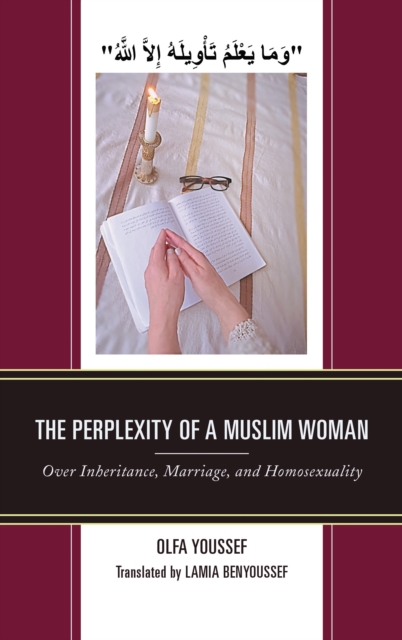
The perplexity of a Muslim woman
Using the methodology of modern scholars in the fields of Arabic lexicography, linguistics, and psychoanalysis, Tunisian feminist scholar Olfa Youssef investigates the rulings about inheritance, marriage, and homosexuality in the Qur’anic text itself and compares them with the interpretations provided by male Muslim theologians and legal scholars from medieval times to the present. In this book, she makes five central arguments: (1) There is a discrepancy between the layered signification in the Qur’anic text itself and the sutured explanations by religious scholars which have been enacted into law in many Muslim countries today; (2) the plurality of meanings is the quintessential essence of the Qur’an as evidenced in the absence of any sura over which there was unanimous agreement among Muslim scholars; (3) when male privilege was at stake, male legal scholars, to protect their own interests, ignored the divine text and based their rulings on human consensus; (4) Muslim medieval views on gender and homosexuality were more tolerant than contemporary ones; and finally (5), preferring indetermination and perplexity over the finality and certainties found in the judgements of male theologians, Youssef argues that only God knows the Qur’an’s true meaning. Her job as a Muslim female scholar is only to raise questions over those human interpretations that many Muslim societies mistake for divine will.
eBook