
Catalogue Search | MBRL


Are you sure you want to remove the book from the shelf?

{{itemTitle}}
18
result(s) for
"Islamic modernism - Indonesia"
Sort by:

A peaceful Jihad : negotiating identity and modernity in Muslim Java
Based on extensive ethnographic research, this book examines how the Islamic community in Java, Indonesia, is actively negotiating both modernity and tradition in the contexts of nation-building, globalisation, and a supposed clash of civilizations. The pesantren community, so-called because it is centered around an educational institution called the pesantren, uses education as a central arena for dealing with globalization and the construction and maintenance of an Indonesian Islamic identity. However, the community's efforts to wrestle with these issues extend beyond education into the public sphere in general and specifically in the area of leadership and politics. The case material is used to understand Muslim strategies and responses to civilizational contact and conflict. Scholars, educated readers, and advanced undergraduates interested in Islam, religious education, the construction of religious identity in the context of national politics and globalization will find this work useful.
eBook

Islamic modernities in Southeast Asia
What does it mean to be a modern Muslim today? In contemporary discourse Islam and modernity are often presented as each other’s opposites in media and popular culture. Southeast Asia has a large Muslim population, especially in Indonesia, Malaysia, and Singapore, but Islamic culture in these states is conspicuously absent from the wider global discourse on Islam. With a focus on popular culture in Indonesia – a country that houses the world’s largest Muslim population and that is also undergoing modernisation –Islamic Modernities in Southeast Asia will demonstrate how Islamic modernities are being negotiated and constructed through popular and visual culture from a trans-regional perspective. Looking at a variety of Islamic-themed popular and visual culture including rock music, cinema, art, visual decorations in shopping malls, self-help books, and fashion blogs, the book explores how Islamic modernities are imagined, negotiated, contested, and shared in Southeast Asia.
eBook

From Islamic modernism to Islamic conservatism: the case of West Sumatra Provinces, Indonesia
The study of the rise of Islamic conservatism in the context of local politics has not been the main focus of studies on Islamic conservatism in Indonesia. Studies on Islamic conservatism have so far emphasized the national political aspect, which illustrates that there has been a change in the dynamics of Islam towards a conservative turn. This article responds to various studies on Islamic conservatism in Indonesia by focusing on the emergence of local Islamic conservatism movements in West Sumatra Province after the New Order. West Sumatra is one of the regions predominantly inhabited by ethnic Minangkabau, which has long been known as a driving force in the Indonesian Islamic renewal and modernism movement. This research uses a qualitative method, with a case study approach, by interviewing actors, religious groups, traditional and religious leaders, and local Islamic organizations. This study found that the change in the spectrum of Islam from Islamic modernism to Islamic conservatism was influenced by several factors. First, the agency factor of post-New Order political openness was utilized by local Islamic organizations to promote religious conservatism. Second, the structural factor of political opportunities is the momentum in the promotion of Islamic conservatism. Third, Local identity was used as an instrument to promote Islamic conservatism in West Sumatra. This study is different from previous studies, as historical factors are the main factors in the proliferation of local Islamic conservatism movements such as in West Java, South Sulawesi, Solo, and West Sumatra.
Rising of religious Islamic conservatism has been expanding and increasing in the last two decades in Indonesia. The phenomenon of increasing Islamic conservatism is not only a national phenomenon but has also developed in the context of local politics in the province of West Sumatra, Indonesia. This change in Islamic orientation towards religious conservatism is contrary to the history of local Minangkabau Islam as an entity in Islamic renewal and Islamic modernism in Indonesia in the past. This article explains the change in the religious spectrum from modernism to Islamic conservatism that occurred in West Sumatra, which is little attention to the main concern of researchers on Islamic conservatism in Indonesia. Previous studies of Islamic conservatism in Indonesia tend to emphasize national phenomena and has not been a concern on Islamic conservatism in the context of local politics, especially in West Sumatra.
Journal Article

Balancing Hope and Fear: Muslim Modernists, Democracy, and the Tyranny of the Majority
During the twentieth and twenty-first centuries, many Muslim modernists exhibited mixed records regarding democracy. On the one hand, they articulated cogent arguments that Islam was, at its heart, democratic in nature and worked to counter Islamist claims to the contrary. Some crafted robust visions for Islamic democratic governance. On the other hand, many of the same modernists forged political alliances with military authoritarian regimes. How can we explain this seeming inconsistency between modernist democratic ideals and their not-so-democratic practices? This article argues that this paradoxical pattern stems from a classic dilemma within democratic theory: the tyranny of the majority. After providing a brief history of majoritarian fears in Western political theory, the article investigates two prominent case studies from mid-twentieth-century Pakistan and Indonesia. The first examines Fazlur Rahman’s ties to Ayub Khan’s military regime in 1960s Pakistan, and the second analyzes why a movement of young modernists was willing to collaborate with Suharto’s New Order regime in 1970s Indonesia. Together, the two cases demonstrate that Muslim modernists balance their genuine hopes for an Islamic democratic future with persistent fears of majoritarian tyranny by advocating for constraints on the majority will. While these constraints can be controversial and even authoritarian in nature, they have important parallels in Western democratic thought. Ultimately, this article argues that Muslim modernists’ mixed records are a function of democratic theory itself rather than some Islamic exception to it.
Journal Article

Muhammadiyah’s Manhaj Tarjih: An evolution of a modernist approach to Islamic jurisprudence in Indonesia
This study uses a literature study of examining the Tarjih Council of Muhammadiyah, the second largest Islamic organisation in Indonesia. Criticism is directed towards manhaj's principle which states that any classical Islamic school of law should not be embraced and, thus, breaks up from the chain of Islamic intellectuality. The critics, however, fail to cover the very idea of Muhammadiyah as an embodiment of the Islamic renewal vision. The article aims to reveal the evolution of the manhaj. The evolution will be elaborated into stages to show the development of concepts and principles in each stage. The article is based on a literature study using constructive conceptual analysis. The analysis is divided into three steps, namely analytical assessment, performative aspects, and conceptual genealogy, stressing the reflective relationship between knowledge and social reality. The study shows that the Tarjih Council's preference not to embrace any classical Islamic schools of law has developed since the establishment of the Tarjih Council. The developments of manhaj's formulation occur in three stages from 1924 until 2000. The manhaj comes up with the synthesis of textuality, rationality, and spirituality as the basic vision of Muhammadiyah's renewal idea which reflects the achievement of a modernist Islamic movement. The study, in comparison to previous research, provides a more comprehensive picture of the manhaj of Muhammadiyah as a representation of the Islamic renewal movement and shows how the manhaj comes to a synthesis that marks Muhammadiyah as a unique modernist-renewal movement. Contribution The study enriches the perspectives on the manhaj as the backbone of Muhammadiyah ideology and shows that Islamic modernism in Indonesia has stepped further to uncover a synthesis suitable to Indonesian society.
Journal Article

Islam in Southeast Asia
In this volume, a range of Muslim scholars and activists from Indonesia, Malaysia and Singapore reflect upon developments in their communities and seek to bring greater nuance to our understanding of these complex religio-cultural and political changes. This book opens up authentic regional perspectives on Islam's contemporary role.
eBook

The Egalitarian Face of Islamic Orthodoxy: Support for Islamic Law and Economic Justice in Seven Muslim-Majority Nations
The authors test two theories linking religion and economic beliefs in predominantly Muslim nations using data from national surveys of Algeria, Bangladesh, Egypt, Indonesia, Jordan, Pakistan, and Saudi Arabia. Moral Cosmology theory posits that because the religiously orthodox are theologically communitarian in viewing individuals as subsumed by a larger community of believers subject to timeless laws and God's greater plan, they are disposed toward economic communitarianism, whereby the state should provide for the poor, reduce inequality, and meet community needs via economic intervention. Modernists are theologically individualistic in seeing individuals as having to make moral decisions in a temporal context and as responsible for their own destinies. As such, modernists are inclined to economic individualism, whereby the poor are responsible for their fates, wider income differences promote individual initiative, and government should not interfere in the economy. An alternate hypothesis, based on Islamic scripture's discussion of economic matters, limits the effect of orthodoxy versus modernism to the one clear economic directive of Islam: the state's responsibility to care for the poor. The authors find that Islamic orthodoxy-measured as the desire to implement Islamic law (the shari'a)-is associated with the broad economic communitarianism expected by Moral Cosmology theory.
Journal Article
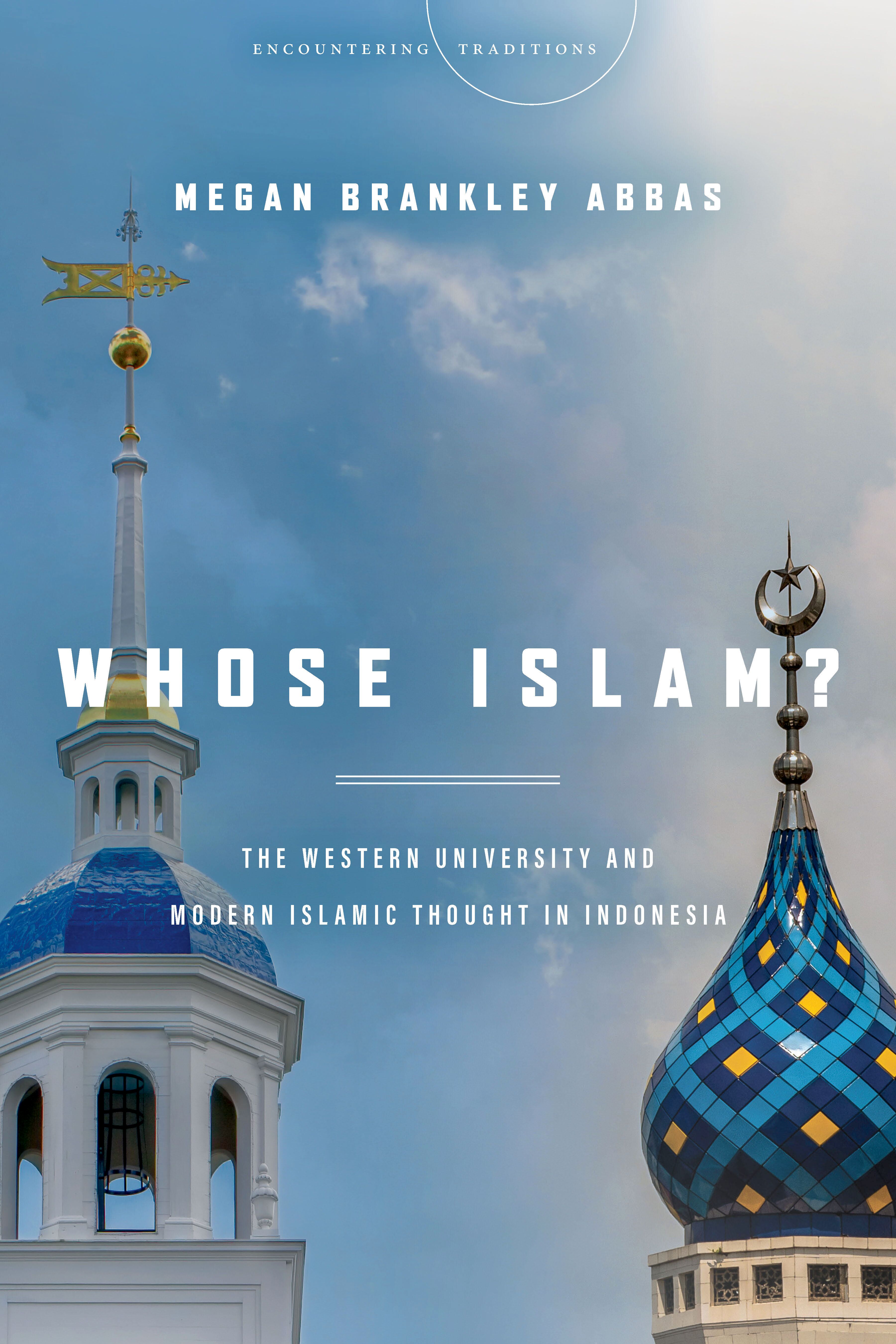
Whose Islam? : the Western university and modern Islamic thought in Indonesia
In this incisive new book, Megan Brankley Abbas argues that the Western university has emerged as a significant space for producing Islamic knowledge and Muslim religious authority. For generations, Indonesia's foremost Muslim leaders received their educations in Middle Eastern madrasas or the archipelago's own Islamic schools. Starting in the mid-twentieth century, however, growing numbers traveled to the West to study Islam before returning home to assume positions of political and religious influence. Whose Islam? examines the far-reaching repercussions of this change for major Muslim communities as well as for Islamic studies as an academic discipline. As Abbas details, this entanglement between Western academia and Indonesian Islam has not only forged powerful new transnational networks but also disrupted prevailing modes of authority in both spheres. For Muslim intellectuals, studying Islam in Western universities provides opportunities to experiment with academic disciplines and to reimagine the faith, but it also raises troubling questions about whether and how to protect the Islamic tradition from Western encroachment. For Western academics, these connections raise pressing ethical questions about their own roles in the global politics of development and Islamic religious reform. Drawing on extensive archival research from around the globe, Whose Islam? provides a unique perspective on the perennial tensions between insiders and outsiders in religious studies.
eBook


Islamic Post-Traditionalism: Postcolonial and Postmodern Religious Discourse in Indonesia
Taking a critical view of the dominance of postcolonial studies by South Asian and Latin American scholars and intellectuals, this article presents a newly emerging discourse among young Indonesian Muslim intellectuals, known as ‘Islamic Post-Traditionalism’. The specific question addressed in the present investigation is to establish to what extent this strand of Muslim thought can be considered a contribution to the engagement with postcoloniality and an application of deconstructionist discourse critique developed by postmodern philosophers within the context of rethinking religion, and Islam in particular, in Indonesia. Identifying a vivid interest among Indonesian Muslim intellectuals in the work of pioneering and controversial contemporary Arab-Islamic thinkers such as Nasr Hamid Abu Zayd, Muhammad Abid al-Jabiri, and Mohammed Arkoun, this article will interrogate the influences exercised by these Arabophone and Francophone Muslim intellectuals on the formation of Indonesia's Islamic Post-Traditionalism and how this is reflected in this discourse. An illustration will be provided by a précis of the writings of a key exponent of the Islamic Post-Traditionalist discourse and an examination of a number of other contributors.
Journal Article