
Catalogue Search | MBRL


Are you sure you want to remove the book from the shelf?

{{itemTitle}}
12
result(s) for
"Islamic modernism -- Europe"
Sort by:

Western Muslims and the Future of Islam
In a Western world suddenly acutely interested in Islam, one question has been repeatedly heard above the din: where are the Muslim reformers? As the number of Muslims living in the West grows, the question of what it means to be a Western Muslim becomes increasingly important to the futures of both Islam and the West. While the media are focused on radical Islam, this book claims that a silent revolution is sweeping Islamic communities in the West, as Muslims actively seek ways to live in harmony with their faith within a Western context. French, English, German, and American Muslims—women as well as men—are reshaping their religion into one that is faithful to the principles of Islam, dressed in European and American cultures, and definitively rooted in Western societies. The book's goal is to create an independent Western Islam, anchored not in the traditions of Islamic countries but in the cultural reality of the West. It begins by offering a fresh reading of Islamic sources, interpreting them for a Western context and demonstrating how a new understanding of universal Islamic principles can open the door to integration into Western societies. The author contends that Muslims can—indeed must—be faithful to their principles while participating fully in the civic life of Western secular societies. This book offers a vision of a new Muslim Identity that rejects the idea that Islam must be defined in opposition to the West.
eBook

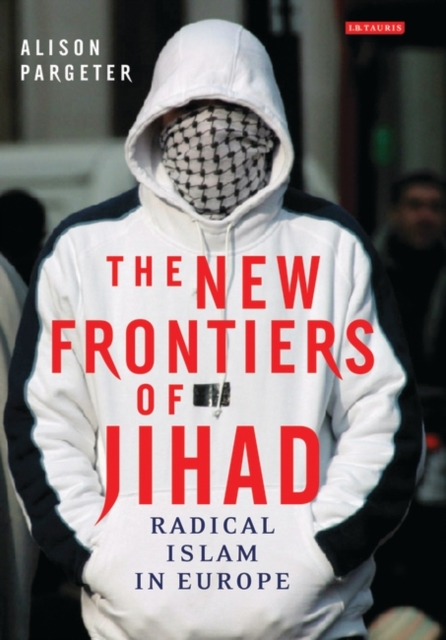
The New Frontiers of Jihad
Following the terrorist attacks on London and Madrid, radical Islam is presumed to be an increasingly potent force in Europe.Yet beneath the media hysteria, very little is actually known about it.What radical movements are there?How do they operate?What is driving them?Who are their recruits?What is their relationship, if any, to Al Qaeda?.
eBook

What Do We Mean By \Salafī? Connecting Muḥammad 'Abduh with Egypt's Nūr Party in Islam's Contemporary Intellectual History
In contemporary academic literature, the word \"Salafī\" has a variety of meanings. Most importantly, Western academic literature of the 20th and 21st centuries applies the word to (1) an Islamic reform movement founded by Jamāl al-Dīn al-Afghānī (d. 1897) and Muḥammad 'Abduh (1849–1905) in the last decades of the 19th century and (2) to contemporary Sunni reform movements that criticize manifestations of Sunni Islam which are based on Sufism, Ash'arism, and traditional madhhab-affiliations to the Shāfi'ī, Ḥanafī, and Mālikī schools. In a 2010-article Henri Lauzière argued that the use of the word \"Salafī\" to describe these two movements is an equivocation based on a mistake. While the movement of contemporary Salafīs may be rightfully called by that name, al-Afghānī and 'Abduh never used the term. Only Western scholars of the 1920s and 30s, most importantly Louis Massignon (1883–1962), called this latter movement \"salafī\". This paper reevaluates the evidence presented by Lauzière and argues that Massignon did not make a mistake. The paper describes analytically both reform movements and draws the conclusion that there is a historic continuity that justifies calling them both \"salafī\". The paper draws an analogy from the use of the word \"socialist\" in European political history, which first applied to a wider movement of the late 19th century before its use was contested and narrowed down in the course of the 20th.
Journal Article

Civility: Between Disciplined Interaction and Local/Translocal Connectedness
This study explores the question of if and how associative bonds based on violence, control and self-restraint mediated by contractual relationships become institutionalised within societies and discusses the cultural factors that determine this threshold. It investigates the trade-off between formalised forms of interaction that safeguard individual rights and secure state control, and less formal modes of civility that deepen trans-state interconnectedness. It asks whether civility is the result of a global civilising process in the sense highlighted by Norbert Elias, whereby affect control is matched by formal norms guaranteed by legitimate institutions, or whether it is rather the much more complex constellation of specific actualisations of the more general trade-off as just defined. After summarising the current twists of the meaning of civility against the background of liberal and modernist precedents and delineating the alternative patterns of civility within Islamic, especially modern Ottoman, history, the analysis critically interrogates Weber's notion of
Verbrüderung
as the pre-modern root concept of organised forms of common action, mutual solidarity and civic participation. Finally, it questions whether this idea fits the historic forms of association in the Islamic world, in particular the privileging of a lower threshold of institutionalisation of the associational bond than has traditionally been found in the European experience-and which survives in the current anxieties about resurgent mahalle (neighbourhood) informal governance in the AKP's Turkey.
Journal Article

Disputing the \Iron Circle\: Renan, Afghani, and Kemal on Islam, Science, and Modernity
This article deals with the criticisms advanced by two leading Muslim thinkers, Jamal ad-Din al-Afghani (1838-1897) and Namik Kemal (1840-1888), of the free-thinking French intellectual Ernest Renan (1823-1892). All three men wrote in 1883—a moment of rapid colonial expansion—on the places of Islam and science in modern political culture. The article challenges the prevailing theory that Islamic concepts of governance could not be reconciled with reformist thought by reevaluating the insights and legacy of Kemal, the most influential Ottoman political activist of his time.
Journal Article

Islam and Modernity in Turkey: Power, Tradition and Historicity in the European Provinces of the Muslim World
Examines Turkey's transition from empire to republic, what it entails for the status of the Turkish present, & the implications of the structure of this present for understanding Islam & modernity. A genealogy of the Turkish present is delineated, tracing the historical context in which Turkish institutions developed & the relationship between cultural forms & the milieu of power imperatives. In this light, the historical relevance of the Balkans to Turkey is considered in terms of the impact of Balkan sociopolitical tendencies; Turkey's political culture is viewed as essentially Balkan, & this ought to be the starting point when considering the importance of Islam & modernity in this nation. It is contended that such a genealogy allows for the reformulating of frameworks to comprehend the relationship among Islam, modernity, & Europe & sheds light on those individual ideas. At issue is ascertaining the historicity of cultural institutions & practices in Turkey, which is heir to a genealogy of Muslim reform, & the nature of this reform, the name in which it was undertaken, & the context of what kinds of imperatives. It is argued that conceptualizing this process as Westernization is inadequate, as it erases the issue of the relationship between emergent modern techniques, practices, & modes of subjection, on one hand, & the historiographic construction of Europe & the position of Muslim polities in relation to this emergence, on the other. It is argued that that Turks tend to locate the modality of their modernity in secularism. It is concluded that the Ottomans were not outside 18th-19th-century Europe transformations, were, in fact, actively part of the context, & to consider Turkey's accession to the European Union as the \"end of Europe\" is viewed as arrogance. 1 Photograph. J. Zendejas
Journal Article

What Went Wrong?
For a long time, people in the Midlle East have been asking themselves and each other this agonizing question - what went wrong? How did the most advanced, creative, flourishing, enlightened, and also the richest and most powerful civilization in the world lose both its strength and leadership and become - in various perspectives - the victim, the prey, the war, the pupil of the West. This book examines the different aspects of the encounter with the West - guns, factories, parliament, monogamy, technology, the sciences and the arts, and the Middle Eastern response to them. Finally, it reviews the different ways in which this question has been formulated, the various diagnoses of what ails the Middle East, and the prescriptions for its cure.
eBook

The argument in favor
Once, when he saw a woman wearing a burqa in a Kabul garden, he tore it off and burned it.18 However, Amanullah was exiled, and the country plunged back into the past.19 Turkey banned the Islamic face veil and the turban in 1934, and this prohibition has been maintained ever since by a long succession of governments that adhered to Atatiirk's secularist and modernist revolution. [...] from the 1980s onward, Turkish women have been prohibited from wearing headscarves in parliament and in public buildings, and this law was even more strictly enforced after a 1997 coup by the secular military.
Magazine Article

Islam, Integration, and the Feminist Alternative
A symposium on books by (1) Jocelyne Cesari, When Islam and Democracy Meet: Muslims in Europe and in the United States (New York, NY: Palgrave, 2006); (2) Jytte Klausen, The Islamic Challenge: Politics and Religion in Western Europe (New York, NY: Oxford U Press, 2005); & (3) Mansoor Moaddel, Islamic Modernism, Nationalism, and Fundamentalism: Episode and Discourse (Chicago, IL: U Chicago Press, 2005).
Book Review