
Catalogue Search | MBRL


Are you sure you want to remove the book from the shelf?

{{itemTitle}}
33
result(s) for
"Islamic religious education -- Iran"
Sort by:
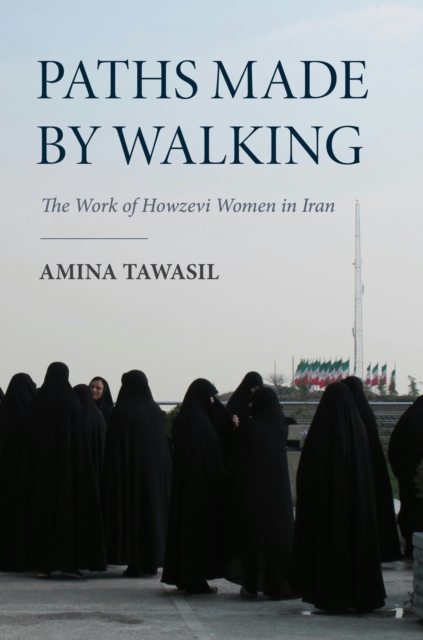
Paths Made by Walking
What can women's scholastic pursuits tell us about what building
an Islamic state looks like for women who are loyal to its project?
And what can an ethnographic study of women who are using Islamic
education to transform their conditions in Iran teach us about our
own humanity?
Paths Made by Walking provides insight into these
questions by examining how Iranian women have participated in
Islamic education since the 1979 revolution. This groundbreaking
ethnography on Iranian howzevi (seminarian) women reveals how
ideologies of womanhood, institutions, and Islamic practices have
played a pivotal role in religiously conservative women's mobility
in the Middle East. Applying over a year of ethnographic fieldwork,
Amina Tawasil analyzes how the Islamic education of seminarian
women has propelled some of them into powerful positions in Iran,
from close ties with the state's supreme leader and chief justice
to membership in the Basij (voluntary military organization). At
the same time, these women often choose to remain \"hidden\" or to
otherwise follow practices that seem inscrutable or illogical from
a framework of politicized resistance. By centering the howzevi
women's senses of self and revealing their complex interpretations
of their beliefs, Tawasil offers a fresh perspective on forms of
feminine identity that do not always mirror supposedly universal
desires for recognition, autonomy, leadership, or authority.
Taking readers into the classrooms, living rooms, and compounds
where howzevi women participate in intellectual discourse,
Paths Made by Walking invites readers to reconsider their
conceptualizations of the women who support the Islamic Republic of
Iran.
eBook

Temperature rising : Iran's revolutionary guards and wars in the Middle East
Iran is a country at war - in Syria, Iraq, and Yemen.The founder of the Islamic Republic, Ayatollah Khomeini, always told audiences that the revolution was not about Iran, but the whole region.
eBook

Schooling Islam
Since the Taliban seized Kabul in 1996, the public has grappled with the relationship between Islamic education and radical Islam. Media reports tend to paint madrasas--religious schools dedicated to Islamic learning--as medieval institutions opposed to all that is Western and as breeding grounds for terrorists. Others have claimed that without reforms, Islam and the West are doomed to a clash of civilizations.
Robert Hefner and Muhammad Qasim Zaman bring together eleven internationally renowned scholars to examine the varieties of modern Muslim education and their implications for national and global politics. The contributors provide new insights into Muslim culture and politics in countries as different as Morocco, Egypt, Pakistan, India, Indonesia, Iran, and Saudi Arabia. They demonstrate that Islamic education is neither timelessly traditional nor medieval, but rather complex, evolving, and diverse in its institutions and practices. They reveal that a struggle for hearts and minds in Muslim lands started long before the Western media discovered madrasas, and that Islamic schools remain on its front line.
Schooling Islamis the most comprehensive work available in any language on madrasas and Islamic education.
eBook

‘Islamic Culture’ textbook content and religious needs of literacy students
The present study aimed to investigate the degree of adaptation of the 'Islamic Culture' textbook content to the religious needs of the literacy learners, using document and content analysis as the main research method. The statistical population for the document analysis included all texts related to the religious needs of the literacy learners, and the 'Islamic Culture' textbook was examined in the content analysis section. The research tools were composed of some forms and a content analysis checklist. Furthermore, the documents were analysed qualitatively, and the data from the content analysis were examined, using the descriptive indicators in the Shannon entropy for data analysis. The study results revealed that the conceptual framework of the religious needs among the literacy learners could be classified into three dimensions, namely; cognitive, emotional and functional, and then divided into several components. According to the expert opinions, there was no correlation between the 'Islamic Culture' textbook content and the dimensions of the religious needs of the literacy learners. The levels of attention to the religious needs in such learners in the 'Islamic Culture' textbook content was also not the same, so that the most emphasis had been laid on the cognitive dimension and the least weight was placed on the functional one. Contribution This study was to identify the dimensions and components of the religious needs of the literacy learners. For this purpose, three dimensions and 58 components were categorised for the religious needs, using document and content analysis as well as data collection tools for searching the related literature in books, journals, databases and websites.
Journal Article

Prospects for Higher Shia Religious Education in Post-Soviet Countries
The opportunity to receive religious education plays an important role in the formation of the religious elite of society. It forms the Muslim clergy, which, in turn, represents this community in front of other members of society. Their statements directly affect the attitude of non-Muslims towards the members of this community, which is very important, especially in the cases where Muslims are a minority, and Shi’ites, in turn, are a minority in all post-Soviet countries except Azerbaijan. The Shia communities of the post-Soviet region are little studied in general. Analysing their specifics, one can see that almost all the clerics of these communities received religious education in Iran and/or Iraq, while the Sunni clerics of the same countries most often studied in their homeland. This problem in the aspect of comparing Sunni and Shia education, as well as the past (starting from the USSR times), the present and the future of Shia higher religious education were studied in this paper.
Journal Article

Exploring the Perspectives and Experiences of Donor and Recipient Mothers Regarding Human Milk Bank Services in Iran
Human milk provides essential nutrition for infants, particularly vulnerable preterm and low‐birth‐weight neonates. This qualitative study explored Iranian mothers' perspectives on human milk bank (HMB) services through semi‐structured interviews with 16 participants (9 donors, 7 recipients) across four HMBs. Using inductive content analysis, we identified five key themes: (1) Expanding opportunities for HMB utilization requires integrating milk donation education into prenatal programs and addressing awareness gaps; (2) Familiarizing parents with HMB services through healthcare providers and social media is crucial for engagement; (3) Infrastructure limitations including equipment shortages and insufficient HMB locations hinder service delivery; (4) Donated human milk (DHM) represents both hope for recipients and fulfillment for donors; and (5) Religious beliefs about milk kinship and family support significantly influence participation. Findings reveal that while Iran has developed the Middle East's most extensive HMB network, cultural and religious considerations around milk kinship require sensitive approaches. Donors reported altruistic motivations and emotional rewards, whereas recipients described DHM as critical for infant survival. Key barriers included limited public awareness, equipment deficiencies, and concerns about milk safety. The study highlights the need for culturally adapted education campaigns, standardized equipment, and policy support to expand services. These results provide valuable insights for improving HMB implementation in Muslim‐majority contexts while addressing unique regional challenges in neonatal nutrition. The research underscores DHM's potential to reduce infant mortality when combined with appropriate infrastructure and community engagement strategies. Summary Many Iranian mothers lack awareness of Human Milk Bank (HMB) services, underscoring the need for broad education campaigns through healthcare providers and social media. Limited facilities and equipment restrict HMB capacity, making expansion and standardisation essential. Cultural and religious beliefs, particularly Islamic views on milk kinship, influence acceptance and require sensitive communication and family engagement. Donor mothers are motivated by altruism, while recipients express gratitude and trust in milk safety. Integrating HMB education into maternal care, supported by government and philanthropic partnerships, can overcome logistical and financial barriers. Iran's growing HMB network offers valuable lessons for similar settings, highlighting that strengthening awareness, infrastructure, and cultural engagement is key to improving neonatal health outcomes. This qualitative study explores Iranian mothers' perspectives on human milk banks (HMBs), revealing five key themes: awareness, infrastructure needs, donated milk as hope, and the role of beliefs/family support. Findings emphasize the necessity of public education, HMB expansion, and improved equipment to better serve preterm infants and encourage milk donation.
Journal Article

State and Religion in Iraq: The Sufi Insurgency of the Former Baʿth Regime in Historical Context
Since the fall of Saddam Hussein's regime in 2003, Iraqi society has experienced profound crises in its transition from a strong centralized state under secular Baʿth Party authoritarianism to a new weak but still authoritarian federal state that is dominated by Shiʿi Islamist parties and plagued by factionalism, open sectarian competition, and conflict. A comprehensive scrutiny of the country's recent historical ruptures and continuities that pertain to the relations between the state and religion in particular is still a desideratum in contemporary Iraq studies. The extent to which thirty-five years of Baʿthi dictatorship transformed and lastingly shaped Iraq's diverse religious landscape is still not yet fully understood. Following the US-led invasion, the former regime was well-remembered for its repression and atrocities against almost all segments of society, but its image and the long-held notion and memory of it as “atheist” and “antireligious” are increasingly being challenged. Moreover, sectarian conflicts and violence since 2005 reveal an ongoing conflict over the interpretive sovereignty and ownership of famous religious sites of memory, such as shrines and mosques, between the various factions in Iraq. Beginning with the Iran–Iraq War in 1980, the Baʿth regime lavishly sponsored Sunni and Shiʿi shrines and advertised them in its religious war propaganda all over the country as sites of memory for the Iraqi and Arab nation. Many of these religious sites were surrounded by a certain confessional ambiguity and constitute memorials and meeting places for Sunnis and Shiʿis equally. After the fall of the regime, this ambiguity sparked sectarian competition over these sites since both communities often associated with one and the same shrine quite different memories of the same saintly figure, or they disagreed about who was buried there. Radical jihadist Salafis, in turn, generally rejected them as un-Islamic and even associated them with the old regime from 2014 onward.
Journal Article

Investigating the Effect of Religious and Islamic Teachings on the Calmness and Mental Health in Educational Spaces
Religion can lead to the creation of meaning. Therefore, religion gives meaning to the life and death of humans. Spirituality is far higher than religion and entails all concepts of human dimensions such as spiritual health, peace resulting from belief and spiritual adaptation as well as one’s experiences in a unique and dynamic process (which is reflecting the belief in God and infinite power), connection (to someone, others, nature or God) and coalition. Regardless of considering the role of spirituality in the health section, what is worldly paid attention today, is the “spirituality” and “sublime values” in medical science education specially life skills and spiritual life skills education and the people of the society. This research sought to investigate the effect of religious and spiritual education on the mental health of girl students (2018–2019) of Technical and Vocational University in the architecture major of Tehran province. The methodology of the study was quasi-experimental having pretest and posttest and control group. The sample size included 152 individuals using Morgan table who were selected through multi-stage sampling. The statistical population was randomly divided into two experimental and control groups. Experimental group received educational–religious classes for 15 sessions. To analyze the data, Goldberg health questionnaire was utilized, and also descriptive as well as inferential statistics such as covariance analysis and LSD test were used in this regard. The results indicated that religious and spiritual effects were influential on the increase in mental health and social and physical performances as well as the decrease in students’ depression.
Journal Article

The Moral Economy of the Madrasa
The revival of madrasas in the 1980s coincided with the rise of political Islam and soon became associated with the \"clash of civilizations\" between Islam and the West. This volume examines the rapid expansion of madrasas across Asia and the Middle East and analyses their role in society within their local, national and global context.
Based on anthropological investigations in Afghanistan, Bangladesh, China, Iran, and Pakistan, the chapters take a new approach to the issue, examining the recent phenomenon of women in madrasas; Hui Muslims in China; relations between the Iran's Shia seminary after the 1979-Islamic revolution and Shia in Pakistan and Afghanistan; and South Asian madrasas. Emphasis is placed on the increased presence of women in these institutions, and the reciprocal interactions between secular and religious schools in those countries. Taking into account social, political and demographic changes within the region, the authors show how madrasas have been successful in responding to the educational demand of the people and how they have been modernized their style to cope with a changing environment.
A timely contribution to a subject with great international appeal, this book will be of great interest to students and scholars of international politics, political Islam, Middle East and Asian studies and anthropology.
eBook

Islamic Feminism and Its Discontents: Toward a Resolution of the Debate
Explores the validity of Islamic feminism by inspecting the debate in Iran. An overview of the Iranian Revolution & the gender regime that was instituted provide the political context for women's status in the country. Advancements for women during the 1990s are discussed. Both sides of the debate among scholars regarding the interpretation of the political developments & the activities of Islamic women who pushed for liberalization & reform are presented. An assessment of the debate includes the gender dynamics of Islamic fundamentalism, the gender regime & political regime of the Iranian Revolution, & the nature of independent & state feminists. The necessities of interpreting religious texts to emphasize more egalitarian treatment of women & incorporating a degree of a secular political system are advocated. 95 References. L. Collins
Journal Article