
Catalogue Search | MBRL


Are you sure you want to remove the book from the shelf?

{{itemTitle}}
13
result(s) for
"Islamic sects -- Turkey"
Sort by:


Hizmet means service
Hizmet Means Service examines Hizmet, a Turkey-based but global movement dedicated to human service. Inspired by Fethullah Gülen, a Sufi Muslim mystic, scholar, and preacher, it is an international endeavor focused on education, business, interfaith dialogue, science, and efforts to promote tolerance and understanding. One of Hizmet's main tenets is that religious believers can hold profound beliefs and commit spiritually inspired acts of service without discriminating against or alienating people of other faiths. Even as a ruling party in Turkey has set out to undercut the movement, its international influence continues to grow and attract followers who are devoted to service. The scholars whose work appears in this book represent a variety of disciplines, faiths, and nations and offer a wide range of narratives, analyses, and critiques. This title moves beyond mere introduction, analyzing Hizmet and the manifestations of this interfaith movement.
eBook
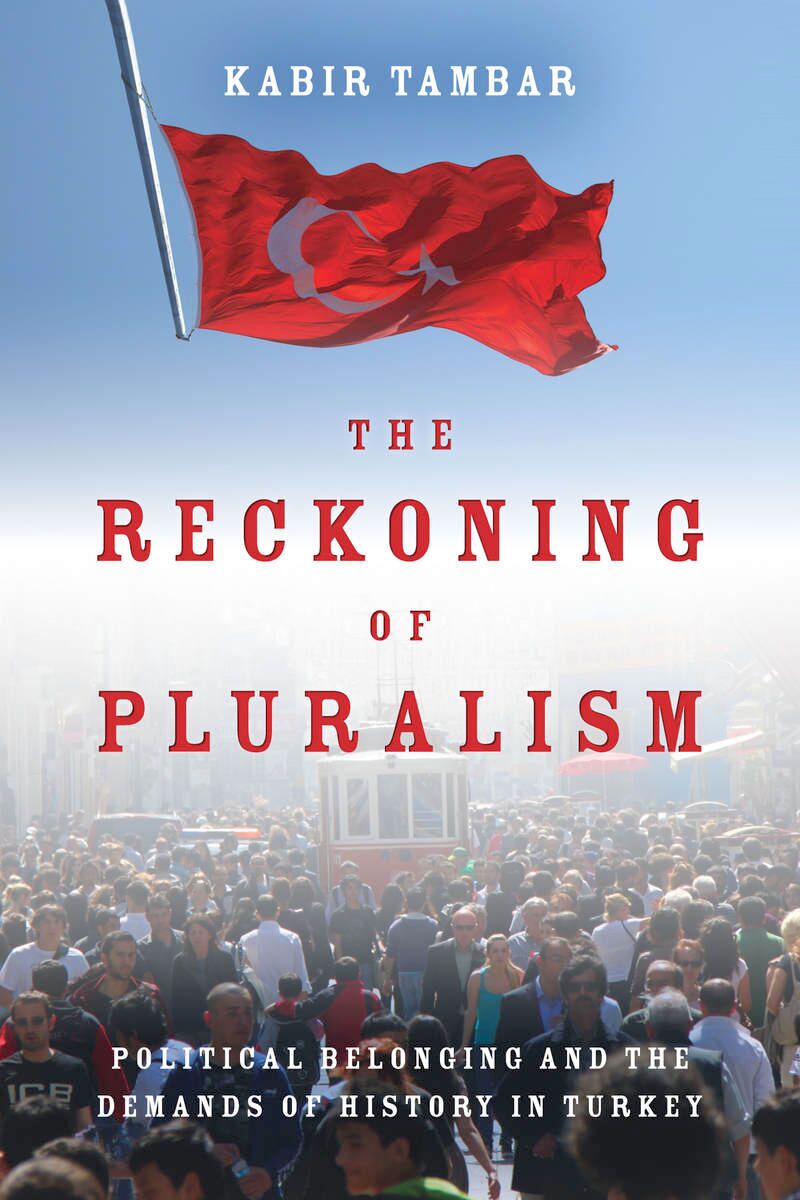
The reckoning of pluralism
The Turkish Republic was founded simultaneously on the ideal of universal citizenship and on acts of extraordinary exclusionary violence. Today, nearly a century later, the claims of minority communities and the politics of pluralism continue to ignite explosive debate. The Reckoning of Pluralism centers on the case of Turkey's Alevi community, a sizeable Muslim minority in a Sunni majority state. Alevis have seen their loyalty to the state questioned and experienced sectarian hostility, and yet their community is also championed by state ideologues as bearers of the nation's folkloric heritage. Kabir Tambar offers a critical appraisal of the tensions of democratic pluralism. Rather than portraying pluralism as a governing ideal that loosens restrictions on minorities, he focuses on the forms of social inequality that it perpetuates and on the political vulnerabilities to which minority communities are thereby exposed. Alevis today are often summoned by political officials to publicly display their religious traditions, but pluralist tolerance extends only so far as these performances will validate rather than disturb historical ideologies of national governance and identity. Focused on the inherent ambivalence of this form of political incorporation, Tambar ultimately explores the intimate coupling of modern political belonging and violence, of political inclusion and domination, contained within the practices of pluralism.
eBook


La Mosquée verte
Extrait: \"Les Imans de la Mosquée Verte, assis à l'ombre matinale, commençaient le rêve du jour. Les premières heures du soleil nouveau venaient de les réunir dans leur lieu familier, au bord de la sainte terrasse, sous des platanes centenaires.\"
eBook

The Alevis in Turkey
This is the only volume dedicated to the Alevis available in English and based on sustained fieldwork in Turkey. The Alevis now have an increasingly high profile for those interested in the diverse cultures of contemporary Turkey, and in the role of Islam in the modern world. As a heterodox Islamic group, the Alevis have no established doctrine. This book reveals that as the Alevi move from rural to urban sites, they grow increasingly secular, and their religious life becomes more a guiding moral culture than a religious message to be followed literally. But the study shows that there is nothing inherently secular-proof within Islam, and that belief depends upon a range of contexts.
Introduction 1. Setting the Scene: Religion and Social Change in Modern Turkey 2. The Alevis and their Place in the Republic: An Overview 3. An Alevi Community 4. Religion, Ritual and Belief among Alevis 5. Social Change and the Alevi Communities 6. The Alevi, the State, and the Future 7. Theoretical and Comparative Reflections Appendices: Primary Material on the Alevis
David Shankland lectures in the Dept of Social Anthropology at the Univeristy of Wales, Lampeter, and was formerly Assistant and Acting Director of the British Institute of Archaeology at Ankara, Turkey. For many years a specialist on Turkey, he has published widely on the subject.
eBook

Muslim-Christian relations in Damascus amid the 1860 riot
On 9 July 1860 CE, an outbreak of violence in the inner-city Christian quarter of Damascus created shock waves locally and internationally. This book provides a step-by-step presentation of events and issues to assess the true role of all the players and shapers of events. It critically examines the internal and external politico-socio-economic factors involved and argues that economic interests rather than religious fanaticism were the main causes for the riot of 1860. Furthermore, it argues that the riot was not a sudden eruption but rather a planned and organised affair.
eBook

The Alevis in Turkey and Europe
This book examines the development of identity politics amongst the Alevis in Europe and Turkey, which simultaneously provided the movement access to different resources and challenged its unity of action.
While some argue that Aleviness is a religious phenomenon, and others claim it is a cultural or a political trend, this book analyzes the various strategies of claim-making and reconstructions of Aleviness as well as responses to the movement by various Turkish and German actors. Drawing on intensive fieldwork, Elise Massicard suggests that because of activists' many different definitions of Aleviness, the movement is in this sense an \"identity movement without an identity.\"
eBook

Imperial Citizen
Imperial Citizen considers the geopolitical necessities of Ottoman-Iranian/Sunni-Shi‘ite relations in the Iraqi frontier provinces in the late 19th-early 20th century through an examination of Ottoman centralization policies, and the impact of those policies on Ottoman citizenship laws and on the institution of marriage.
eBook

Lebanese Salafis between the Gulf and Europe
Salafism is becoming increasingly important in the post-Arab Spring Middle East, yet there is a marked scarcity of serious academic studies of its rise. This essential volume examines the rise of Salafi networks in Lebanon and their transnational reach in Northern Africa, the Arabian Gulf and Europe. Drawing on his extensive fieldwork in Lebanon, Kuwait, Qatar and Europe, the author sheds new light on the expansion of Salafism to become one of the most important religious movements in Lebanon's Sunni Muslim community. Offering new insight into the structure of Salafism and its networking techniques at the local and transnational level, Pall links the interconnectedness of the Lebanese groups with networks and charity organisations in the Gulf and in Europe. This timely volume is an invaluable addition to the broad international debates on transnational Islamic movements.
eBook