
Catalogue Search | MBRL


Are you sure you want to remove the book from the shelf?

{{itemTitle}}
31,622
result(s) for
"Islamic studies"
Sort by:

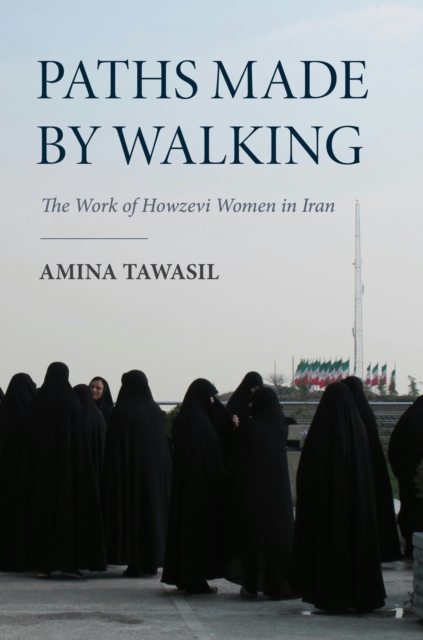
Paths Made by Walking
What can women's scholastic pursuits tell us about what building
an Islamic state looks like for women who are loyal to its project?
And what can an ethnographic study of women who are using Islamic
education to transform their conditions in Iran teach us about our
own humanity?
Paths Made by Walking provides insight into these
questions by examining how Iranian women have participated in
Islamic education since the 1979 revolution. This groundbreaking
ethnography on Iranian howzevi (seminarian) women reveals how
ideologies of womanhood, institutions, and Islamic practices have
played a pivotal role in religiously conservative women's mobility
in the Middle East. Applying over a year of ethnographic fieldwork,
Amina Tawasil analyzes how the Islamic education of seminarian
women has propelled some of them into powerful positions in Iran,
from close ties with the state's supreme leader and chief justice
to membership in the Basij (voluntary military organization). At
the same time, these women often choose to remain \"hidden\" or to
otherwise follow practices that seem inscrutable or illogical from
a framework of politicized resistance. By centering the howzevi
women's senses of self and revealing their complex interpretations
of their beliefs, Tawasil offers a fresh perspective on forms of
feminine identity that do not always mirror supposedly universal
desires for recognition, autonomy, leadership, or authority.
Taking readers into the classrooms, living rooms, and compounds
where howzevi women participate in intellectual discourse,
Paths Made by Walking invites readers to reconsider their
conceptualizations of the women who support the Islamic Republic of
Iran.
eBook

Home, land, security : deradicalization and the journey back from extremism
\"Nicola, Christianne, and Marie are mothers who discovered too late that their sons had been radicalized online and had flown from the West to join the tens of thousands of foreign ISIS fighters in Syria. Too often extremists are portrayed as having sprung from the earth as irredeemable killing machines, but these women underscore the deeper truth that no one is born a terrorist, and they have themselves become activists in preventing violent radicalism. Grasping at the Root explores innovative new counter-extremism programs around the world, including in the United States, Europe, Pakistan, and Indonesia. We meet an American judge who has staked his career on finding new ways to handle terror suspects, a Pakistani woman running a game-changing school for former child soldiers, a radicalized Somali American who learns through literature to see beyond his hate-filled beliefs, and a former neo-Nazi who now helps disarm jihadis\"-- Provided by publisher.
Book

Scientific Discourse amongst the Scholars of the Oxford Journal of Islamic Studies: Bibliometric Study, and Geopolitical Analysis and Insights
This paper examines the state of scholarly communication within the field of Islamic Studies as reflected by the Oxford Journal of Islamic Studies (OJIS). The field of Islamic studies has witnessed significant growth in recent years, with a surge in publications covering a wide range of subfields. The paper highlights challenges in scholarly communication, particularly in introducing a peer-review culture and fostering voluntary peer-review in Islamic studies. The study also explores the impact of the emphasis on research and publications in universities in the Arab Gulf countries, potentially shifting the focus from teaching to research. This study offers a comprehensive analysis of OJIS publications, encompassing articles, books, and book reviews from 1990 to 2021. Through bibliometric analysis, it assesses the academic prominence of Islamic Studies, investigates publication patterns, scrutinizes book selection criteria, compares articles, books, and reviews, contextualizes publications within their geopolitical milieu, and offers recommendations for future research. The study reveals shifts in publication patterns influenced by global events, while also highlighting highly cited articles and influential authors. Furthermore, it provides insights into the thematic evolution of research trends, demonstrating the multi-disciplinarity of OJIS publications. The paper concludes with a geographical analysis, showcasing the countries with the most significant contributions to OJIS publications. Overall, this research contributes to the understanding of Islamic Studies scholarship and its global impact.
Journal Article

Women's employment in Muslim countries : patterns of diversity
\"With the economic position of women in Muslim countries being a regular focus of public attention and a fiercely debated topic amongst academics, few systematic, detailed descriptions and analyses are available. This book presents a new and nuanced exploration of the topic, introducing a theoretical framework that accommodates both women's individual agency as well as cultural, economic, religious, and political forces shaping their position. Collating research findings involving more than 300,000 women in 383 provinces in 28 Muslim countries ranging from the Middle East via Sub-Saharan Africa and Central Asia to Indonesia in Southeast Asia, the book, based on this wealth of data, shows how many women earn a living outside agriculture, how big the differences in employment likelihood really are, and how these differences can be explained. In doing so it addresses topical debates on the role of Islam, modernization, globalization, neocolonialism, educational inequalities, patriarchy, household hierarchies, and more\"-- Provided by publisher.
Book

Prospects and challenges in promoting Humanitarian Islam : Nahdlatul Ulama's international social partnerships
Humanitarian Islam refers to the efforts of Nahdlatul Ulama (NU) to promote peaceful coexistence among people of different faiths in the world, with a focus on rahmah (universal love and compassion).The main vehicles for promoting Humanitarian Islam have been North Carolina-registered non-governmental organizations (NGOs), namely Bayt ar-Rahmah (Home of the Divine Grace) and the Center for Shared Civilizational Values. Key advocates of this campaign include current Nahdlatul Ulama (NU) chairman Yahya Cholil Staquf and North Carolina native Holland Taylor.The Humanitarian Islam message promoted under Yahya Cholil Staquf's leadership goes back to the philosophy of Abdurrahman Wahid (Gus Dur) and NU's promotion of Islam Nusantara under Said Aqil Siroj's chairmanship. It focuses on recontextualizing orthodox religious teachings through the establishment of various inter- and intra-religious partnerships globally.NU and Bayt ar-Rahmah leaders have witnessed early-stage successes in promoting the Humanitarian Islam vision to forge ties with other large religious organizations across the world such as the Imam Warith Deen Muhammad (IWDM) community and World Evangelical Alliance through utilizing universal vocabularies such as indigeneity, human dignity and humanitarian Islam.
eBook

Adjudicating family law in Muslim courts
\"While there are many books on Islamic family law, the literature on its enforcement is scarce. This book focuses on how Islamic family law is interpreted and applied by judges in a range of Muslim countries, Sunni and Shi'a, as well as Arab and non-Arab. It thereby aids the understanding of shari'a law in practice in a number of different cultural and political settings. It shows how the existence of differing views of what shari'a is, as well as the presence of a vast body of legal material which judges can refer to, make it possible for courts to interpret Islamic law in creative and innovative ways\"-- Provided by publisher.
Book

Violence in Islamic Thought from the Qur'an to the Mongols
Examines how violence was described and evaluated in the foundational texts of Islam. How was violence justified in early Islam? What role did violent actions play in the formation and maintenance of the Muslim political order? How did Muslim thinkers view the origins and acceptability of violence? These questions are addressed by an international range of eminent authors through both general accounts of types of violence and detailed case studies of violent acts drawn from the early Islamic sources. Violence is understood widely, to include jihad, state repressions and rebellions, and also more personally directed violence against victims (women, animals, children, slaves) and criminals. By understanding the early development of Muslim thinking around violence, our comprehension of subsequent trends in Islamic thought, during the medieval period and up to the modern day, become clearer.
Key Features: Examines the portrayal of violence in a variety of different intellectual contexts
* Takes a broad understanding of violence - from warfare between Muslims (and between Muslims and others) to individual acts of violence
* Enables a better informed debate about the nature of violence in early Islam
* Includes contributions from leading international experts including Michael Cooperson, Maribel Fierro, Geert Jan van Gelder, Christopher Melchert, John Nawas, Andrew Rippin and Dominique Urvoy
eBook


Divine Money
Zakat giving or mutual aid is a sacred practice in Islam. Where
government and public safety nets fail, zakat serves as a form of
social security in Muslim communities. In Divine Money ,
Emanuel Schaeublin shows how zakat institutions and direct zakat
donations function in contemporary Palestine. Based on his
ethnographic fieldwork in the city of Nablus, Schaeublin traces
zakat flows as they provide critical support to households living
under military rule and security surveillance. In the neighborhoods
of Nablus, the Islamic tradition shapes public life. Many enact
simple gifts of money of food as an expression of God's generosity
and justice. How do such invocations of the divine enable people to
negotiate responsibilities and tensions arising from differences in
wealth in Palestinian society? What is the role of zakat in
confronting political repression and economic instability?
eBook