
Catalogue Search | MBRL


Are you sure you want to remove the book from the shelf?

{{itemTitle}}
11,167
result(s) for
"Islamic terrorism"
Sort by:


Islamic State Practices, International Law and the Threat from Terrorism
In the post '9/11' legal and political environment, Islam and Muslims have been associated with terrorism. Islamic civilization has increasingly been characterized as backward, insular, stagnant and unable to deal with the demands of the twenty first century and differences and schisms between Islam and the west are being perceived as monumental and insurmountable. '9/11' terrorist attacks have unfortunately provided vital ammunition to the critics of Islam and those who champion a 'clash of civilizations'. In this original and incisive study, the author investigates the relationship between Islamic law, States practices and International terrorism. It presents a detailed analysis of the sources of Islamic law and reviews the concepts of Jihad, religious freedom and minority rights within Sharia and Siyar. In eradicating existing misconceptions, the book provides a thorough commentary of the contributions made by Islamic States in the development of international law, including norms on the prohibition of terrorism. It presents a lucid debate on such key issues within classical and modern Islamic State practices as diplomatic immunities, prohibitions on hostage-taking, aerial and maritime terrorism, and the financing of terrorism. The book surveys the unfairness and injustices within international law - a legal system dominated and operated at the behest of a select band of powerful States. It forewarns that unilateralism and the undermining of human rights values in the name of the 'war on terrorism' is producing powerful reactions within Muslim States: the 'new world order' presents a dangerous prognosis of the self-fulfilling prophecy of an inevitable 'clash of civilizations' between the Islamic world and the west.
eBook

In their own words : understanding Lashkar-e-Tayyaba
\"This volume reveals a little-known aspect of how Lashkar-e-Tayyaba (LeT), a jihadist terrorist group, functions in Pakistan and beyond by translating and commenting upon a range of publications produced and disseminated by Dar-ul-Andlus, the publishing wing of LeT\"-- Provided by publisher.
Book

Global alert
Many associate terrorism with irrational behavior and believe only lunatics could perpetuate such horrific acts. Global Alert debunks this myth by anatomizing the rationale behind modern terrorism. It draws a distinct picture of its root and instrumental causes and plots the different stages of a terrorist attack, from indoctrination and recruitment to planning, preparation, and launch. Global Alert also exposes the measured exploitation of democratic institutions by terrorists to further their goals. Despite its strong capabilities and extensive resources, the modern liberal-democratic state is nevertheless subject to the rules of war, which partially restrict the state's ability to operate and maneuver. Boaz Ganor shows how terrorist organizations exploit these values to paralyze or neutralize the states they oppose. In outlining this new \"hybrid\" terrorist organization and its activity in both the military–terrorist arena and the political–welfare arena, Ganor advances an international doctrine for governing military operations between state and nonstate actors as part of a new type of armed conflict termed \"multidimensional warfare.\"
eBook
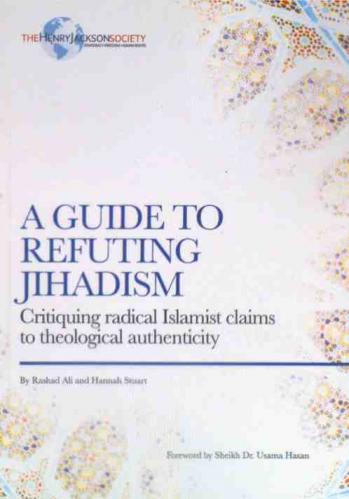
Jihad and international security
This book explores the global jihad movement and its emergence in the latter half of the twentieth century. Roshandel and Chadha investigate the nature and extent of this threat, tracing its religious and ideological roots, relevant history, and its goals.
eBook

Small arms : children and terrorism
\"Analyzes the mechanisms for the mobilization of children by terrorist organizations, contrasts children in terrorist movements with child soldiers, and discusses what strategies might be helpful for demobilizing and re-integrating these children back into society\"-- Provided by publisher.
Book

The Terrorist's Dilemma
How do terrorist groups control their members? Do the tools groups use to monitor their operatives and enforce discipline create security vulnerabilities that governments can exploit?The Terrorist's Dilemmais the first book to systematically examine the great variation in how terrorist groups are structured. Employing a broad range of agency theory, historical case studies, and terrorists' own internal documents, Jacob Shapiro provocatively discusses the core managerial challenges that terrorists face and illustrates how their political goals interact with the operational environment to push them to organize in particular ways.
Shapiro provides a historically informed explanation for why some groups have little hierarchy, while others resemble miniature firms, complete with line charts and written disciplinary codes. Looking at groups in Africa, Asia, Europe, and North America, he highlights how consistent and widespread the terrorist's dilemma--balancing the desire to maintain control with the need for secrecy--has been since the 1880s. Through an analysis of more than a hundred terrorist autobiographies he shows how prevalent bureaucracy has been, and he utilizes a cache of internal documents from al-Qa'ida in Iraq to outline why this deadly group used so much paperwork to handle its people. Tracing the strategic interaction between terrorist leaders and their operatives, Shapiro closes with a series of comparative case studies, indicating that the differences in how groups in the same conflict approach their dilemmas are consistent with an agency theory perspective.
The Terrorist's Dilemmademonstrates the management constraints inherent to terrorist groups and sheds light on specific organizational details that can be exploited to more efficiently combat terrorist activity.
eBook


The Politics of Secularism in International Relations
Conflicts involving religion have returned to the forefront of international relations. And yet political scientists and policymakers have continued to assume that religion has long been privatized in the West. This secularist assumption ignores the contestation surrounding the category of the \"secular\" in international politics. The Politics of Secularism in International Relations shows why this thinking is flawed, and provides a powerful alternative. Elizabeth Shakman Hurd argues that secularist divisions between religion and politics are not fixed, as commonly assumed, but socially and historically constructed. Examining the philosophical and historical legacy of the secularist traditions that shape European and American approaches to global politics, she shows why this matters for contemporary international relations, and in particular for two critical relationships: the United States and Iran, and the European Union and Turkey.
eBook