
Catalogue Search | MBRL


Are you sure you want to remove the book from the shelf?

{{itemTitle}}
117
result(s) for
"Islamic weapons History."
Sort by:


Losing an enemy : Obama, Iran, and the triumph of diplomacy
The definitive book on President Obama's historic nuclear deal with Iran from the U.S. foreign policy expert and acclaimed author of Treacherous Alliance.
In Losing an Enemy, Middle East policy expert Trita Parsi examines President Obama's strategy toward Iran's nuclear program and reveals how the historic agreement of 2015 broke the persistent stalemate in negotiations that had blocked earlier efforts. The Joint Comprehensive Plan of Action, commonly known as the Iran nuclear deal, accomplished two major feats in one stroke: it averted the threat of war with Iran and prevented the possibility of an Iranian nuclear bomb.
Parsi advised the Obama White House throughout the talks and had access to decision-makers and diplomats on the U.S. and Iranian sides alike. With his unique insight, he examines every facet of a triumph that could become as important and consequential as Nixon's rapprochement with China. Drawing from more than seventy-five in-depth interviews with key decision-makers, including Iran's Foreign Minister Javad Zarif and U.S. Secretary of State John Kerry, this is the first authoritative account of President Obama's signature foreign policy achievement.
\"A detailed and gripping account of the 22 months of negotiations over Iran's nuclear program that resulted in the 2015 deal.\"—John Waterbury, Foreign Affairs
eBook

A Climate of Confessionalization: Famine and Difference in the Late Ottoman Empire
After the 1877–78 Russo-Ottoman War, the Ottoman Empire saw the rise of ethnic and sectarian clashes in Anatolia, the Balkans, and elsewhere, and the task of explaining that rise remains unfinished. Many have examined the intellectual formations of ethnic and sectarian solidarities after 1878, but the availability of new ideas cannot alone account for their widespread uptake. Why after 1878 did ordinary people respond more to calls upon ethnic and sectarian solidarity? Drawing on sources surrounding the 1879 famine in the Ottoman East, this article steps away from imperial metropoles to examine overlapping environmental, financial, and technological disjunctures. Adopting the methods of political ecology, the article underscores the simultaneous effects of drought, sovereign default, and an influx of modern weapons, each of which imposed uneven hardships along ethno-religious lines. Together, they created a climate of lived confessionalization that highlighted the communal categories upon which emergent movements called.
Journal Article

South Asian cultures of the bomb : atomic publics and the state in India and Pakistan
Since their founding as independent nations, nuclear issues have been key
elements of nationalism and the public sphere in both India and Pakistan. Yet the
relationship between nuclear arms and civil society in the region is seldom taken
into account in conventional security studies. These original and provocative essays
examine the political and ideological components of national drives to possess and
test nuclear weapons. Equal coverage for comparable issues in each country frames
the volume as a genuine dialogue across this contested boundary.
eBook
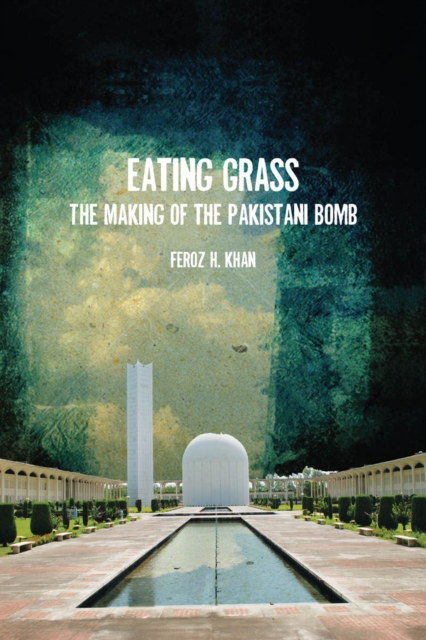
Eating grass : the making of the Pakistani bomb
The history of Pakistan's nuclear program is the history of Pakistan. Fascinated with the new nuclear science, the young nation's leaders launched a nuclear energy program in 1956 and consciously interwove nuclear developments into the broader narrative of Pakistani nationalism. Then, impelled first by the 1965 and 1971 India-Pakistan Wars, and more urgently by India's first nuclear weapon test in 1974, Pakistani senior officials tapped into the country's pool of young nuclear scientists and engineers and molded them into a motivated cadre committed to building the 'ultimate weapon.' The tenacity of this group and the central place of its mission in Pakistan's national identity allowed the program to outlast the perennial political crises of the next 20 years, culminating in the test of a nuclear device in 1998.
Written by a 30-year professional in the Pakistani Army who played a senior role formulating and advocating Pakistan's security policy on nuclear and conventional arms control, this book tells the compelling story of how and why Pakistan's government, scientists, and military, persevered in the face of a wide array of obstacles to acquire nuclear weapons. It lays out the conditions that sparked the shift from a peaceful quest to acquire nuclear energy into a full-fledged weapons program, details how the nuclear program was organized, reveals the role played by outside powers in nuclear decisions, and explains how Pakistani scientists overcome the many technical hurdles they encountered. Thanks to General Khan's unique insider perspective, it unveils and unravels the fascinating and turbulent interplay of personalities and organizations that took place and reveals how international opposition to the program only made it an even more significant issue of national resolve.
Listen to a podcast of a related presentation by Feroz Khan at the Stanford Center for International Security and Cooperation at cisac.stanford.edu/events/recording/7458/2/765 [http://cisac.stanford.edu/events/recording/7458/2/765].
eBook
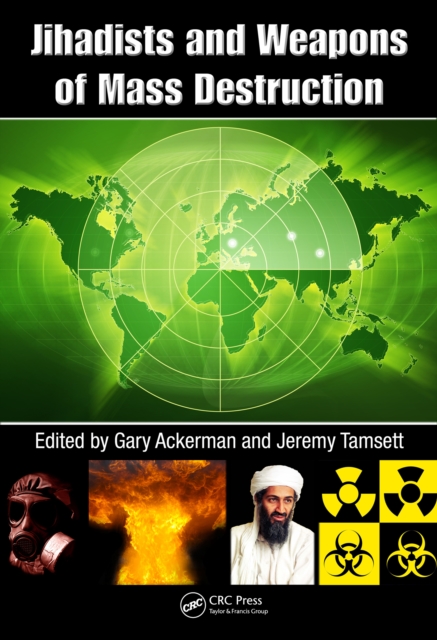
Jihadists and Weapons of Mass Destruction
Written for professionals and policymakers working at the forefront of anti-terrorist efforts, this volume covers the weapons of mass destruction that jihadist terrorists have historically used and are likely to use in the future. Leading international experts examine terrorist ideology, strategy, and target selection. They describe chemical, biological, radiological, and nuclear weapons, and discuss how terrorists might acquire or manufacture them. They also address detection, prevention, and attack mitigation techniques. Devoid of sensationalism, this multidimensional evaluation adds a heightened level of sophistication to our understanding of terrorism.
eBook
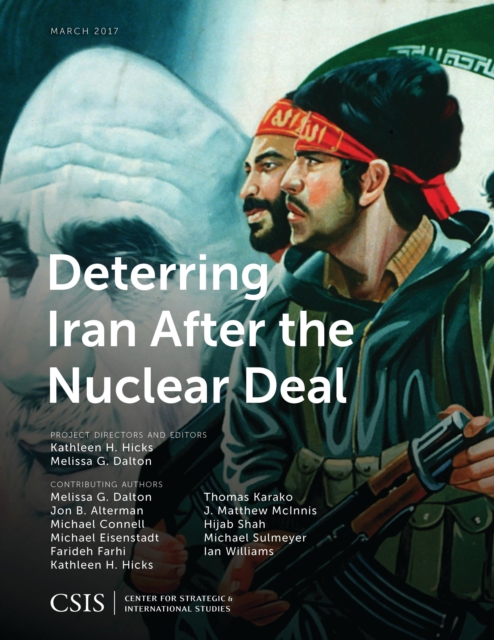
Deterring Iran after the Nuclear deal
Despite a U.S. focus on securing an international deal to curb Iran’s nuclear development for the last several years, the United States lacks a strategy to combat the full range of Iranian activities that threaten the interests of the United States and its allies but fall short of conventional warfare. In this report, CSIS’s International Security Program sets forth analysis of Iran’s strategy, motivations, military, and paramilitary capabilities and evaluates the effects of Iranian behavior on key U.S. partners. The study leverages the expertise of contributing authors at CSIS, the American Enterprise Institute, the Center for Naval Analyses, the Washington Institute for Near East Policy, Harvard University and the University of Hawaii to inform its analysis. The study proposes a framework for deterring Iran, including practical recommendations for the U.S. administration and Congress that would enhance the security of the United States and its allies and partners.
eBook

Iranian Weapons of Mass Destruction
This book provides an in-depth examination of the serious security implications that Iran's nuclear program has on a region that is already plagued by insecurity and conflict. Iranian Weapons of Mass Destruction: The Birth of a Regional Nuclear Arms Race? is an expert insider's look at Iran's current and potential ability to wage both conventional and asymmetrical warfare, and the options available for dealing with a nuclear Iran. Are we on the brink of a regional nuclear arms race in the Middle East? In this urgent volume, Anthony Cordesman and Adam Seitz examine how Iran's nuclear ambitions have already altered security policy for the United States, Iran's neighbors, and the international community. Cordesman and Seitz address the full range of issues related to Iran's quest for nuclear weapons, including its emphasis on medium- and long-range missiles, the decline of Iran's conventional military capabilities, and continued Iranian efforts to undercut the spread of democracy in the region.
eBook

'Nuclear Sword of the Moslem World'?: the United States, Britain, Pakistan, and the 'Islamic Bomb', 1977-80
There exists today considerable fear of nuclear proliferation across the 'Islamic world.' Despite this, an issue that - in part - set the tone for contemporary debates has largely gone under-examined in the scholarly literature. The emergence of the 'Islamic bomb' idea in the late 1970s created a meme that remains with us today. Analysing the roots of this meme allows us to examine its creation and the attitudes of governments towards this alleged emergent nuclear-proliferation threat. This analysis demonstrates that while the media portrayed the 'Islamic world' as violent, undifferentiated, and determined to gain nuclear capability, the US and British governments assessed matters evidentially and came to the conclusion that the 'Islamic bomb' represented a propaganda problem rather than an imminent nuclear-proliferation concern. Attitudes towards the 'Islamic bomb' highlight media and governmental attitudes towards the changing power balances in the Middle East and South Asia during a turbulent and troubled period.
Journal Article
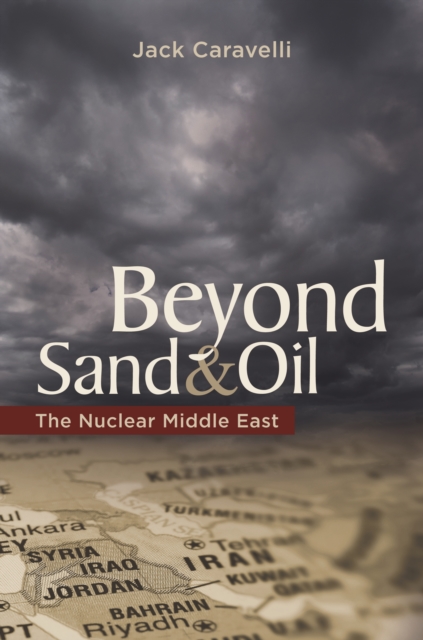
Beyond sand and oil : the nuclear Middle East
This text provides an up-to-date overview of nuclear weapons in the politically fragile Middle East, discussing the evolution and future of national programs, as well as the current challenge posed by Iran. Shortly after World War II, the Middle East became a locus for nations seeking to acquire nuclear missiles and the means to deliver them to their enemies. Israel was the first; Libya and Iraq followed suit. Pakistan now possesses a substantial number of nuclear weapons, to which longtime rival India will no doubt respond. The implications of the political and security dynamics of the Middle East for the United States and other nations are truly profound and sobering. Beyond Sand and Oil provides a nation-by-nation overview of the evolution of nuclear weapons programs in what is likely the world's most politically unstable region. A detailed assessment of Iran's prospects for becoming a nuclear weapons state—and how Israel, the Arab world, and the international community will respond to that outcome—is also included.
eBook