
Catalogue Search | MBRL


Are you sure you want to remove the book from the shelf?

{{itemTitle}}
100
result(s) for
"Islamophobie."
Sort by:

Islamophobia in non-Western online newspapers
The media attention towards Islam has increased recently, but meeting the quality standards in reporting the religion is often of great concern in this regard. This issue has been debated since the aftermath of violent incidents such as the 9/11 attacks in 2001, the Afghanistan War in 2002, the Iraq War in 2003, the Danish cartoon row in 2005, the London bombings in 2005, the Paris attacks in 2015, and the New Zealand shootings in 2017. In reporting violence, the media tend to construct a negative image of Islam, which is likely to reproduce unfounded hostility toward Islam and Muslims, known.
BOOK
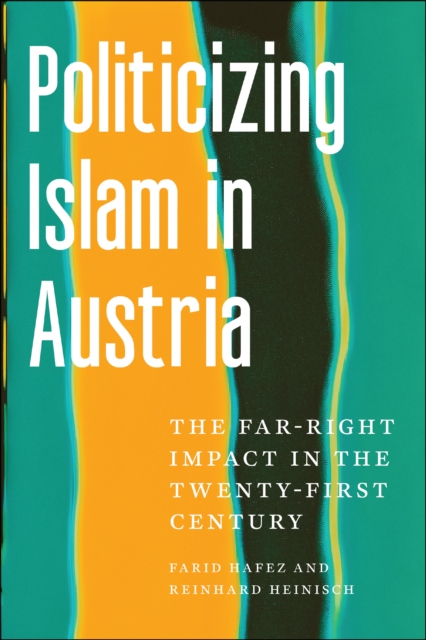
Politicizing Islam in Austria : the far-right impact in the twenty-first century
Among its Continental peers, Austria has stood out for its longstanding state recognition of the Muslim community as early as 1912. A shift has occurred more recently, however, as populist far-right voices within the Austrian government have redirected public discourse and put into question Islam's previously accepted autonomous status within the country. Politicizing Islam in Austria examines this anti-Muslim swerve in Austrian politics through a comprehensive analysis of government policies and regulations, as well as party and public discourses. In their innovative study, Hafez and Heinisch show how the far-right Austrian Freedom Party (FPÖ) adapted anti-Muslim discourse to their political purposes and how that discourse was then appropriated by the conservative center-right Austrian People's Party (ÖVP). This reconfiguration of the political landscape prepared the way for a right-wing coalition government between conservatives and far-right actors that would subsequently institutionalize anti-Muslim political demands and change the shape of the civic conditions and public perceptions of Islam and the Muslim community in the republic.
eBook

Pop Islam
In the West, Islam and Muslim life have been imagined as
existing in an opposing state to popular culture-a frozen faith
unable to engage with the dynamic way popular culture shifts over
time, its followers reduced to tropes of terrorism and enemies of
the state.
Pop Islam: Seeing American Muslims in Popular Media
traces narratives found in contemporary American comic books,
scripted and reality television, fashion magazines, comedy
routines, and movies to understand how they reveal nuanced Muslim
identities to American audiences, even as their accessibility
obscures their diversity. Rosemary Pennington argues that even as
American Muslims have become more visible in popular media and
created space for themselves in everything from magazines to
prime-time television to social media, this move toward \"being
seen\" can reinforce fixed ideas of what it means to be Muslim.
Pennington reveals how portrayals of Muslims in American popular
media fall into a \"trap of visibility,\" where moving beyond
negative tropes can cause creators and audiences to unintentionally
amplify those same stereotypes. To truly understand where American
narratives of who Muslims are come from, we must engage with
popular media while also considering who is allowed to be seen
there-and why.
eBook

Terrified
In July 2010, Terry Jones, the pastor of a small fundamentalist church in Florida, announced plans to burn two hundred Qur'ans on the anniversary of the September 11 attacks. Though he ended up canceling the stunt in the face of widespread public backlash, his threat sparked violent protests across the Muslim world that left at least twenty people dead. InTerrified, Christopher Bail demonstrates how the beliefs of fanatics like Jones are inspired by a rapidly expanding network of anti-Muslim organizations that exert profound influence on American understanding of Islam.
Bail traces how the anti-Muslim narrative of the political fringe has captivated large segments of the American media, government, and general public, validating the views of extremists who argue that the United States is at war with Islam and marginalizing mainstream Muslim-Americans who are uniquely positioned to discredit such claims. Drawing on cultural sociology, social network theory, and social psychology, he shows how anti-Muslim organizations gained visibility in the public sphere, commandeered a sense of legitimacy, and redefined the contours of contemporary debate, shifting it ever outward toward the fringe. Bail illustrates his pioneering theoretical argument through a big-data analysis of more than one hundred organizations struggling to shape public discourse about Islam, tracing their impact on hundreds of thousands of newspaper articles, television transcripts, legislative debates, and social media messages produced since the September 11 attacks. The book also features in-depth interviews with the leaders of these organizations, providing a rare look at how anti-Muslim organizations entered the American mainstream.
eBook

Islamophobia in Higher Education
While Islamophobia was present in our society before 9/11, it has become more pervasive in recent years. This is evidenced by the current social and political climate, hate speech and hate crimes directed at Muslims, and the Supreme Court's upholding of Presidential Proclamation 645 that effectively bans Muslim immigration from coming to the U.S. What does this mean for Muslim students in college, and indeed for institutions of higher education as they navigate law and policy on the one hand and adhere to their mission of achieving inclusive and equitable educational environments on the other? Two thirds of Muslims in the U.S. are vexed with current policy, and there has been an alarming increase in reports of bigotry and discrimination against them since the 2016 presidential elections. The fear of Islam, in general, and Muslims, specifically, not only compels non-Muslims to differentially treat Muslims, but also trade some of their own civil rights and civil liberties under the guise of national security. To address these issues, institutions require a nuanced understanding of laws and policies that institutionalize Islamophobia, and a greater understanding of the diverse college students that identify as Muslim. This book fills what has been a dearth of research that explores the experiences and navigation of Muslim students in colleges and universities, and addresses the even less studied domain of the experiences of Muslim students who hold multiple marginalized identities -- such as race, ethnicity, and LGBTQ status - as well as the intersection of those identities that may create multiple burdens of oppression and discrimination. This book begins by critically engaging with how current laws and policies institutionalize Islamophobia and affect the intersectionality and diversity within the Muslim community. It includes multidisciplinary voices, such as an international human rights attorney, a civil rights attorney, a criminal law attorney, student affairs
eBook

Anders breivik and the rise of Islamophobia
In late July 2011, Norway was struck by the worst terror attacks in its history. In a fertilizer-bomb attack on Government Headquarters in Oslo and a one-hour-long shooting spree at the Labour Party Youth Camp at Utøya, seventy-seven people, mostly teenagers, were killed by Anders Behring Breivik. By targeting young future social democratic leaders, his actions were meant to lead to the downfall of Europe's purportedly multiculturalist elites, thus removing an obstacle to his plans for an ethnic cleansing of Muslims from Europe. In this highly original work, leading Norwegian social anthropologist Sindre Bangstad reveals how Breivik's beliefs were not simply the result of a deranged mind, but rather they are the result of the political mainstreaming of pernicious racist and Islamophobic discourses. These ideas, currently gaining common currency, threaten equal rights to dignity, citizenship and democratic participation for minorities throughout contemporary Europe. An authoritative account of the Norwegian terror attacks and the neo-racist discourse that motivated them.
eBook

Islamophobia as a Form of Radicalisation
Foundations and mechanisms of Islamophobia in the West. Islamophobia as a Form of Radicalisation discusses the scope and fragmented boundaries of Islamophobia as a concept and a sociopolitical reality. The fifteen chapters of this collection cover and connect interdisciplinary research, media content analysis, media discourse analysis, ethnographic research, intersectoral advocacy work, and action research conducted in Belgium, Canada, France, Germany, Poland, Portugal, and Spain. Confronted with an Islamophobia that is growing as a symptom of broader societal malaise in the West, a resistance against it is also arising. It is now a question of better understanding the foundations and mechanisms of this metasolidarity and resistance. Islamophobia as a Form of Radicalisation offers recommendations for urgent consideration by Muslim citizens of Canada and Europe, media professionals, civil society and academic stakeholders, policymakers at the municipal, provincial and federal levels.
Contributors: Abdelwahed Mekki-Berrada (Laval University), Alexander Van Leuven (KU Leuven), Alfonso Corral (San Jorge University), Alfredo Brant (Catholic University of Portugal), Anna Flora Machado (Catholic University of Portugal), Anabelle Vanier-Clément (SHERPA University Institute), Ann Trappers (Foyer VZW), Ans De Nolf (KU Leuven), Antonio Prieto-Andrés (San Jorge University), Ashley S. Montgomery (Concordia University), Camila Arêas (University of Reunion), Cayetano Fernández (San Jorge University), Cécile Rousseau (McGill University), Colin Robineau (University of Reunion), David De Coninck (KU Leuven), Erkan Toguslu (KU Leuven), Helena Cruz Ventura (University Institute of Lisbon), Jennifer A. Selby (Memorial University of Newfoundland and Labrador), Jihène Hichri (Université du Québec à Montreal), Joanna Sozańska (Warsaw School of Economics), Katarzyna Górak-Sosnowska (Warsaw School of Economics), Leen d’Haenens (KU Leuven), Luis Manuel Hernández Aguilar (European University Viadrina Frankfurt Oder), Rawda Harb (Concordia University), Salam El-Majzoub (McGill University), Sobia Shaheen Shaikh (Memorial University of Newfoundland and Labrador), Stefan Mertens (KU Leuven), Vivek Venkatesh (Concordia University) Ebook available in Open Access. This publication is GPRC-labeled (Guaranteed Peer-Reviewed Content).
eBook

Muslims, Islams and Occidental Anxieties
Muslims, Islams and Occidental Anxieties deconstructs our common prejudices about both the compatibility and incompatibility of Muslim and Western civilizations. Rather than reinforcing the well-meant, but misinformed, opinion that the religions all fundamentally teach identical values, we identify what seem different distinctive Muslim \"goods.\" Rather than offering the facile moral choice between an Islam either \"all good\" or \"all bad,\" we argue the case for pluralism derived from Sir Isaiah Berlin. In many cases, Islam thus represents a distinctive system of alternative ethical and religious \"goods\" to those valued in the West. In other cases, differences will remain different and unresolved. Far from necessarily threatening Western moral and religious identity, we explore how the alternative \"goods\" Islam offers the West can enrich our notions of what constitutes \"the good,\" even to the extent of reviving or enlivening certain Western religious practices. Along with instructional guidelines for classroom use, the book in informed by the powerful and intellectually rigorous device of investigative, empathetic \"dialogue\" or \"conversation,\" as articulated by MIT's Sherry Turkle and Oxford's Theodore Zeldin, respectively. This form of dialogue steers clear of the didactic mode and instead recovers the open models of philosophical dialogues pioneered by Plato, Socrates, and the \"tolerant\" Renaissance humanists, such as Erasmus and Jean Bodin.
eBook
