
Catalogue Search | MBRL


Are you sure you want to remove the book from the shelf?

{{itemTitle}}
29
result(s) for
"Ismailites History"
Sort by:

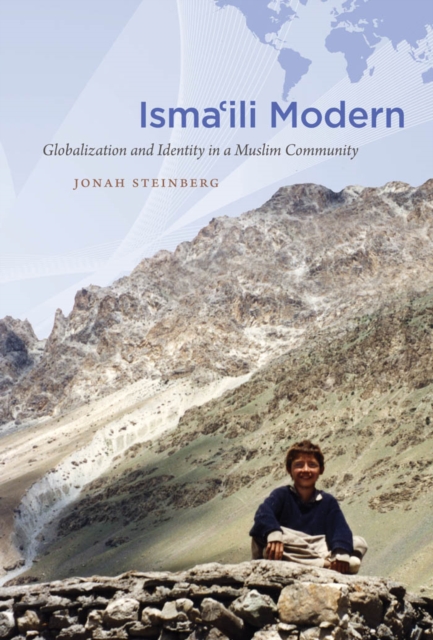
Isma'ili Modern
The Isma'ili Muslims, a major sect of Shi'i Islam, form a community that is intriguing in its deterritorialized social organization. Informed by the richness of Isma'ili history, theories of transnationalism and globalization, and firsthand ethnographic fieldwork in the Himalayan regions of Tajikistan and Pakistan as well as in Europe, Jonah Steinberg investigates Isma'ili Muslims and the development of their remarkable and expansive twenty-first-century global structures.Led by a charismatic European-based hereditary Imam, Prince Karim Aga Khan IV, global Isma'ili organizations make available an astonishing array of services--social, economic, political, and religious--to some three to five million subjects stretching from Afghanistan to England, from Pakistan to Tanzania. Steinberg argues that this intricate and highly integrated network enables a new kind of shared identity and citizenship, one that goes well beyond the sense of community maintained by other diasporic populations. Of note in this process is the rapid assimilation in the postcolonial period of once-isolated societies into the intensively centralized Isma'ili structure. Also remarkable is the Isma'ilis' self-presentation, contrary to common characterizations of Islam in the mass media, as a Muslim society that is broadly sympathetic to capitalist systems, opposed to fundamentalism, and distinctly modern in orientation. Steinberg's unique journey into remote mountain regions highlights today's rapidly shifting meanings of citizenship, faith, and identity and reveals their global scale.
eBook

The Assassin legends : myths of the Ismailis
For hundreds of years Westerners have been fascinated by stories of the Assassins, their mysterious leader and their remote mountain stronghold at Alamut in Northern Iran. The legends first emerged in the 12th and 13th centuries, when Crusaders in Syria came into contact with the Nazari Isma'ilis, one of the communities of Shi'ite Islam who, at the behest of their leader Hassan Sabaa (mythologized as the \"Old Man of the Mountain\"), engaged in dangerous missions to kill their enemies. Elaborated over the years, the tales culminated in Marco Polo's claim that the \"Old Man\" controlled the behaviour of his self-sacrificing devotees through the use of hashish and a secret garden of paradise. So influential were these tales that the word \"assassin\" entered European languages as a common noun meaning \"murderer\"--Http://www.amazon.com (Nov. 19, 2013).
BOOK
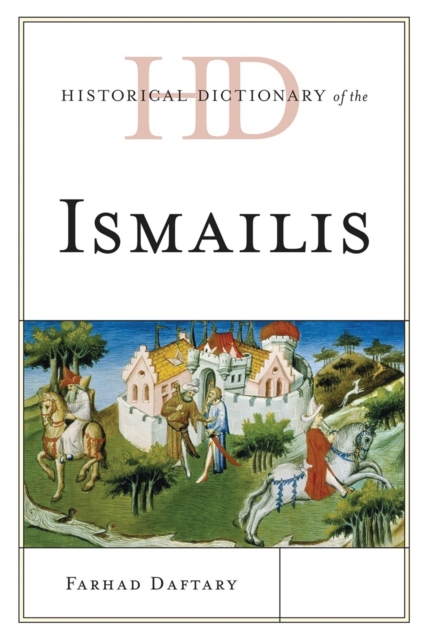
Historical dictionary of the Ismailis
The Ismaili Muslims, who belong to the Shia branch of Islam, live in over 25 different countries around the world, mainly in Asia, Africa and the Middle East. Their history has typically been linked to the history of the various countries in which they live, but the worldwide community is united under Prince Karim Aga Khan, the spiritual leader and 49th Imam of the Ismaili Muslims. Few fields of Islamic studies have witnessed as drastic a change as Ismaili studies, due in part to the recent discovery of numerous historical texts, and author Farhad Daftary makes extensive use of these new sources in the Historical Dictionary of the Ismailis. This comprehensive new reference work is the first of its kind on the Ismailis and presents a summary of the findings of modern scholarship on the Ismaili Shia Muslims and different facets of their heritage. The dictionary covers all phases of Ismaili history as well as the main doctrines of the community. It includes an introductory chapter, which provides a broad historical survey of the Ismailis, followed by alphabetical entries on all major aspects of the community, such as key figures, institutions, traditions, and doctrines. It also contains a chronology, genealogical tables, a glossary, and a substantial bibliography. This book is an excellent access point for students, researchers, and anyone wanting to know more about the Ismailis.
eBook


Mysticism and philosophy in al-Andalus : Ibn Masarra, Ibn al-ʿArabī and the Ismāʿīlī tradition
In Mysticism and Philosophy in al-Andalus, Michael Ebstein underscores the many links that connect the intellectual world of the Andalusi mystics Ibn Masarra (269/883-319/931) and Ibn al-ʿArabi (560/1165-638/1240) to the Ismāʿīlī tradition.
eBook


Mysticism and Philosophy in al-Andalus: Ibn Masarra, Ibn al-?Arabi and the Isma?ili Tradition
Muslim Spain gave rise to two unusual figures in the mystical tradition of Islam: Ibn Masarra (269/883-319/931) and Ibn al-?Arabi (560/1165-638/1240). Representing, respectively, the beginning and the pinnacle of Islamic mysticism in al-Andalus, Ibn Masarra and Ibn al-?Arabi embody in their writings a type of mystical discourse which is quite different from the Sufi discourse that evolved in the Islamic east during the 9th-12th centuries.In Mysticism and Philosophy in al-Andalus, Michael Ebstein points to the Isma?ili tradition as one possible source which helped shape the distinct intellectual world from which both Ibn Masarra and Ibn al-?Arabi derived. By analyzing their writings and the works of various Isma?ili authors, Michael Ebstein unearths the many links that connect the thought of Ibn Masarra and Ibn al-?Arabi to the Isma?ili tradition.
eBook

The Ismailis in the colonial era : modernity, empire and Islam
From the early nineteenth century onwards the Nizari Ismailis were transformed from a minor and obscure sect surrounded by ill-informed historical legend, into a small but highly organised temporal and religious movement with global political and economic influence. Much of this remarkable change in fortune can be traced to the hitherto little known diplomatic interaction between the British Empire, and later the British Commonwealth, and the Nizari Ismailis, from 1839 to 1969. Marc van Grondelle's book, based on painstaking archival research, examines the processes and interactions which led to the modernisation and successful co-optation by the British government of this comparatively small branch of Shi'a Islam. The author poses several key questions regarding the wider developing relationship between movements in contemporary Islam and 'The West'. In these increasingly polarised times, his discussion of the effective co-optation of a Muslim group to the mutual benefit of both the former and British foreign and colonial policy is timely and suggestive. He investigates the processes and actions that shaped the Ismails' relationship with London, and the social and political conditions that shaped this realignment. -- Book jacket.
Book
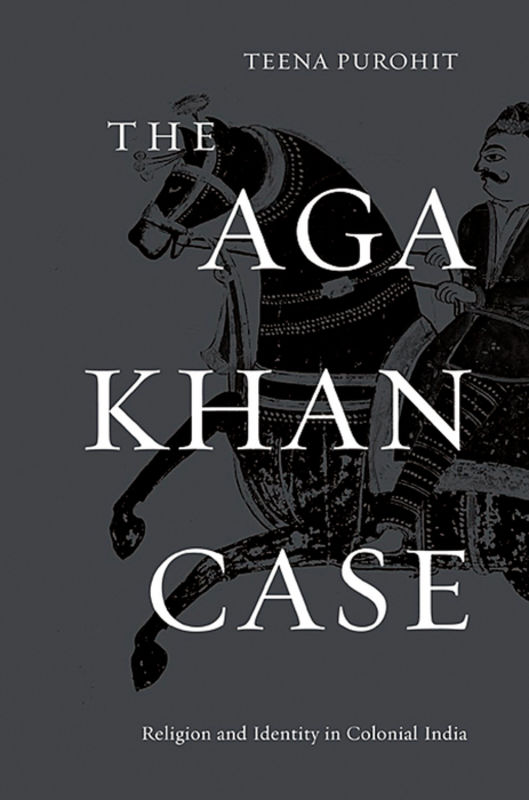
The Aga Khan case : religion and identity in colonial India
An Arab-centric perspective dominates the West's understanding of Islam. Purohit presses for a view of Islam as a heterogeneous religion that has found a variety of expressions in local contexts. The Ismaili community in colonial India illustrates how much more complex Muslim identity is, and always has been, than the media would have us believe.
eBook