
Catalogue Search | MBRL


Are you sure you want to remove the book from the shelf?

{{itemTitle}}
582
result(s) for
"Israel -- Foreign public opinion, American"
Sort by:

Inter/nationalism : decolonizing Native America and Palestine
\"According to Steven Salaita, the seemingly disparate fields of Palestinian studies and American Indian studies have more in common than one may think. In Inter/nationalism, Salaita argues that American Indian and Indigenous studies must be more central to the scholarship and activism focusing on Palestine. Salaita offers [an] ... inside account of the Boycott, Divestment, and Sanctions (BDS) movement--which, among other things, aims to end Israel's occupation of Palestinian land. In doing so, he emphasizes BDS's significant potential as an organizing community as well as its importance in the creation of intellectual and political communities that put Natives and other colonized peoples such as Palestinians into conversation\"-- Provided by publisher.
Book
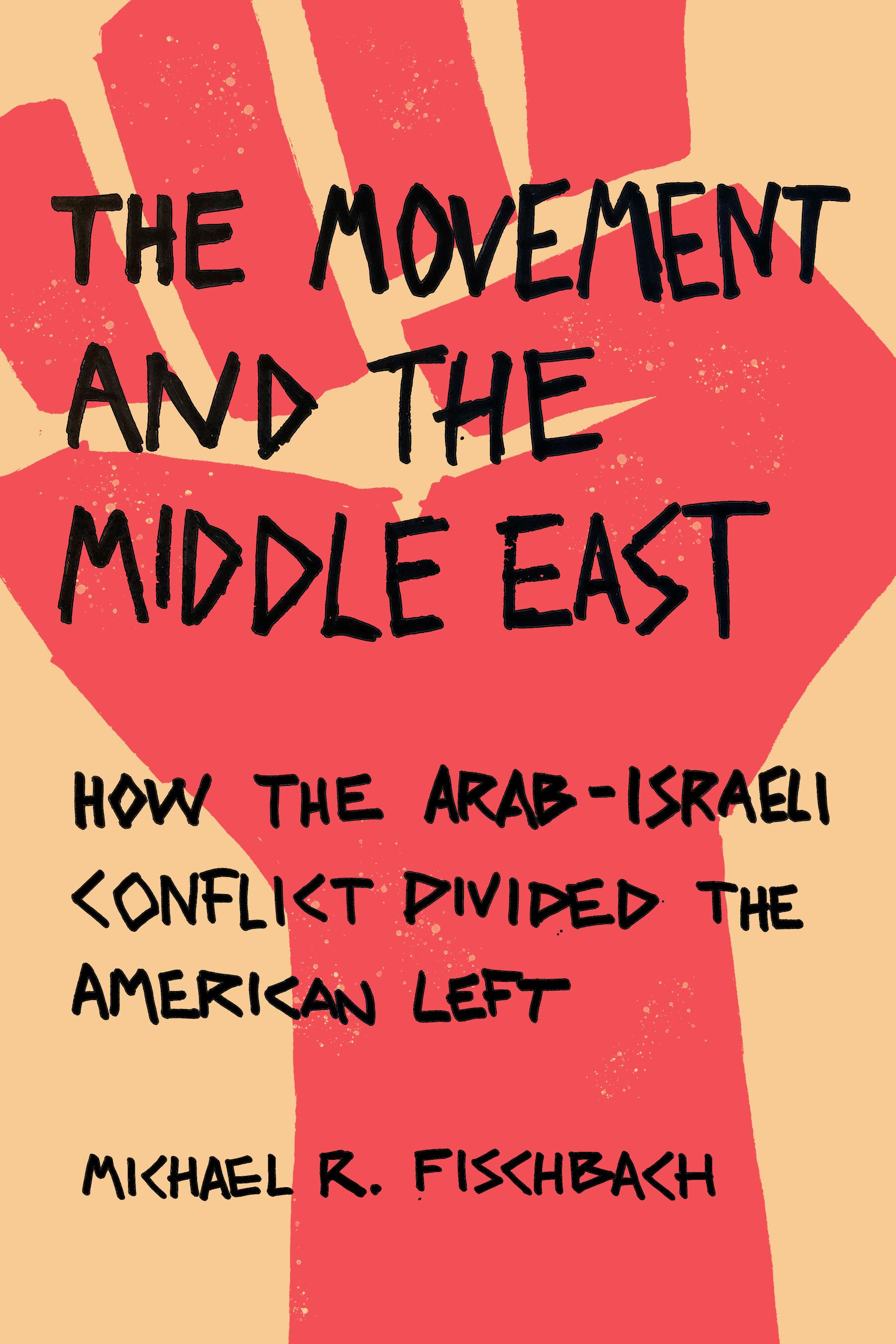
The movement and the Middle East : how the Arab-Israeli conflict divided the American left
The Arab-Israeli conflict constituted a serious problem for the American Left in the 1960s: pro-Palestinian activists hailed the Palestinian struggle against Israel as part of a fundamental restructuring of the global imperialist order, while pro-Israeli leftists held a less revolutionary worldview that understood Israel as a paragon of democratic socialist virtue. This intra-left debate was in part doctrinal, in part generational. But further woven into this split were sometimes agonizing questions of identity. Jews were disproportionately well-represented in the Movement, and their personal and communal lives could deeply affect their stances vis-à-vis the Middle East. The Movement and the Middle East offers the first assessment of the controversial and ultimately debilitating role of the Arab-Israeli conflict among left-wing activists during a turbulent period of American history. Michael R. Fischbach draws on a deep well of original sources—from personal interviews to declassified FBI and CIA documents—to present a story of the left-wing responses to the question of Palestine and Israel. He shows how, as the 1970s wore on, the cleavages emerging within the American Left widened, weakening the Movement and leaving a lasting impact that still affects progressive American politics today.
eBook

“We’re Not Friends Anymore Because I Support Israel”: Evolving Beliefs about Israel Politics from Elementary to Middle School
Drawing upon a longitudinal study tracking a group of Jewish children from the start of elementary school (ages 5–6) through the end of middle school (ages 13–14), this article examines how young Jews develop an initial understanding of Israeli politics. It outlines four distinct stages in the development of political understanding. First, in early elementary school, children develop an awareness of civic issues at a stage that might be understood as pre-political. Second, in the upper elementary grades, children develop new knowledge of political issues and political leaders in the USA, but their understanding of the parallels in Israel often lags behind their developmental capacities for understanding political systems. Next, in the transition from late childhood to early adolescence, this gap in children’s understanding begins to narrow as tweens and young teens begin to make sense of politics in Israel and politics about Israel in the USA. Fourth, as children near the end of middle school, many begin to understand the ways that their own personal decisions can also be political, especially as they attempt to navigate how Israel functions in online, often hostile discourse.
Journal Article
The Young American Left and Attitudes About Israel
Over the last two decades, a rift has emerged on the US political left regarding the State of Israel. Public polling has shown that young people and the ideological far left have developed distinctly negative views toward Israel. In the fall of 2020, we surveyed 3500 US adults, including oversampling of 2500 adults aged 18–30. We first explore the young left’s views toward Israel in comparison to how they view other foreign countries, and in comparison to how older adults and more conservative adults view Israel. We then ask whether their negative views toward Israel are explained by an issue prioritization of the Israel/Palestine conflict (no). Finally, we ask whether the young left’s negative attitudes toward Israel are focused on Israel’s politics and government or on other features of the country, such as its cultures and religions (it’s both). Overall, the young left evaluates Israel like it evaluates US adversaries such as Russia and Iran, whereas the center and right evaluate Israel like they evaluate other US allies, such as Mexico and India.
Journal Article
From the Mouths of Children: Widening the Scope and Shifting the Focus of Understanding the Relationships Between American Jews and Israel
Scholars have spent considerable effort to uncover and explain the unique ways that contemporary American Jews think and feel about Israel, yet the voices of American Jewish children have been conspicuously absent from most research. American Jewish children—like the adults in their lives—have beliefs, opinions, and thoughts about Israel and its role in American Jewish life. This article makes two distinct yet interrelated arguments about the role of children in research on contemporary American Jews. The first is that children ought to be included in research about American Judaism. Second, the inclusion of children in research both widens the scope and shifts the focus of understanding American Jewish relationships to Israel. Children's participation in research demonstrates how American Jews develop relationships with Israel over the course of a lifetime. In addition, the methodological approaches that allow for the inclusion of children in research shift the focus of understanding away from a \"deficit model\" that measures participants' knowledge and connection against an existing ledger, and towards an \"inventory model\" that takes stock of participants' cognitive and emotional warehouses. This shift is essential for understanding what Israel means in the lives of American Jews of all ages.
Journal Article

Can We Talk?
Universities are places where many students will feel uncomfortably challenged in their cherished identities, if those are identities of privilege. On December 11, 2019, Jewish identity was singled out for special protection against harassment and discrimination under Title VI by President Trump’s executive order, with anti-Jewish harassment defined as including statements such as “the Jewish people do not have a right to self-determination” and “Israel is a racist endeavor.” Singling out Jewish identity for protection by a centralized authority, regardless of what one thinks about the Jewish state, has been a favored tactic of Jewish survival, as Benzion Netanyahu long ago pointed out, and it is dangerous because it makes all Jews the target of resentment by other, lesser protected groups, and because it leaves Jews without political allies if the centralized power abandons them. Furthermore, it runs against the political principles of the pluralistic democracies in which Jews are best able to flourish when they live outside the ethnonational majoritarian Jewish state. Weaponizing Title VI by creating a special protection for Jews, whatever one’s views of the Jewish state, is not a long-term strategy for Jewish communal flourishing in America. The American and Israeli Jewish communities should recognize that there are two kinds of Jewish politics: one that fits Jewish life in a pluralistic democracy, and another that fits life in a ethnonational majoritarian democracy. It is best not to mix these two forms of politics, even if in the Trump era they seemed to have become united.
Journal Article
Negotiating Critical Analysis and Collective Belonging: Jewish American Students Write the History of Israel
American Jews, particularly those who are highly engaged in Jewish communal life, learn many stories about Israel's past. They learn the story of Israel as the culmination of a heroic two thousand year struggle and about the waves of immigrants who came to the Holy Land with nothing and made the desert bloom. But when these stories are subjected to critical scrutiny, they may fail to hold up. This study analyzed 438 short narratives of the history of Israel written by Jewish American high school students attending Jewish day schools. Their responses suggested that many students are aware of the tensions between various historical accounts and adopt different strategies to negotiate between critical historical analysis and Jewish collective belonging. Although there were no differences in the content of the accounts by students' religious denomination or prior study of Israel's history, students adopted different approaches to negotiating critical analysis and collective belonging. Some students told stories of Jewish heritage without taking into account other possible perspectives. Some students engaged with challenges to their inherited stories but only to dispute them. Finally, some students managed to synthesize multiple narratives together while still using a Jewish perspective to frame their account. This last strategy suggests that students can be historically sophisticated without abandoning a commitment to their heritage.
Journal Article

Inter/Nationalism
\"The age of transnational humanities has arrived.\" According to Steven Salaita, the seemingly disparate fields of Palestinian Studses and American Indian studies have more in common than one may think. InInter/Nationalism,Salaita argues that American Indian and Indigenous studies must be more central to the scholarship and activism focusing on Palestine.
Salaita offers a fascinating inside account of the Boycott, Divestment, and Sanctions (BDS) movement-which, among other things, aims to end Israel's occupation of Palestinian land. In doing so, he emphasizes BDS's significant potential as an organizing entity as well as its importance in the creation of intellectual and political communities that put Natives and other colonized peoples such as Palestinians into conversation. His discussion includes readings of a wide range of Native poetry that invokes Palestine as a theme or symbol; the speeches of U.S. President Andrew Jackson and early Zionist thinker Ze'ev Jabotinsky; and the discourses of \"shared values\" between the United States and Israel.
Inter/Nationalismseeks to lay conceptual ground between American Indian and Indigenous studies and Palestinian studies through concepts of settler colonialism, indigeneity, and state violence. By establishing Palestine as an indigenous nation under colonial occupation, this book draws crucial connections between the scholarship and activism of Indigenous America and Palestine.
eBook
American Jewish Children's Thoughts and Feelings About the Jewish State: Laying the Groundwork for a Developmental Approach to Israel Education
This study presents the first longitudinal data on American Jewish children's thoughts and feelings about Israel, highlighting children's development between kindergarten and second grade. Drawing upon interviews and photo and music elicitation exercises with Jewish elementary school students, the research examines both children's conceptual understandings of Israel—what they imagine it to be—and their feelings toward Israel. The research finds that throughout the early elementary grades, children think of Israel as a place where both good and bad can happen—a duality that remains relatively stable over time. Yet their feelings about Israel change over time, as consistently happy emotions give way to a wider range of affective responses to Israel, including worry, fear, and sadness. This manuscript examines both children's static conceptions of Israel and their changing feelings about the Jewish state, addressing the implications of these findings for elementary school Israel education and Jewish communal policy toward youth engagement with Israel.
Journal Article

From Bipartisanship to Dysergia: Trends in Congressional Actions Toward Israel
Support for Israel among members of the US Congress has been a puzzling exception to congressional involvement and interest in the realm of foreign policy. Members of Congress have consistently debated and passed resolutions in support of Israel and in repudiation of its foes, showing strong bipartisan support for Israel. This paper systematically examines congressional involvement by identifying trends in congressional actions concerning Israel since 1973. The data include all bills and resolutions that deal specifically with Israel. We pay attention to the quantity, type of bills and resolutions, and their support to illustrate a detailed account of the overall changes in the level and nature of support for Israel. We find an active and bipartisan Congress concerning Israel that follows the general trends of congressional involvement in international affairs, and identify a recent development in congressional support for Israel where both parties are becoming less cooperative in expressing their support.
Journal Article