
Catalogue Search | MBRL


Are you sure you want to remove the book from the shelf?

{{itemTitle}}
35
result(s) for
"Israel-Arab War, 1967 -- Egypt"
Sort by:


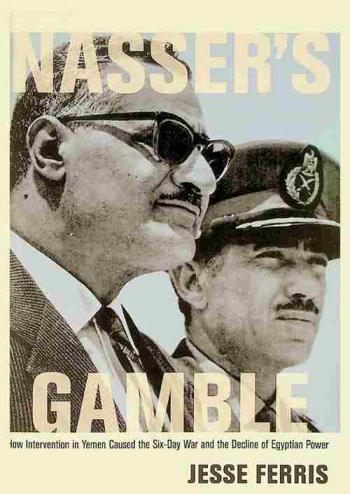
Nasser's Gamble
Nasser's Gambledraws on declassified documents from six countries and original material in Arabic, German, Hebrew, and Russian to present a new understanding of Egypt's disastrous five-year intervention in Yemen, which Egyptian president Gamal Abdel Nasser later referred to as \"my Vietnam.\" Jesse Ferris argues that Nasser's attempt to export the Egyptian revolution to Yemen played a decisive role in destabilizing Egypt's relations with the Cold War powers, tarnishing its image in the Arab world, ruining its economy, and driving its rulers to instigate the fatal series of missteps that led to war with Israel in 1967.
Viewing the Six Day War as an unintended consequence of the Saudi-Egyptian struggle over Yemen, Ferris demonstrates that the most important Cold War conflict in the Middle East was not the clash between Israel and its neighbors. It was the inter-Arab struggle between monarchies and republics over power and legitimacy. Egypt's defeat in the \"Arab Cold War\" set the stage for the rise of Saudi Arabia and political Islam.
Bold and provocative,Nasser's Gamblebrings to life a critical phase in the modern history of the Middle East. Its compelling analysis of Egypt's fall from power in the 1960s offers new insights into the decline of Arab nationalism, exposing the deep historical roots of the Arab Spring of 2011.
eBook
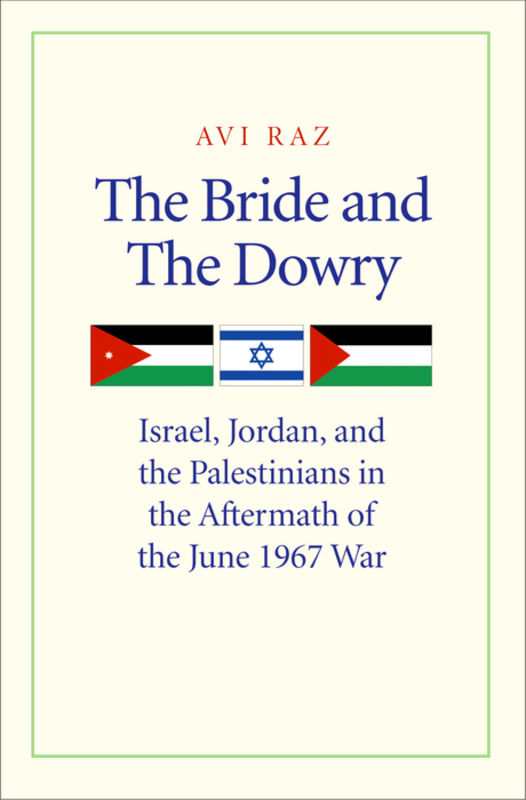
The Bride and the Dowry
Israel's victory in the June 1967 Six Day War provided a unique opportunity for resolving the decades-old Arab-Zionist conflict. Having seized the West Bank, the Gaza Strip, the Sinai Peninsula, and the Golan Heights, Israel for the first time in its history had something concrete to offer its Arab neighbors: it could trade land for peace. Yet the political deadlock persisted after the guns fell silent. This book sets out to find out why.
Avi Raz places Israel's conduct under an uncompromising lens. He meticulously examines the critical two years following the June war and substantially revises our understanding of how and why Israeli-Arab secret contacts came to naught. Mining newly declassified records in Israeli, American, British, and UN archives, as well as private papers of individual participants, Raz dispels the myth of overall Arab intransigence and arrives at new and unexpected conclusions. In short, he concludes that Israel's postwar diplomacy was deliberately ineffective because its leaders preferred land over peace with its neighbors. The book throws a great deal of light not only on the post-1967 period but also on the problems and pitfalls of peacemaking in the Middle East today.
eBook

The Nixon Administration and the Middle East Peace Process, 1969-1973
The Yom Kippur War was a watershed moment in Israeli society and a national trauma whose wounds have yet to heal some four decades later. In the years following the war many studies addressed the internal and international political background prior to the war, attempting to determine causes and steps by political players and parties in Israel, Egypt and the United States. But to date there has been no comprehensive study based on archival materials and other primary sources. Classified documents from that period have recently become available and it is now possible to examine in depth a crucial period in Middle East history generally and Israeli history in particular. The authors provide a penetrating and insightful viewpoint on the question that lies at the heart of the Israeli polity and military: Was an opportunity missed to prevent the outbreak of the Yom Kippur War? The book provides surprising answers to long-standing issues: How did National Security Adviser, Henry Kissinger, succeed in torpedoing the efforts of the State Department to bring about an interim agreement between Israel and Egypt in 1971?; Would that agreement have allowed Israel to hold on to most of the Sinai Peninsula for many years and at the same time avert the outbreak of the war; Did Golda Meir reject any diplomatic initiative that came up for discussion in the years preceding the war?; Was the White House's Middle East policy throughout 1973 a catalyst for war breaking out?
eBook
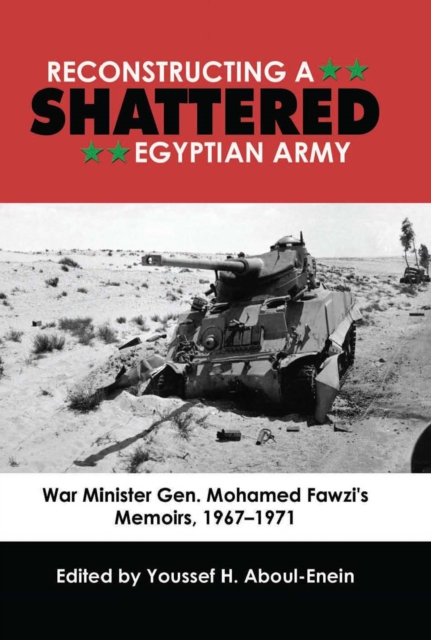
Reconstructing a shattered Egyptian Army : War Minister Gen. Mohamed Fawzi's memoirs, 1967-1971
Central to CDR Youssef Aboul-Enein's career has been the mission to introduce America's military leaders to Arabic works of military significance. Just like American military leaders who had an obsession for all things Russian during the Cold War in order to understand the Soviets, the war on al-Qaida and the complex nuances of the Arab Spring demand a deeper comprehension of the Middle East from direct sources. The memoirs of General Mohamed Fawzi, Egyptian War Minister from 1967 to 1971, were first published in 1984, but his work has not ben translated and remains undiscovered by English speaking readers. Many in the United States Armed Services have yet to be introduced to his ideas, perspectives, and the seeds by which the 1973 Yom-Kippur War were laid. In this new contribution to his series of essays written for Infantry Journal, Aboul-Enein has determined to bring to life the military thoughts of this Arab War Minister. This book is a joint Infantry-Naval Institute Press project that has condensed the entire collection of essays on Fawzi to a single volume, to provide future generations of America's military leaders with access his ideas. Fawzi is unique among Arab generals for his scathing critique of his own armed forces, and from his critical examination of what went wrong in 1967, he was able to slowly resurrect the Egyptian Armed Forces to a level that enabled Sadat to consider an offensive in 1973. This Egyptian general will provide insights into the level of Soviet cooperation and military aid provided Egypt after the 1967 Six-Day War, known simply in Arabic by one word, al-Naksah (the setback), not to be confused with the 1948 Arab-Israeli War known by one word, al-Nakbah (the catastrophe). While Fawzi lapses into conspiracy, indulges in wishful thinking, and employs the language of pan-Arabism on occasion, much like Soviet military
theorists couched their ideas in Marxist-Leninist rhetoric, this will not stop serious American students of war from recognizing his brilliance about the lessons learned from the crushing defeat of Egyptian arms in the 1967 Six-Day War.
eBook

A history of the Egyptian intelligence service : a history of the Mukhabarat, 1910-2009
This book analyzes how the Egyptian intelligence community has adapted to shifting national security threats since its inception 100 years ago. Starting in 1910, when the modern Egyptian intelligence system was created to deal with militant nationalists and Islamists, the book shows how the security services were subsequently reorganized, augmented and centralized to meet an increasingly sophisticated array of challenges, including fascism, communism, army unrest, Israel, France, the United Kingdom, conservative Arab states, the Muslim Brotherhood and others. The book argues that studying Egypt's intelligence community is integral to our understanding of that country's modern history, regime stability and human rights record. Intelligence studies have been described as the 'missing dimension' of international relations. It is clear that intelligence agencies are pivotal to understanding the nature of many Arab regimes and their decision-making processes, and there is no published history of modern Egyptian intelligence in either a European language or in Arabic, though Egypt has the largest and arguably most effective intelligence community in the Arab world. This book will fill a clear gap in the intelligence literature and will be of much interest to students of intelligence studies, Middle Eastern politics, international security and IR in general.
eBook

Imperialism and the Arab-Israeli Conflict: Revisions in Matzpen's Historical Perspective
The Israeli Socialist Organization (ISO) known later as Matzpen was founded in 1962 but did not earn much notice until after the 1967 Six- Day War when it attracted great attention, chiefly for being the first Israeli organization to speak against Israel abroad. The rhetoric that characterized Matzpen was largely based on a historical analysis of the Arab-Israeli conflict. The article argues that Matzpen underwent significant ideological shifts that influenced and at times changed the way it perceived historical events retroactively. A systematic reading of Matzpen's publications from its seminal book in 1961 until the end of 1972, reveal that unlike the common notion, transitions in Matzpen's view regarding the nature of Zionism and its relation to the Western powers in the Middle Eastern context, occurred also before the Six-Day War. The War was merely one important turning point in a process of de-Zionization.
Journal Article
La guerre des Six Jours
Découvrez enfin tout ce qu'il faut savoir sur la guerre des Six Jours en moins d'une heure!
Le 5 juin 1967, les Israéliens lancent une nouvelle attaque contre l'Égypte suite au blocus du détroit de Tiran. En trois heures, l'aviation égyptienne est détruite. Outré, l'ensemble du monde arabe condamne aussitôt l'offensive et s'unit pour apporter son soutien à l'Égypte. La bataille ne fait que commencer. Ce livre vous permettra d'en savoir plus sur:
• Le contexte politique et social de l'époque
• Les acteurs majeurs du conflit
• Le déroulement de la guerre des Six Jours et sa chronologie (carte à l'appui)
• Les raisons de la victoire israélienne
• Les répercussions de la guerre Le mot de l'éditeur:
« Dans ce numéro de la collection « 50MINUTES|Grandes Batailles », Héloïse Malisse présente l'un des conflits modernes qui occupent le plus l'actualité: le conflit israélo-arabe. Grâce à ses nombreuses explications et à la mise en contexte de la guerre, elle permet à chacun de mieux comprendre cet épisode qui a permis à Israël de quadrupler son territoire, obtenant ainsi une position dominante par rapport à ses voisins arabes. » Stéphanie DagrainÀ PROPOS DE LA SÉRIE 50MINUTES | Grandes Batailles
La série « Grandes Batailles » de la collection « 50MINUTES » aborde plus de cinquante conflits qui ont bouleversé notre histoire. Chaque livre a été pensé pour les lecteurs curieux qui veulent tout savoir sur une bataille, tout en allant à l'essentiel, et ce en moins d'une heure. Nos auteurs combinent les faits, les analyses et les nouvelles perspectives pour rendre accessibles des siècles d'histoire.
eBook

The 1967 Arab-Israeli War
The June 1967 war was a watershed in the history of the modern Middle East. In six days, the Israelis defeated the Egyptian, Syrian and Jordanian armies, seizing large portions of their territories. Two veteran scholars of the Middle East bring together some of the most knowledgeable experts in their fields to reassess the origins and the legacies of the war. Each chapter takes a different perspective from the vantage point of a different participant, those that actually took part in the war and also the world powers that played important roles behind the scenes. Their conclusions make for sober reading. At the heart of the story was the incompetence of the Egyptian leadership and the rivalry between various Arab players who were deeply suspicious of each other's motives. Israel, on the other side, gained a resounding victory for which, despite previous assessments to the contrary, there was no master plan.
eBook