
Catalogue Search | MBRL


Are you sure you want to remove the book from the shelf?

{{itemTitle}}
32
result(s) for
"Istanbul (Turkey) Civilization."
Sort by:

An Armchair Traveller's History of Istanbul
The author is an old Istanbul hand who has seen it change over the years from a provincial backwater to today's vibrant metropolis. With Tillinghast as a guide through Istanbul's cafés, mosques and palaces, and along its streets and waterways, readers will feel at home both in the Constantinople of bygone days and on the streets of the modern town.
eBook

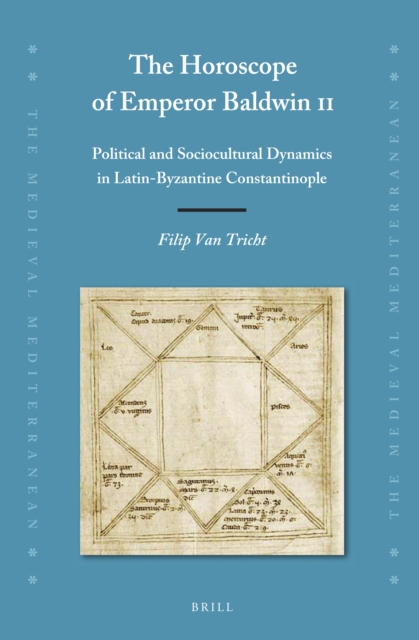
The Horoscope of Emperor Baldwin II
In The Horoscope of Emperor Baldwin II Filip Van Tricht presents a microstudy of political, social and cultural life in Latin-Byzantine Constantinople and Romania. A 'new' set of sources is used to question the traditionally negative view of the Byzantine capital under Latin rule. Combined with an analysis of other underused historical materials, mid-13th century Latin-Byzantine Constantinople is redefined as a city that—in spite of the Western conquest during the Fourth Crusade—remained dynamic, with vibrant internal and international politics, and with interesting developments in the social, religious, artistic, and scientific spheres. Against the background of a shared Roman past the metropolis on the Bosporus became a fascinating laboratory of Latin-Byzantine interaction.
eBook

To the city : life and death along the ancient walls of Istanbul
Caught between two seas and two continents, with a contested past and an imperiled future, Istanbul represents the precipitous moment civilizations around the world are currently facing. 'To the City' seamlessly blends two narratives: the fears and hopes of the present-day inhabitants, and the story of Ottoman Sultan Mehmet II's siege and capture of the city in 1453. That event still looms large in Turkey, as Recep Tayyip Erdogan like a latter-day sultan invokes its memory as part of his effort to transform Turkey in an echo of its imperial past.
Book

Geoffroy of Villehardouin, Marshal of Champagne
Geoffroy of Villehardouin, Marshal of
Champagne by Theodore Evergates traces the
remarkable life of Geoffroy of Villehardouin (c. 1148-c. 1217) from
his earliest years in Champagne through his last years in Greece
after the crusade.
The fourth son of a knight, Geoffroy became marshal of
Champagne, principal negotiator in organizing the Fourth Crusade,
chief of staff of the expedition to and conquest of Constantinople,
garrison commander of Constantinople and, in his late fifties,
field commander defending the Latin settlement in the Byzantine
empire against invading Bulgarian armies and revolting Greek
cities. Known for his diplomatic skills and rectitude, he served as
the chief military advisor to Count Thibaut III of Champagne and
later to Emperor Henry of Constantinople.
Geoffroy is remarkable as well for dictating the earliest war
memoir in medieval Europe, which is also the earliest prose
narrative in Old French. Addressed to a home audience in Champagne,
he described what he did, what he saw, and what he heard during his
eight years on crusade and especially during the fraught period
after the conquest of Constantinople. His memoir, The Book of
the Conquest of Constantinople , furnishes a commander's
retrospective account of the main events and inner workings of the
crusade-the innumerable meetings and speeches, the conduct (not
always commendable) of the barons, and the persistent discontent
within the army-as well as a celebration of his own deeds as a
diplomat and a military commander.
eBook

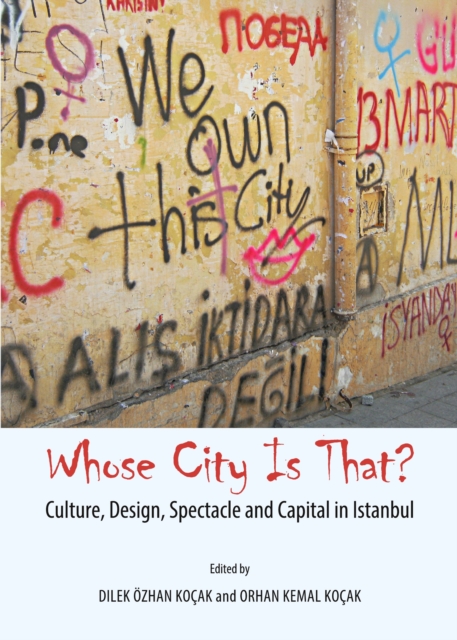
Whose City Is That? Culture, Design, Spectacle and Capital in Istanbul
Whose City is That? shows that Istanbul is produced not only by strong and systematic efforts, corporate influences and/or marketing activities, but also by individual contributions and coincidences. As such, the primary purpose of this book is to find the answer of to whom Istanbul does belong, presenting the reader with the richness of human experience and the practice of everyday life. The chapters in this book are therefore focused on the physical and economic dimensions, as well as the i.
eBook


From Constantinople to the Frontier
From Constantinople to the Frontier: The City and the Cities provides twenty-five articles addressing the concept of centres and peripheries in the late antique and Byzantine worlds, focusing specifically on urban aspects of this paradigm. Spanning from the fourth to thirteenth centuries, and ranging from the later Roman empires to the early Caliphate and medieval New Rome, the chapters reveal the range of factors involved in the dialectic between City, cities, and frontier.Including contributions on political, social, literary, and artistic history, and covering geographical areas throughout the central and eastern Mediterranean, this volume provides a kaleidoscopic view of how human actions and relationships worked with, within, and between urban spaces and the periphery, and how these spaces and relationships were themselves ideologically constructed and understood.Contributors are Walter F. Beers, Lorenzo M. Bondioli, Christopher Bonura, Lynton Boshoff, Averil Cameron, Jeremiah Coogan, Robson Della Torre, Pavla Drapelova, Nicholas Evans, David Gyllenhaal, Franka Horvat, Theofili Kampianaki, Maximilian Lau, Valeria Flavia Lovato, Byron MacDougall, Nicholas S.M. Matheou, Daniel Neary, Jonas Nilsson, Cecilia Palombo, Maria Alessia Rossi, Roman Shliakhtin, Sarah C. Simmons, Andrew M. Small, Jakub Sypianski, Vincent Tremblay and Philipp Winterhager.
eBook