
Catalogue Search | MBRL


Are you sure you want to remove the book from the shelf?

{{itemTitle}}
783
result(s) for
"Italian fiction"
Sort by:

Italian Women Writers
Post-Unification Italy saw an unprecedented rise of the middle classes, an expansion in the production of print culture, and increased access to education and professions for women, particularly in urban areas. Although there was still widespread illiteracy, especially among women in both rural and urban areas, there emerged a generation of women writers whose domestic fiction and journalism addressed a growing female readership. This study looks at the work of three of the most significant women writers of the period: La Marchesa Colombi, Neera, and Matilde Serao. These writers, whose works had been largely forgotten for much of the last century, only to be rediscovered by the Italian feminist movement of the 1970s, were widely read and received considerable critical acclaim in their day. In their realist fiction and journalism, these professional women writers documented and brought to light the ways in which women participated in everyday life in the newly independent Italy, and how their experiences differed profoundly from those of men.
Katharine Mitchell shows how these three authors, while hardly radical emancipationists, offered late-nineteenth-century readers an implicit feminist intervention and a legitimate means of approaching and engaging with the burning social and political issues of the day regarding “the woman question” – women’s access to education and the professions, legal rights, and suffrage. Through close examinations of these authors and a selection of their works – and with reference to their broader artistic, socio-historical, and geo-political contexts – Mitchell not only draws attention to their authentic representations of contemporary social and historical realities, but also considers their important role as a cultural medium and catalyst for social change.
eBook

The Mirage of America in Contemporary Italian Literature and Film
The Mirage of America in Contemporary Italian Literature and Film explores the use of images associated with the United States in Italian novels and films released between the 1980s and the 2000s. In this study, Barbara Alfano looks at the ways in which the individuals portrayed in these works – and the intellectuals who created them – confront the cultural construct of the American myth. As Alfano demonstrates, this myth is an integral part of Italians’ discourse to define themselves culturally – in essence, Italian intellectuals talk about America often for the purpose of talking about Italy.
The book draws attention to the importance of Italian literature and film as explorations of an individual’s ethics, and to how these productions allow for functioning across cultures. It thus differentiates itself from other studies on the subject that aim at establishing the relevance and influence of American culture on Italian twentieth-century artistic representations.
eBook
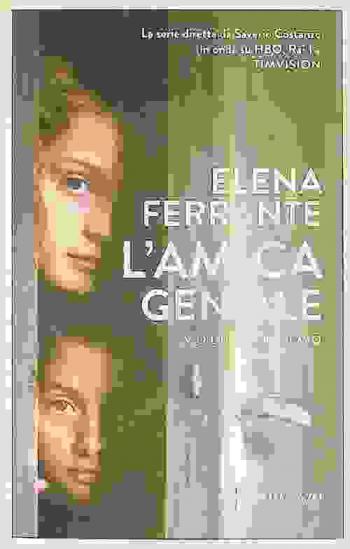
L'amica geniale : Infanzia, adolescenza
Care lettrici, cari lettori, provate a leggere questo libro e vorrete che non finisca mai. Elena Ferrante, con il suo nuovo romanzo, torna a sorprenderci, a spiazzarci, regalandoci una narrazione-fiume cui ci si affida come quando si fa un viaggio con un tale piacevole agio, con un tale intenso coinvolgimento, che la meta più è lontana e meglio è. L'autrice abbandona la piccola, densa storia privata e si dedica a un vasto progetto di scrittura che racconta un'amicizia femminile, quella tra Lila Cerullo ed Elena Greco, dall'infanzia a Napoli negli anni Cinquanta del secolo scorso fino a oggi.
Book
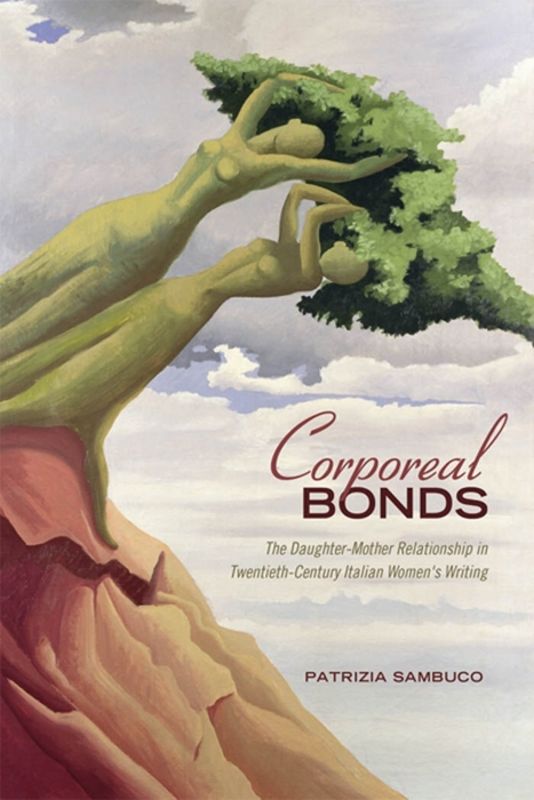
Corporeal Bonds
In Corporeal Bonds, Patrizia Sambuco analyses novels by authors such as Elsa Morante, Francesca Sanvitale, Mariateresa Di Lascia, and Elena Ferrante, each of which is narrated from the daughter's point of view and depicts the daughter's bond with the mother.
eBook


The Novel as Investigation
Detective fiction is a universally popular genre; stories about the investigation of a crime by a detective are published all over the world and in hundreds of languages. Detective fiction provides more than entertainment, however; it often has a great deal to say about crime and punishment, justice and injustice, testimony and judgment.The Novel as Investigationexamines a group of detective novels by three important Italian writers - Leonardo Sciascia, Dacia Maraini, and Antonio Tabucchi - whose conviction about the ethical responsibility of the writer manifests itself in their investigative fiction.
Jo-Ann Cannon explores each writer's denunciation of societal ills in two complementary texts. These investigative novels shed light on pressing social ills, which are not particular to Italian society of the late twentieth century but are universal in scope: Sciascia focuses on abuses of power and the death penalty, Maraini on violence against women, Tabucchi on torture and police brutality. In addition, each of these texts self-reflexively explore the role of writing in society. Sciascia, Maraini, and Tabucchi all use their fiction to defend the power of the pen to address \"il male del mondo.\"
The Novel as Investigationwill be of interest to a broad audience of readers, including those interested in Italian and comparative literature, Italian social history, and cultural studies.
eBook

Very Valentine : a novel
Valentine Roncalli struggles to save her decades-old family business, finding love and the life she wants along the way.
Book

From Margins to Mainstream
Carol Lazzaro-Weiss studies the fiction of twenty-five contemporary Italian women writers. Arguing for a notion of gender and genre, she runs counter to many Anglo-American and French feminist theorists who contend that traditional genres cannot readily serve as vehicles for feminist expression.
eBook