Catalogue Search | MBRL


Are you sure you want to remove the book from the shelf?

{{itemTitle}}
485
result(s) for
"Italian language Texts"
Sort by:
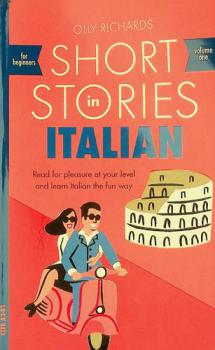
Short stories in Italian : read for pleasure at your level and learn Italian the fun way
Short Stories in Italian for Beginners has been written especially for students from beginner to intermediate level, designed to give a sense of achievement, and most importantly - enjoyment! These eight captivating stories will both entertain you, and give you a feeling of progress when reading. As a result, you will be able to focus on enjoying reading, delighting in your improved range of vocabulary and grasp of the language, without ever feeling overwhelmed or frustrated. From science fiction to fantasy, to crime and thrillers, Short Stories in Italian for Beginners will make learning Italian easy and enjoyable.

L'Italia verso il Duemila
An outstanding collection of readings in Italian designed to introduce language students to contemporary Italian culture while developing their skills in reading, speaking, writing, and listening.
eBook
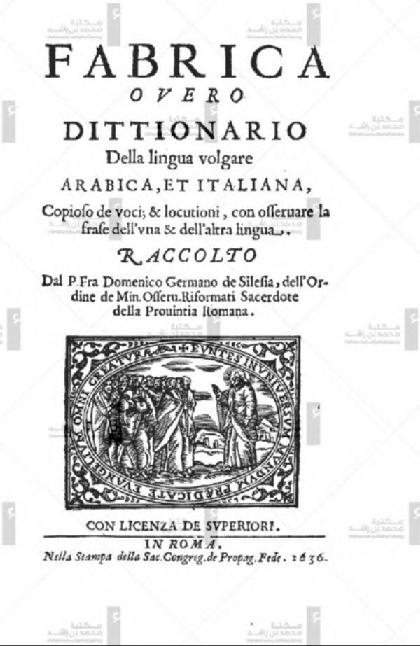
Fabrica overo dittionario della lingua volgare arabica, et italiana
Dominicus Germanus de Silesia (1588--1670) was a German priest and missionary. Born in Schurgast (present-day Skorogoszcz, Poland), he entered the Franciscan order in 1624 and devoted himself to learning Arabic, Persian, and Turkish. In 1630 he went to Palestine as a pastor, where he continued with his language studies. In 1635 he returned to Rome where he joined the Sacra Congregatio de Propaganda de Fide (Sacred Congregation for the Propagation of the Faith). In 1636 he became a teacher at the Mission of San Pietro in Montorio, Rome, and published his grammar of Arabic and Italian, Fabrica overo dittionario della lingua volgare arabica, et italiana (Fabrica, or dictionary of vernacular Arabic and Italian language). Shown here is the rare first edition of his Fabrica, printed by the press of the Propagande de Fide. Dominicus was also the editor of the famous Arabic--Latin dictionary printed at the same press in 1639, and the author of a polemical work, Antitheses Fidei, published in 1638. In 1645 he was sent to Persia on a political mission by King Wladyslaw IV of Poland. Although his destination was Samarkand, he appears to have reached no further than Isfahan, where he remained, studying Persian and Turkish, before returning to Rome in 1651. In 1652 he went to Spain to the court of Philip IV as teacher and translator. A number of his translations survive at the Escorial Palace. In Madrid he completed a translation of the Bible into Arabic, which the Vatican published in 1671. His translation of the Qurʼan appears to have been incomplete at his death in 1670, in Madrid.
Rare Book


Scripto sopra Theseu Re
Sono rarissime le testimonianze della ricezione dei capolavori della letteratura toscana medievale nelle regioni più periferiche dell’Italia meridionale nei periodi angioino e poi aragonese: la pubblicazione del commento anonimo al Teseida di provenienza salentina trasmesso col titolo di Scripto sopra Theseu Re rappresenta dunque una significativa acquisizione. L’apparato di chiose è trasmesso da un unico manoscritto quattrocentesco appartenuto alla biblioteca di Angilberto del Balzo, barone ribelle salentino giustiziato da re Ferrante d’Aragona nel 1487. Come dimostrano gli studi linguistici e filologici contenuti nel primo volume, il commento è indipendente dalla restante tradizione esegetica incentrata sul Teseida, ed è stato composto a partire da una redazione del poema circolante nelle corti dell’Italia meridionale. L’edizione critica integrale dell’ampio testo (contenuta nel secondo volume) e gli studi che la corredano gettano luce su aspetti finora sconosciuti della diffusione dell’opera boccacciana in età medievale, offrendo elementi inediti per la conoscenza della storia linguistica del Mezzogiorno.
eBook