
Catalogue Search | MBRL


Are you sure you want to remove the book from the shelf?

{{itemTitle}}
499
result(s) for
"Italy Florence."
Sort by:

Fodor's 25 best. Florence
Discusses lodging, dining, museums, and entertainment in Florence, along with information on trip planning, security, and shopping.
Book

Forged in the Shadow of Mars
In Forged in the Shadow of
Mars , Peter W. Sposato traces chivalry's
powerful influence on the mentalitè and behavior of a sizeable
segment of the elite in late medieval Florence. He finds
that the strenuous knights and men-at-arms of the Florentine
chivalric elite-a cultural community comprised of men from both
traditional and newly emerged elite lineages-embraced a chivalric
ideology that was fundamentally martial and violent. Chivalry
helped to shape a common identity among these men based on the
profession of arms and the ready use of violence against both their
peers and those they perceived to be their social inferiors. This
violence, often transgressive in nature, was not only crucial to
asserting and defending personal, familial, and corporate honor,
but was also inherently praiseworthy. In this way, Sposato
highlights the sharp differences between chivalry and the more
familiar civic ideology of the popolo grasso, the Florentine
mercantile and banking elite who came to dominate Florence
politically and economically during the thirteenth and fourteenth
centuries.
As a result, in Forged in the Shadow of Mar s, Sposato
challenges the traditional scholarly view of chivalry as foreign to
the social and cultural landscape of Florence and contests its
reputation as a civilizing force. By reexamining the connection
between chivalric literature and actual practice and identity
formation among historical knights and men-at-arms, he likewise
provides an important corrective to assumptions about the nature of
elite violence and identity in medieval Italian cities.
eBook

Florence
\"The eleventh edition of this accessible, scholarly guide to the city of the Renaissance. An essential handbook for any traveller who wants fully to understand the aesthetic impact of Florence on world history. Completely updated, this edition contains superb plans and illustrations of painting, architecture and sculpture, and includes fully updated coverage of the most recent developments at the Uffizi and other significant sites. There is also detailed coverage of where to stay and eat. The depth of information and quality of research make this book the best guide for the independent traveller as well as for all students of history, art, architecture and Italian culture. Ideal as an on-site guide as well as a desk resource.\"-- Publisher's website.
Book

Orpheus in the marketplace : Jacopo Peri and the economy of late Renaissance Florence
This record of Florentine musician Jacopo Peri's wide-ranging investments and activities in the marketplace enables the first detailed account of the Florentine economy in the late sixteenth and early seventeenth centuries, and opens a completely new perspective on one of Europe's principal centers of capitalism.
eBook

Florentine villas in the fifteenth century : an architectural and social history
This book investigates the architecture and patronage strategies of Florentine villas in 15th century Italy.
Book

Merchant Writers
The birthplace of Boccaccio, Machiavelli, and the powerful Medici family, Florence was also the first great banking and commercial centre of continental Europe. The city's middle-class merchants, though lacking the literary virtuosity of its most famous sons, were no less prolific as writers of account books, memoirs, and diaries. Written by ordinary men, these first-hand accounts of commercial life recorded the everyday realities of their businesses, families, and personal lives alongside the high drama of shipwrecks, plagues, and political conspiracies.
Published in Italian in 1986, Vittore Branca's collection of these accounts established the importance of the genre to the study of Italian society and culture. This new English translation ofMerchant Writersincludes all the texts from the original Italian edition in their entirety. Moreover, it offers a gripping personal introduction to the mercantile world of medieval and Renaissance Florence.
eBook

Merchants in the city of art : work, identity, and change in a Florentine neighborhood
\"In Merchants in the City of Art, Anne Schiller addresses classic anthropological questions about culture change and places them in a contemporary context, bringing together issues of work, heritage, immigration, and tourism. San Lorenzo, a neighborhood located in the historic centre of the celebrated city of Florence, and home to a market that has existed since before the Renaissance, is in transition. Globalization pressures--specifically international tourism and migration--are forcing changes in the way vendors work, which in turn raises larger questions about identity, authenticity, and heritage. This lively and engaging ethnography, written and designed with students in mind, uses the experiences and perspectives of a set of long-time market vendors to explore how cultural identities are formed, and how they change, and are negotiated during periods of profound social and economic change.\"-- Provided by publisher.
Book
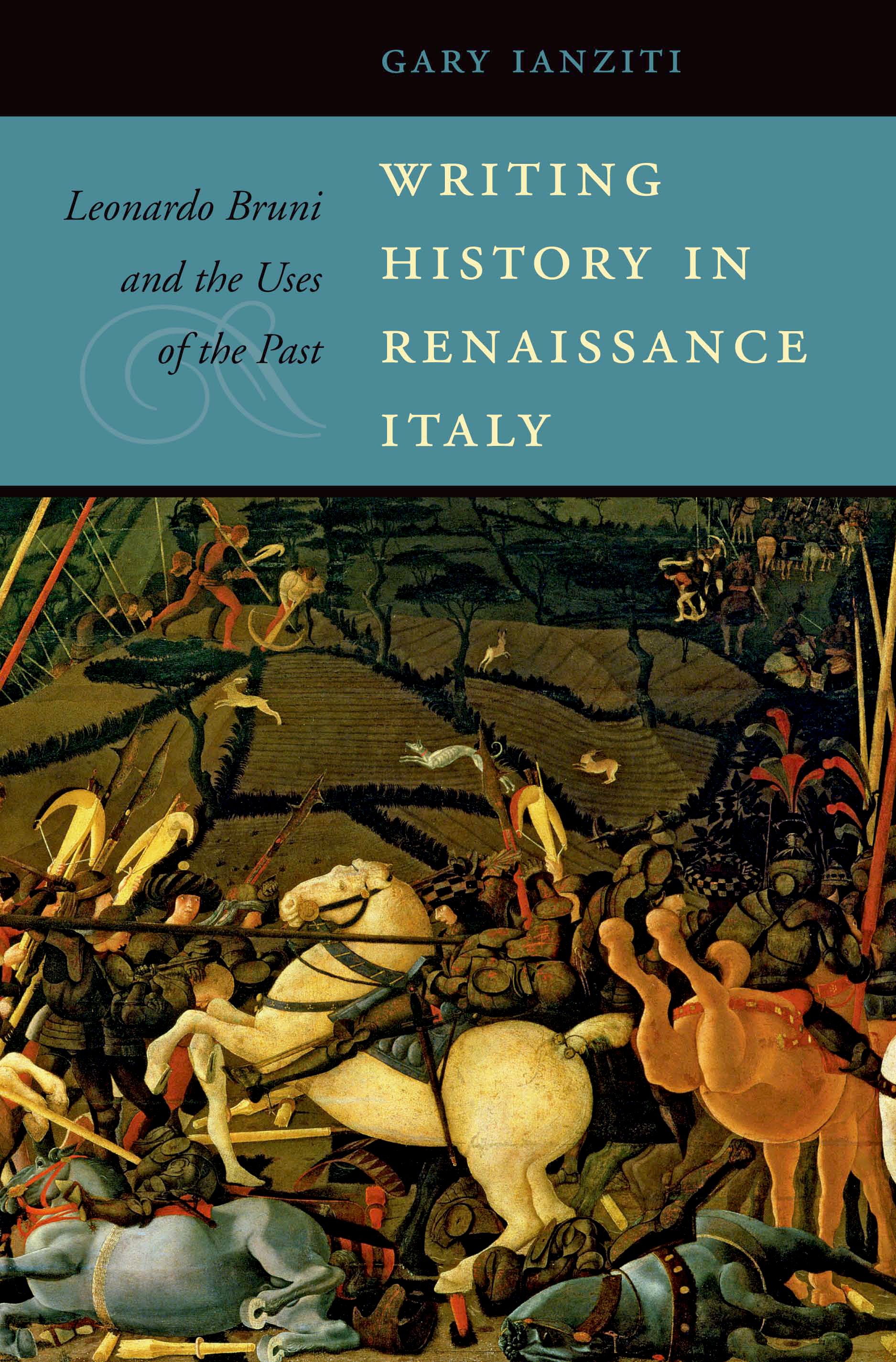
Writing history in Renaissance Italy : Leonardo Bruni and the uses of the past
Leonardo Bruni (1370–1444) is widely recognized as the most important humanist historian of the early Renaissance. But why this recognition came about—and what it has meant for the field of historiography—has long been a matter of confusion and controversy. Writing History in Renaissance Italy offers a fresh approach to the subject by undertaking a systematic, work-by-work investigation that encompasses for the first time the full range of Bruni's output in history and biography.
The study is the first to assess in detail the impact of the classical Greek historians on the development of humanist methods of historical writing. It highlights in particular the importance of Thucydides and Polybius—authors Bruni was among the first in the West to read, and whose analytical approach to politics led him in new directions. Yet the revolution in history that unfolds across the four decades covered in this study is no mere revival of classical models: Ianziti constantly monitors Bruni's position within the shifting hierarchies of power in Florence, drawing connections between his various historical works and the political uses they were meant to serve.
The result is a clearer picture of what Bruni hoped to achieve, and a more precise analysis of the dynamics driving his new approach to the past. Bruni himself emerges as a protagonist of the first order, a figure whose location at the center of power was a decisive factor shaping his innovations in historical writing.
eBook

Around the Tuscan Table
In this delicious book, noted food scholar Carole M. Counihan presents a compelling and artfully told narrative about family and food in late 20th-century Florence. Based on solid research, Counihan examines how family, and especially gender have changed in Florence since the end of World War II to the present, giving us a portrait of the changing nature of modern life as exemplified through food and foodways.
Carole M. Counihan is Professor of Anthropology and the Director of Women's Studies at Millersville University in Pennsylvania. She is currently the editor of Food and Foodways . She has authored and co-edited several books on the anthropology of food, including: Food in the U.S.A. , Food and Culture , and The Anthropology of Food and Body (all published by Routledge).
eBook