
Catalogue Search | MBRL


Are you sure you want to remove the book from the shelf?

{{itemTitle}}
59
result(s) for
"Italy Umbria."
Sort by:

The rough guide to Tuscany & Umbria
Discover these spellbinding regions of central Italy with the most incisive and entertaining guidebook on the market. Whether you plan to catch the Siena Palio, rent a villa in the Valnerina or explore the extraordinary art collection of Florence's Palazzo Pitti, The Rough Guide to Tuscany and Umbria will show you the ideal places to sleep, eat, drink, shop and visit along the way.
Book
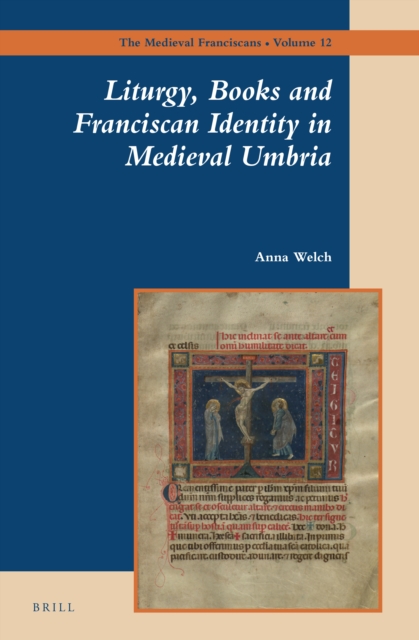
Liturgy, Books and Franciscan Identity in Medieval Umbria
In Liturgy, Books and Franciscan Identity in Medieval Umbria, Anna Welch explores how early Franciscan friars produced the missals essential to their liturgical lives, and reflects on both the construction of ritual communal identity and historiographic trends regarding this process.
eBook


Love, Work, and Death
Umbria was an important geographical and political entity in Italy during the late Middle Ages and was always linked to the Papal State. This text considers the place of the Jews in the religious, social and economic context of the region and discusses their mentality and family life.
eBook


The first ophthalmosaurid ichthyosaur from the Upper Jurassic of the Umbrian–Marchean Apennines (Marche, Central Italy)
The first ophthalmosaurid ichthyosaur from the Upper Jurassic deposits of the Central–Northern Apennines (Marche, Italy) is here described for the first time. The specimen is relatively complete and is referred to Gengasaurus nicosiai gen. et sp. nov. based on a unique combination of characters, including a peculiar condition of the preaxial accessory facet on the humerus. The faunal association of the ichthyosaur-bearing level indicates a late Kimmeridgian – earliest Tithonian age, and its finding contributes significantly to our knowledge of the diversity of Late Jurassic ichthyosaurs from the Western Tethys. Two shark teeth assigned to the order Hexanchiformes were also recovered in association with the ichthyosaur specimen, suggesting that scavenging of the carcass might have occurred. Gengasaurus can be referred to Ophthalmosauridae based on the reduced extracondylar area of the basioccipital, and the presence of a preaxial digit. It differs from Ophthalmosaurus spp. in several respects, including the shape of the posterior basisphenoid, the shape of the supraoccipital, the anteriorly deflected preaxial facet of the humerus, and a proximodistally shortened ulna. The new taxon actually shares diagnostic characters with both members of the two main lineages recovered in previous phylogenetic analyses, more nested within Ophthalmosauridae. The affinities of Gengasaurus to genera from both the northern and southern hemispheres also suggest that connectivity between pelagic habitats was high during the early Late Jurassic, allowing dispersal of some forms, followed by local, endemic divergence.
Journal Article


Cry wolf
Sebastiano Cangio is loving his dream job as a ranger in the stunning Sybillines national park in mystical Umbria. Then the first body is found. Recognizing the hallmarks of a mafia killing and determined to stop Umbria from being destroyed by organized crime, Cangio is pitted against a trail of bodies, greed and corruption that leads right to the top.
Book
Foreland-directed gravitational collapse along curved thrust fronts; insights from a minor thrust-related shear zone in the Umbria-Marche Belt, central-northern Italy
Gravitational collapse occurs during the mature evolution of orogenic belts, but its signature is difficult to discriminate in macroscopic structures from that of pre-, syn- or late-/post-orogenic extension, so reliable mesoscopic examples are particularly useful. A composite fabric developed along a lateral thrust ramp in the Apennines reveals mesoscopic normal faults that truncate the thrust surface, overprint the S-fabric and merge downwards in a foreland-directed splay, leaving the thrust footwall undeformed. These relationships indicate syn-/late-thrusting extension, which we interpret as induced by hanging-wall gravitational collapse. Our study provides critical constraints for reconstructing the kinematic evolution of collapsing thrust fronts.
Journal Article