
Catalogue Search | MBRL


Are you sure you want to remove the book from the shelf?

{{itemTitle}}
106
result(s) for
"Ivan IV, Czar of Russia, 1530-1584"
Sort by:

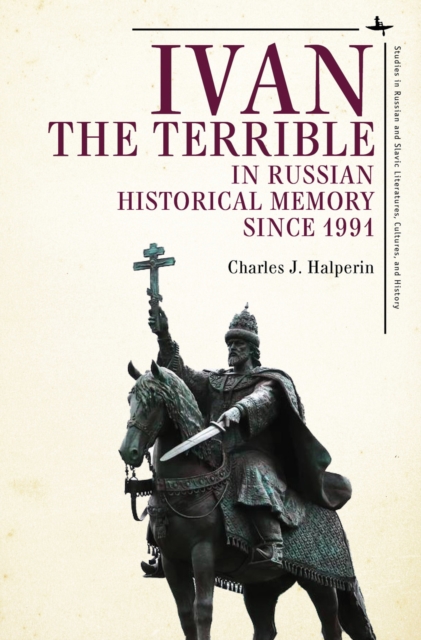
Ivan the Terrible in Russian historical memory since 1991
Tsar Ivan the Terrible (Ivan IV, 1533-1584) is one of the most controversial rulers in Russian history, infamous for his cruelty. He was the first Russian ruler to use mass terror as a political instrument, and the only Russian ruler to do so before Stalin. Comparisons of Ivan to Stalin only exacerbated the politicization of his image. Russians have never agreed on his role in Russian history, but his reign is too important to ignore. Since the abolition of censorship in 1991 professional historians and amateurs have grappled with this problem. Some authors have manipulated that image to serve political and cultural agendas. This book explores Russia's contradictory historical memory of Ivan in scholarly, pedagogical and political publications.
eBook

Ivan the Terrible : free to reward & free to punish
Ivan the Terrible is infamous as a sadistic despot responsible for the deaths of thousands of innocent people, particularly during the years of the oprichnina, his state-within-a-state. Ivan was the first ruler in Russian history to use mass terror as a political instrument. However, Ivan's actions cannot be dismissed by attributing the behavior to insanity. Ivan interacted with Muscovite society as both he and Muscovy changed. This interaction needs to be understood in order properly to analyze his motives, achievements, and failures.Ivan the Terrible: Free to Reward and Free to Punish provides an up-to-date comprehensive analysis of all aspects of Ivan's reign. It presents a new interpretation not only of Ivan's behavior and ideology, but also of Muscovite social and economic history. Charles Halperin shatters the myths surrounding Ivan and reveals a complex ruler who had much in common with his European contemporaries, including Henry the Eighth.
Book

This Thing of Darkness
Sergei Eisenstein's unfinished masterpiece, Ivan the Terrible, was no ordinary movie. Commissioned by Joseph Stalin in 1941 to justify state terror in the sixteenth century and in the twentieth, the film's politics, style, and epic scope aroused controversy even before it was released. In This Thing of Darkness, Joan Neuberger offers a sweeping account of the conception, making, and reception of Ivan the Terrible that weaves together Eisenstein's expansive thinking and experimental practice with a groundbreaking new view of artistic production under Stalin. Drawing on Eisenstein's unpublished production notebooks, diaries, and manuscripts, Neuberger's riveting narrative chronicles Eisenstein's personal, creative, and political challenges and reveals the ways cinematic invention, artistic theory, political critique, and historical and psychological analysis went hand in hand in this famously complex film.
Neuberger's bold arguments and daring insights into every aspect of Eisenstein's work during this period, together with her ability to lucidly connect his wide-ranging late theory with his work on Ivan, show the director exploiting the institutions of Soviet artistic production not only to expose the cruelties of Stalin and his circle but to challenge the fundamental principles of Soviet ideology itself. Ivan the Terrible, she argues, shows us one of the world's greatest filmmakers and one of the 20th century's greatest artists observing the world around him and experimenting with every element of film art to explore the psychology of political ambition, uncover the history of recurring cycles of violence and lay bare the tragedy of absolute power.
eBook

This thing of darkness : Eisenstein's Ivan the Terrible in Stalin's Russia
\"Eisenstein's diaries and production notebooks show that he carefully planned Ivan the Terrible to be a devastating critique of Stalinism, a profound study of the tragedy of absolute power, and a wildly innovative use of montage, all wrapped inside a narrative that would receive Stalin's approval\"-- Provided by publisher.
BOOK

Ivan the Terrible in Russian Historical Memory since 1991
Tsar Ivan the Terrible (Ivan IV, 1533-1584) is one of the most
controversial rulers in Russian history, infamous for his cruelty.
He was the first Russian ruler to use mass terror as a political
instrument, and the only Russian ruler to do so before Stalin.
Comparisons of Ivan to Stalin only exacerbated the politicization
of his image. Russians have never agreed on his role in Russian
history, but his reign is too important to ignore. Since the
abolition of censorship in 1991 professional historians and
amateurs have grappled with this problem. Some authors have
manipulated that image to serve political and cultural agendas.
This book explores Russia's contradictory historical memory of Ivan
in scholarly, pedagogical and political publications.
eBook

Red Star falling
Wrapping up his latest assignment for the Magellan Billet, Luke Daniels receives a surprise visit from the head of a former-CIA operation named Sommerhaus -- a failed attempt to assemble an espionage network within the Ukraine on the eve of the Russian invasion. Sommerhaus ranks high on Luke's list of painful regrets for it was during this mission that his friend, CIA case officer John Vince, was captured by Russian operatives and supposedly executed. But Luke is provided some shocking news. Vince is alive, in failing health, locked behind the walls of Russia's brutal Solovetsky Island prison, and has a critical message he'll give to no one but Luke. Needing no further convincing Luke vows to bring Vince home. However, just as he manages to extract his friend from prison Vince tragically dies and his final words are rambling and incoherent. Just bits and pieces. But enough to plunge Luke into a hunt for something lost since the 15th century. The legendary library of the first Tsar of All Russia, Ivan the Terrible. Within that priceless collection of rare manuscripts is the key to unraveling a modern-day cipher and stopping a secret Soviet satellite program that still exists. But Luke is not the only one on the trail. Others, both inside and out of Russia, want the library for a totally different reason--to re-start the Red Star program and finally unleash its destructive potential. Luke's mission is clear. Find the lost library, solve the puzzle, and prevent Red Star falling.
Book
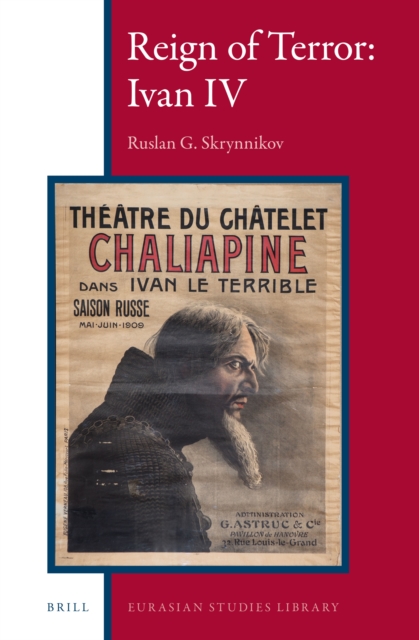
Reign of Terror: Ivan IV
Ruslan Grigor'evitch Skrynnikov unfolds the drama of terror under Ivan the Terrible and his oprichnina. He uses new kinds of evidence paying close attention to primary sources. The conflicts between Ivan and the gentry, the crushing of Novgorod autonomy, the ways in which Ivan interpreted his authority and sought to create an alternative base of power in a loyal body of henchmen-followers known as the oprichnina, the alienation of different groups in society from the government, the impoverishment and weakening of whole regions leading to the Time of Troubles are among the themes that Skrynnikov develops. The details of Ivan's confrontations with those he perceived as opponents, the forms of execution he inflicted on his enemies, the atmosphere of peril and suspicion that he created justify the description of his reign as one of terror, relevant of course to later periods of history with obvious echoes of the Stalinist period.
eBook
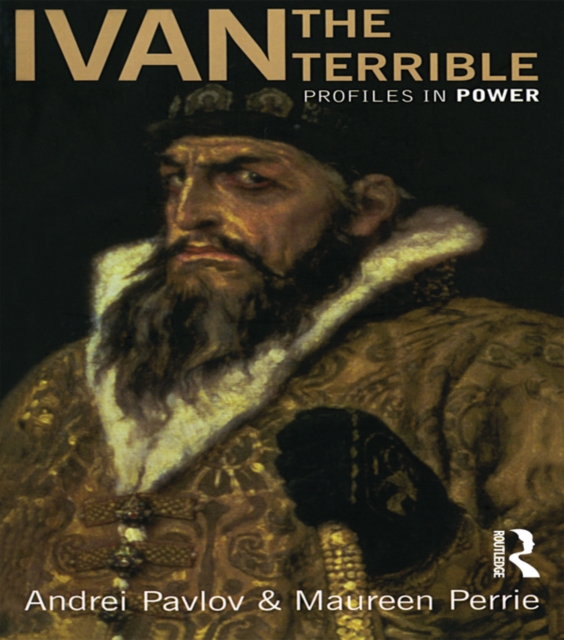
Ivan the Terrible
This is the first major re-assessment of Ivan the Terrible to be published in the West in the post-Soviet period. It breaks away from older stereotypes of the tsar - whether as 'crazed tyrant' and 'evil genius', on the one hand, or as a 'great and wise statesman', on the other - to provide a more balanced picture. It examines the ways in which Ivan's policies contributed to the creation of Russia's distinctive system of unlimited monarchical rule.Ivan is best remembered for his reign of terror, the book pays due attention to the horrors of his executions, tortures and repressions, especially in the period of the oprichnina (1565-72), when he mysteriously divided his realm into two parts, one of which was under the direct control of the tsar and his oprichniki (bodyguard). This work argues that the often gruesome forms assumed by the terror reflected not only Ivan's personal cruelty and sadism, but also his religious views about the divinely ordained right of the tsar to punish his treasonous subjects, just as sinners were punished in Hell. Primarily chronological in its organisation, the book focuses on three main aspects of Ivan's power: the territorial expansion of the state, the mythology, rituals and symbols of monarchy; and the development of the autocratic system of rule.
eBook

Reign of Terror
R. G. Skrynnikov uses new kinds of evidence drawn from primary sources to unfold the drama of terror under Ivan Groznyi (the Terrible), which has relevance to later periods of history (echoes of the Stalinist period, for example).
eBook