
Catalogue Search | MBRL


Are you sure you want to remove the book from the shelf?

{{itemTitle}}
5
result(s) for
"JHBD"
Sort by:

Tuff City
During the 1990s, Naples' left-wing administration sought to tackle the city's infamous reputation of being poor, crime-ridden, chaotic and dirty by reclaiming the city's cultural and architectural heritage. This book examines the conflicts surrounding the reimaging and reordering of the city's historic centre through detailed case studies of two piazzas and a centro sociale, focusing on a series of issues that include decorum, security, pedestrianization, tourism, immigration and new forms of urban protest. This monograph is the first in-depth study of the complex transformations of one of Europe's most fascinating and misunderstood cities. It represents a new critical approach to the questions of public space, citizenship and urban regeneration as well as a broader methodological critique of how we write about contemporary cities.
eBook

Domesticating Youth
Most of the Muslim societies of the world have entered a demographic transition from high to low fertility, and this process is accompanied by an increase in youth vis-a-vis other age groups. Political scientists and historians have debated whether such a \"youth bulge\" increases the potential for conflict or whether it represents a chance to accumulate wealth and push forward social and technological developments. This book introduces the discussion about youth bulge into social anthropology using Tajikistan, a post-Soviet country that experienced civil war in the 1990s, which is in the middle of such a demographic transition. Sophie Roche develops a social anthropological approach to analyze demographic and political dynamics, and suggests a new way of thinking about social change in youth bulge societies.
eBook
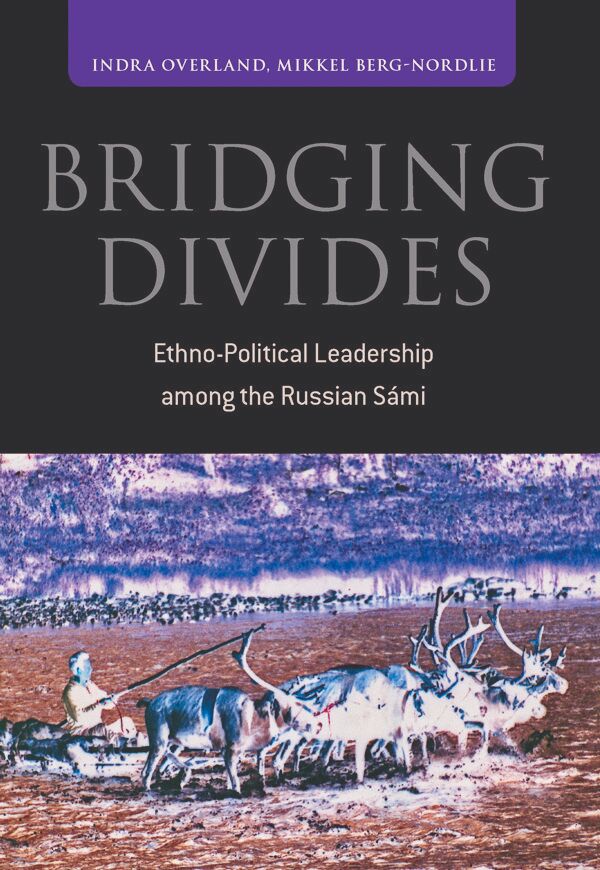
Bridging Divides
The Sami are a Northern indigenous people whose land, Sapmi, covers territory in Finland, Norway, Russia and Sweden. For the Nordic Sami, the last decades of the 20th century saw their indigenous rights partially recognized, a cultural and linguistic revival and the establishment of Sami parliaments. The Russian Sami, however, did not have the same opportunities and were isolated behind the closed border until the dissolution of the Soviet Union. This book examines the following two decades and the Russian Sami's attempt to achieve a linguistic revival, to mend the Cold War scars, and to establish their own independent ethno-political organizations.
eBook
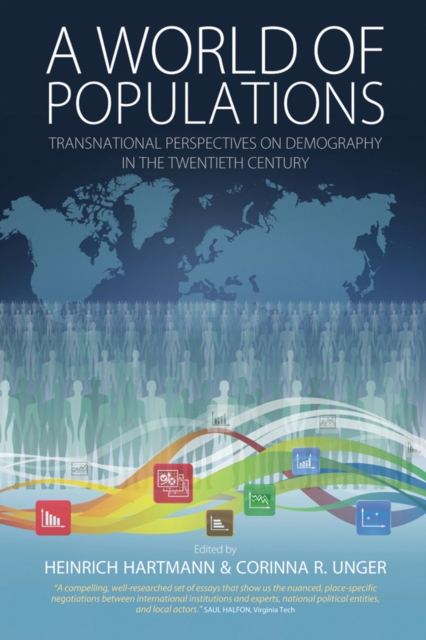
A world of populations
Demographic study and the idea of a \"population\" was developed and modified over the course of the twentieth century, mirroring the political, social, and cultural situations and aspirations of different societies. This growing field adapted itself to specific policy concerns and was therefore never apolitical, despite the protestations of practitioners that demography was \"natural.\" Demographics were transformed into public policies that shaped family planning, population growth, medical practice, and environmental conservation. While covering a variety of regions and time periods, the essays in this book share an interest in the transnational dynamics of emerging demographic discourses and practices. Together, they present a global picture of the history of demographic knowledge.
eBook

About the Hearth
Due to changing climates and demographics, questions of policy in the circumpolar north have focused attention on the very structures that people call home. Dwellings lie at the heart of many forms of negotiation. Based on years of in-depth research, this book presents and analyzes how the people of the circumpolar regions conceive, build, memorialize, and live in their dwellings. This book seeks to set a new standard for interdisciplinary work within the humanities and social sciences and includes anthropological work on vernacular architecture, environmental anthropology, household archaeology and demographics.
eBook