
Catalogue Search | MBRL


Are you sure you want to remove the book from the shelf?

{{itemTitle}}
159
result(s) for
"Jack, the Ripper."
Sort by:

The sixth victim
The foggy streets of London's Whitechapel district have become a nocturnal hunting ground for Jack the Ripper, and no woman is safe. Flower girl Constance Piper is not immune to dread, but she is more preoccupied with her own strange experiences of late. Clairvoyants seem to be everywhere these days. Constance's mother has found comfort in contacting her late father in a seance. But are such powers real? And could Constance really be possessed of second sight? She longs for the wise counsel of her mentor and champion of the poor, Emily Tindall, but the kind missionary has gone missing. Following the latest grisly discovery, Constance is contacted by a high-born lady of means who fears the victim may be her missing sister. She implores Constance to use her clairvoyance to help solve the crime, which the press is calling \"the Whitechapel Mystery,\" attributing the murder to the Ripper. As Constance becomes embroiled in intrigue far more sinister than she could have imagined, assistance comes in a startling manner that profoundly challenges her assumptions about the nature of reality. She'll need all the help she can get - because there may be more than one depraved killer out there.
BOOK


The Ripper affair
\"A shattering accident places Archibald Clare, mentath in the service of Britannia, in the care of Emma Bannon, sorceress Prime. Clare needs a measure of calm to repair his faculties of Logic and Reason. Without them, he is not his best. At all. Unfortunately, calm and rest will not be found. There is a killer hiding in the sorcerous steam-hells of Londinium, murdering poor women of a certain reputation. A handful of frails murdered on cold autumn nights would make no difference...but the killings echo in the highest circles, and threaten to bring the Empire down in smoking ruins. Once more Emma Bannon is pressed into service; once more Archibald Clare is determined to aid her. The secrets between these two old friends may give an ambitious sorcerer the means to bring down the Crown. And there is still no way to reliably find a hansom when one needs it most\"--P. [4] of cover.
BOOK
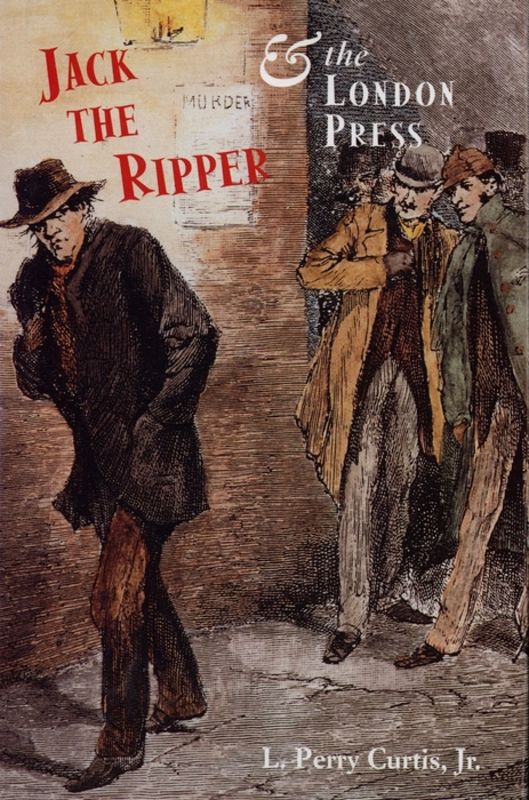
Jack the Ripper and the London Press
Press coverage of the 1888 mutilation murders attributed to Jack the Ripper was of necessity filled with gaps and silences, for the killer remained unknown and Victorian journalists had little experience reporting serial murders and sex crimes. This engrossing book examines how fourteen London newspapers-dailies and weeklies, highbrow and lowbrow-presented the Ripper news, in the process revealing much about the social, political, and sexual anxieties of late Victorian Britain and the role of journalists in reinforcing social norms.L. Perry Curtis surveys the mass newspaper culture of the era, delving into the nature of sensationalism and the conventions of domestic murder news. Analyzing the fourteen newspapers-two of which emanated from the East End, where the murders took place-he shows how journalists played on the fears of readers about law and order by dwelling on lethal violence rather than sex, offering gruesome details about knife injuries but often withholding some of the more intimate details of the pelvic mutilations. He also considers how the Ripper news affected public perceptions of social conditions in Whitechapel.
eBook

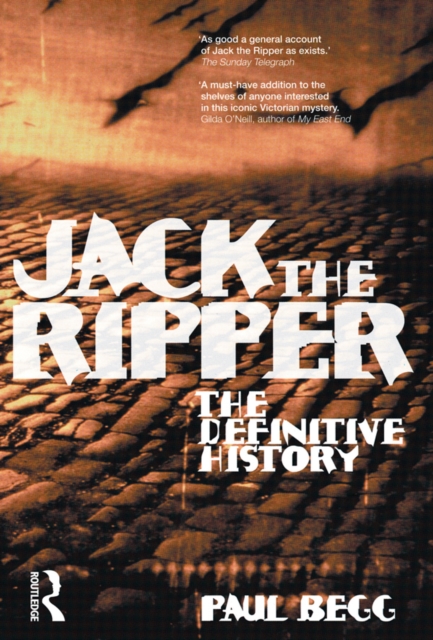
Jack the Ripper
'The clearest, most accurate, and most up-to-date account of the Ripper murders, by one of Britain's greatest and most respected experts on the \"autumn of terror\" in Victorian London.'
William D. Rubenstein, Professor of Modern History, University of Wales, Aberystwyth
England in the 1880s was a society in transition, shedding the skin of Victorianism and moving towards a more modern age. Promiscuity, moral decline, prostitution, unemployment, poverty, police inefficiency& all these things combined to create a feeling of uncertainty and fear.
The East End of London became the focus of that fear. Here lived the uneducated, poverty-ridden and morally destitute masses. When Jack the Ripper walked onto the streets of the East End he came to represent everything that was wrong with the area and with society as a whole. He was fear in a human form, an unknown lurker in the shadows who could cross boundaries and kill.
Jack the Ripper: The Definitive History is not yet another attempt to identify the culprit. Instead, the book sets the murders in their historical context, examining in depth what East London was like in 1888, how it came to be that way, and how events led to one of the most infamous and grisly episodes of the Victorian era.
eBook

Ripper : the secret life of Walter Sickert
Examines the century-old series of murders that terrorized London in the 1880s, drawing on research, state-of-the-art forensic science, and insights into the criminal mind to reveal the true identity of the infamous Jack the Ripper.
Book

Framing Deaths, Embracing Lives: Alan M. Clark’s Jack the Ripper Victims Series
Jack the Ripper fictions tend to be realist in mode, making frequent use of the Victorian press and archives to depict the 1888 murders. At the same time, they marginalise and exploit the victims, defining them as silent testimonies to the power of the elusive perpetrator. In contrast, Alan M. Clark’s Jack the Ripper Victims Series (2011–2018), consisting of five novels devoted to one canonical victim each, shifts the focus and depicts their lives. This article outlines the way the fictionalisations of the five women’s lives bring to the fore five other ‘crimes’ or transgressions: addiction, domestic violence, unemployment, sex work, and homelessness, but also the way these texts replace what is sensational and formulaic in Ripperature with something more than mundane and gritty in the lived experience of everyday people, such as moments of personal joy or professional accomplishments. Drawing on Kate Mitchell’s approach to history, cultural memory, and neo-Victorian fiction, it argues that pre-dating the publication of The Five (2019), Clark managed to realistically re-present (make present) and represent (create a portrayal of) the late-Victorian crime of dismissing the women who were murdered.
Journal Article

The big book of Jack the Ripper
\"Of all the real-life serial killers whose gruesome deeds have splashed across headlines throughout human history, few have reached the near-mythical status of Jack the Ripper. Terrorizing the world with a rash of violent murders in London's East End in the fall of 1888, Saucy Jack seemed to vanish just as quickly, leaving future generations to speculate upon his identity and whereabouts--and living on in some of the most spectacularly unnerving fiction ever written. Collected here, for the first time ever, are forty-one tales featuring the infamous slasher\"-- Provided by publisher.
BOOK
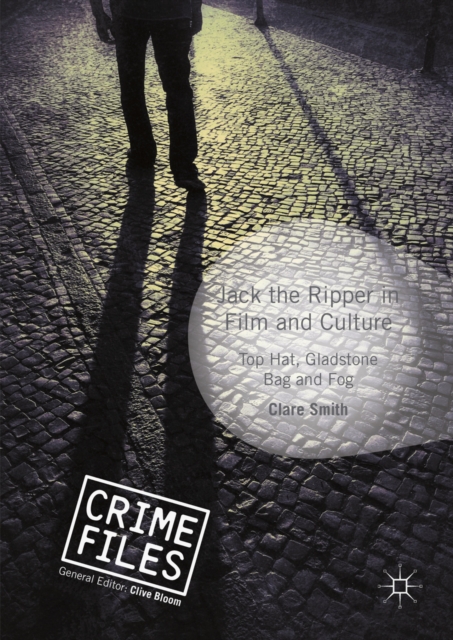
Jack the Ripper in film and culture : top hat, Gladstone bag and fog
In 1888 the name Jack the Ripper entered public consciousness with the brutal murders of women in the East End of London.The murderer was never caught, yet film and television depicts a killer with a recognisable costume, motive and persona.
eBook