
Catalogue Search | MBRL


Are you sure you want to remove the book from the shelf?

{{itemTitle}}
162
result(s) for
"Jamaica Fiction."
Sort by:

Here comes the sun : a novel
\"In this radiant, highly anticipated debut, a cast of unforgettable women battle for independence while a maelstrom of change threatens their Jamaican village. Capturing the distinct rhythms of Jamaican life and dialect, Nicole Dennis- Benn pens a tender hymn to a world hidden among pristine beaches and the wide expanse of turquoise seas. At an opulent resort in Montego Bay, Margot hustles to send her younger sister, Thandi, to school. Taught as a girl to trade her sexuality for survival, Margot is ruthlessly determined to shield Thandi from the same fate. When plans for a new hotel threaten their village, Margot sees not only an opportunity for her own financial independence but also perhaps a chance to admit a shocking secret: her forbidden love for another woman. As they face the impending destruction of their community, each woman--fighting to balance the burdens she shoulders with the freedom she craves--must confront long-hidden scars. From a much-heralded new writer, Here Comes the Sun offers a dramatic glimpse into a vibrant, passionate world most outsiders see simply as paradise.\"-- Provided by publisher
Book

Pink Icing
Telling stories of ordinary lives with extraordinary skill, Pamela Mordecai draws delicately detailed portraits of life in Jamaica and other islands, with occasional trips to Canada. Her characters speak with the cadences of the Caribbean, and cope with the universal experiences of birth and death, joy and betrayal.
eBook

Sweetness in the skin
Pumkin Patterson dreams of a life beyond her Jamaican hometown. But what we dream of and where we belong aren't always the same thing. For Pumkin Patterson, family is complicated. There's her mother Paulette, who only sees Pumkin as a nuisance. There's her beloved Auntie Sophie, who has always talked of she and Pumkin travelling to new horizons. And there's her grandmother, who has always favoured Sophie over Paulette. When Sophie moves to France for work, she promises to send for her niece in one year's time. All Pumkin has to do is pass her French entrance exam. But when Pumkin's mother finds out, she's determined that her sister won't get her own way this time. Now forced to raise the money for her exam in secret, Pumkin turns to her loyal friends to help her secure her way out - while evading her mother's suspicions.
BOOK

Show me a mountain
From the Costa- and Commonwealth-shortlisted author of Pao, a story of revolution and oppression, privilege and poverty, love and betrayal, set against the backdrop of Jamaican independence. Fay Wong is a woman caught between worlds. Her father is a Chinese immigrant who conjured a fortune out of nothing; her mother, of African heritage, grew up on a plantation and now reigns over their mansion on Lady Musgrave Road, sipping Earl Grey tea in the Kingston afternoons. But the Chinatown haunts where her father spends his time are out of bounds to Fay, and the rooms of Lady Musgrave Road are filled with her mother's long-kept secrets and uncontrollable rages--rages against which Fay rebels as she grows from a girl into a headstrong woman. As she tries to escape the restraints of her privileged upbringing, striving for independence in a homeland that is trying to do the same, Fay's eyes are opened to a Jamaica she was never meant to see. She encounters gangsters and revolutionaries, priests and prostitutes, and witnesses great sacrifices and betrayals. But when her mother decides that she must marry the racketeer Yang Pao, she finds herself on a journey that leads to sacrifices and betrayals of her own. In Show Me A Mountain , Kerry Young creates a vivid portrait of a woman and a country struggling to fashion a future unburdened by the past.
Book


A thief in the village, and other stories
A collection of nine short stories about life in contemporary Jamaica, on such subjects as a young boy's desire to buy shoes for the cricket team and a girl's adventures on a coconut plantation.
Book

Metamorphosis From Innocence Into Experience: Jamaica Kincaid’s Annie John From a Postcolonial Feminist Perspective
A passionate and outspoken advocate of female assertiveness, Antiguan-American author Jamaica Kincaid writes from her personal observations of the injustices of colonial subjugation and patriarchy. An overall reading of her fiction shows that most of her books defend oppressed and devalued women against the historical atrocities enforced by both colonial and androcentric communities. Most significantly, Kincaid’s oeuvre holds colonization liable for entrenching patriarchy in Caribbean culture. Annie John is no exception since its eponymous character, rebellious and defiant Annie, vehemently rejects the passivity and victimization assigned to Caribbean women by both white colonialists and the patriarchal society where she lives. Since its publication in a book form in the New Yorker in 1985, Annie John is often analyzed from a postcolonial perspective. However, an in-depth reading of the text shows that it intertwines gender relations, women's sustainability, and unfettered sexuality, along with colonial and postcolonial realities for non-white, non-Western women.
Journal Article
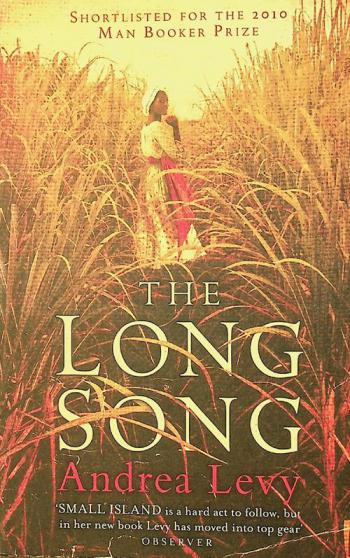
The long song
The child of a field slave on the Amity sugar plantation in Jamaica, July lives with her mother until a recently transplanted English widow decides to move her into the great house and rename her. She remains bound to the plantation despite her \"freedom.\" The arrival of a young English overseer dramatically changes life in the great house.

The Discourse of the “Good Death” in Nineteenth-Century Fiction and a Historical Case Study
What people said on their deathbeds preoccupied 19th-century Protestants. Fear of the void after death or of punishment in the afterlife made death terrifying. The process of dying, however, was ritualized to negate these terrors. Having a “good death” constituted reassurance for the dying, comfort for the family, and a lesson for the community. Such comfort was available even from fictional deathbed scenes, where sentiment and imagery softened the harsh reality. This interdisciplinary study explores the similarities between real and fictional deathbed narratives, using a sample of 19th-century novels, two historical deathbeds from Scotland, and a case study of an actual deathbed from the West Indies. The pattern of the good death – in both fiction and biography – includes specific elements such as witness, testimony, requests and advice, music, scripture, and confident hope of Heaven. Some deathbeds even became virtual stages or pulpits, with the dying person at the centre. Protestanti so v 19. stoletju veliko pozornosti namenjali besedam, izrečenim na smrtni postelji. Ljudje so se bali smrti zaradi strahu pred praznino ali kaznijo v posmrtnem življenju. Strahove so poskusili pregnati z ritualizacijo postopka umiranja. “Dobra smrt” naj bi pomirila umirajočega, potolažila družino in predstavljala nauk za skupnost. Tovrstno tolažbo so ponujali celo prikazi umiranja v fikciji, kjer so kruto stvarnost omehčala čustva in podobje. Pričujoča interdisciplinarna raziskava ugotavlja podobnosti med resničnimi in fiktivnimi prikazi umiranja v romanih 19. stoletja: na primeru dveh škotskih zgodovinskih romanov ter na primeru resnične, zgodovinsko izpričane smrti v Zahodni Indiji. Vzorec dobre smrti - tako v leposlovju kot v biografiji - vključuje posebne elemente, kot so priče, pričevanje, prošnje in nasveti, glasba, sveto pismo in upanje na pot v nebesa. Nekateri opisi ljudi na smrtni postelji so se spremenili celo v navidezne odre ali prižnice, na katerih je bila v ospredju umirajoča oseba.
Journal Article