
Catalogue Search | MBRL


Are you sure you want to remove the book from the shelf?

{{itemTitle}}
1,358
result(s) for
"James Merrill"
Sort by:


The Moon Slides Down the Stair / To See Who’s There
This article explores the understudied formal, experiential, and historical relationships between crosswords and poetry. Using an illuminating coincidence of names (the poet James Merrill and crossword constructor Patrick Merrell) as indicative of a fundamental experience of language—arbitrariness within a communicative code—I reconsider how the creative impulses and pleasure derived from the cultural and intellectual work of crosswords and poetry touch upon a deeper social consciousness.
Journal Article

Politics and form in postmodern poetry : O'Hara, Bishop, Ashbery, and Merrill
Approaching post-World War II poetry from a postmodern critical perspective, this study challenges the prevailing assumption that experimental forms signify political opposition while traditional forms are politically conservative.
Book

At the Brink of Infinity
From popular culture to politics to classic novels, quintessentially American texts take their inspiration from the idea of infinity. In the extraordinary literary century inaugurated by Ralph Waldo Emerson, the lyric too seemed to encounter possibilities as limitless as the U.S. imagination. This raises the question: What happens when boundlessness is more than just a figure of speech? Exploring new horizons is one thing, but actually looking at the horizon itself is something altogether different. In this carefully crafted analysis, James von der Heydt shines a new light on the lyric craft of Emily Dickinson, Robert Frost, Elizabeth Bishop, and James Merrill and considers how their seascape-vision redefines poetry's purpose.
Emerson famously freed U.S. literature from its past and opened it up to vastness; in the following century, a succession of brilliant, rigorous poets took the philosophical challenges of such freedom all too seriously. Facing the unmarked horizon, Emersonian poets capture-and are captured by-a stark, astringent version of human beauty. Their uncompromising visions of limitlessness reclaim infinity's proper legacy-and give American poetry its edge. Von der Heydt's book recovers the mystery of their world.
eBook

James Merrill, Postmodern Magus
One of the unique voices in our century, James Merrill was known for his mastery of prosody; his ability to write books that were not just collected poems but unified works in which each individual poem contributed to the whole; and his astonishing evolution from the formalist lyric tradition that influenced his early work to the spiritual epics of his later career. Merrill's accomplishments were recognized with a Pulitzer Prize in 1977 forDivine Comediesand a National Book Critics Circle Award in 1983 forThe Changing Light at Sandover.In this meticulously researched, carefully argued work, Evans Lansing Smith argues that the nekyia, the circular Homeric narrative describing the descent into the underworld and reemergence in the same or similar place, confers shape and significance upon the entirety of James Merrill's poetry. Smith illustrates how pervasive this myth is in Merrill's work - not just inThe Changing Light at Sandover, where it naturally serves as the central premise of the entire trilogy, but in all of the poet's books, before and after that central text.By focusing on the details of versification and prosody, Smith demonstrates the ingenious fusion of form and content that distinguishes Merrill as a poet. Moving beyond purely literary interpretations of the poetry, Smith illuminates the numerous allusions to music, art, theology, philosophy, religion, and mythology found throughout Merrill's work.
eBook

The Queer Afterlife of Gossip
This article reveals the formative interplay between the queer art of gossip and poetic practice in James Merrill’s
, a sprawling verse trilogy composed with the unlikely assistance of a Ouija board. The poem’s extensive gossip with the dead is often dismissed as mere surface. Yet Merrill, the article contends, indulges in what he calls the Ouija’s “backstage gossip” both to establish a queer relationship to poetic tradition and to confront the pervasive menace of the Cold War discourse of the Lavender Scare, which haunts the trilogy’s 1950s origins. Arguing that midcentury American attitudes about sexuality inflect—productively as much as disastrously—the relationship of lyric privacy to gossipy publicity in Merrill’s poem, the article shows how gossip, in its rich afterlife in
, emerges not so much as a normative threat to be overcome but as a mode of fostering and preserving nonnormative voices, converting the privacy imposed on the homosexual into the conditions for creating queer worlds. Gossip concomitantly provides Merrill with a model of poetic self-performance that at once pushes against and embraces New Critical ideals of lyric subjectivity—a way of telling one’s own scandalous story through someone else’s words, even words intended as hostile, discovering poetic and sexual pleasures where others see only anxiety and dread.
Journal Article

The Poetics of the Everyday
Wallace Stevens once described the \"malady of the quotidian,\" lamenting the dull weight of everyday regimen. Yet he would later hail \"that which is always beginning, over and over\"-recognizing, if not celebrating, the possibility of fresh invention.
Focusing on the poems of Wallace Stevens, Robert Frost, Elizabeth Bishop, and James Merrill, Siobhan Phillips positions everyday time as a vital category in modernist aesthetics, American literature, and poetic theory. She eloquently reveals how, through particular but related means, each of these poets converts the necessity of quotidian experience into an aesthetic and experiential opportunity. In Stevens, Phillips analyzes the implications of cyclic dualism. In Frost, she explains the theoretical depth of a habitual \"middle way.\" In Bishop's work, she identifies the attempt to turn recurrent mornings into a \"ceremony\" rather than a sentence, and in Merrill, she shows how cosmic theories rely on daily habits.
Phillips ultimately demonstrates that a poetics of everyday time contributes not only to a richer understanding of these four writers but also to descriptions of their era, estimations of their genre, and ongoing reconfigurations of the issues that literature reflects and illuminates.
eBook
James Merrill's Secret Scansions
As the Ouija board provided James Merrill with his esoteric themes, iambic pentameter was his medium for \"evoking fresh speech.\" He attributed his unfamiliar rhythms to \"secret scanning\" in a meter that had been stable for centuries. His frequent use of less common modulations like headless lines, epic cesuras, and compression often makes the verse—both lyric and epic—sound loose or unmetrical but also rich and strange, even when the themes are more down-to-earth. The essay reviews the fine details of iambic scansion Merrill used to create unprecedented rhythms.
Journal Article
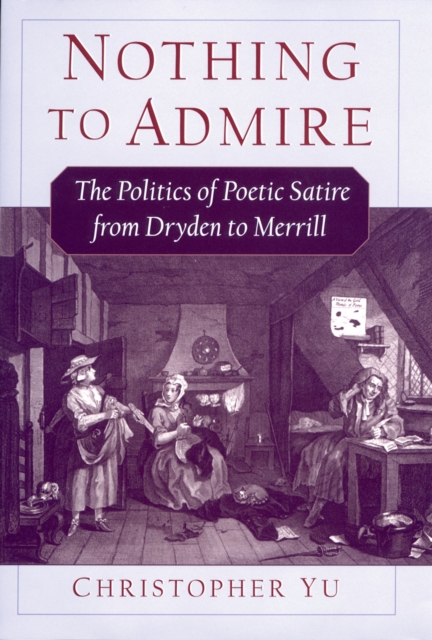
Nothing to admire : the politics of poetic satire from Dryden to Merrill
Arguing that a continuous genealogy of poetic satire links the writings of Dryden, Pope, Byron, Auden, and Merrill, Christopher Yu makes the case that the shared idiom of Augustanism developed by these satirists sponsors a meritocratic and ultimately radically liberal ideal of culture.
eBook
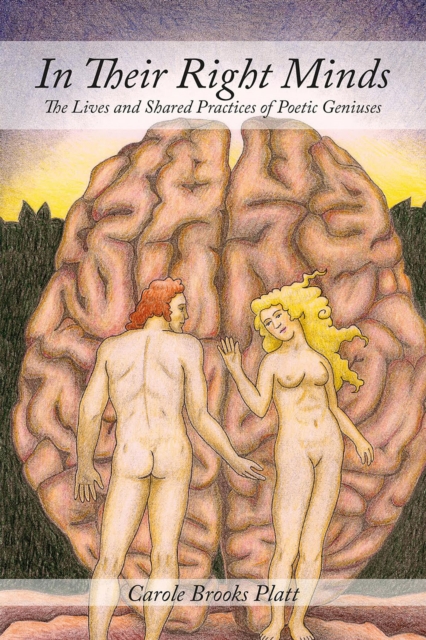
In Their Right Minds
In 1976, Julian Jaynes proposed that the language of poetry and prophecy originated in the right, \"god-side\" of the brain. Current neuroscientific evidence confirms the role of the right hemisphere in poetry, a sensed presence, and paranormal claims as well as in mental imbalance. Left-hemispheric dominance for language is the norm. An atypically enhanced right hemisphere, whether attained through genetic predisposition, left-hemispheric damage, epilepsy, childhood or later traumas, can create hypersensitivities along with special skills. Dissociative \"Others\" may arise unbidden or be coaxed out through occult practices. Based on nearly twenty years of scientific and literary research, this book enters the atypical minds of poetic geniuses - Blake, Keats, Hugo, Rilke, Yeats, Merrill, Plath and Hughes - by way of the visible signs in their lives, beliefs, and shared practices.
eBook