
Catalogue Search | MBRL


Are you sure you want to remove the book from the shelf?

{{itemTitle}}
118
result(s) for
"Japan - Strategic aspects"
Sort by:

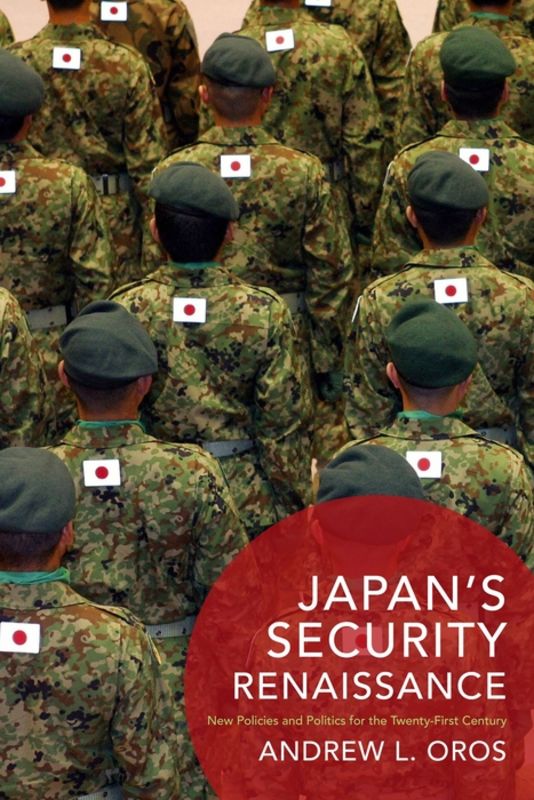
Japan's Security Renaissance
For decades after World War II, Japan chose to focus on soft power and economic diplomacy alongside a close alliance with the United States, eschewing a potential leadership role in regional and global security. Since the end of the Cold War, and especially since the rise of Prime Minister Shinzo Abe, Japan's military capabilities have resurged. In this analysis of Japan's changing military policy, Andrew L. Oros shows how a gradual awakening to new security challenges has culminated in the multifaceted \"security renaissance\" of the past decade.
Despite openness to new approaches, however, three historical legacies-contested memories of the Pacific War and Imperial Japan, postwar anti-militarist convictions, and an unequal relationship with the United States-play an outsized role. InJapan's Security RenaissanceOros argues that Japan's future security policies will continue to be shaped by these legacies, which Japanese leaders have struggled to address. He argues that claims of rising nationalism in Japan are overstated, but there has been a discernable shift favoring the conservative Abe and his Liberal Democratic Party. Bringing together Japanese domestic politics with the broader geopolitical landscape of East Asia and the world,Japan's Security Renaissanceprovides guidance on this century's emerging international dynamics.
eBook


Japanese strategic thought toward Asia
Japanese leaders and often the media too have substituted symbols for strategy in dealing with Asia. This comprehensive review of four periods over twenty years exposes the strategic gap in viewing individually and collectively China, Taiwan, the Korean peninsula, Russia, Central Asia, and regionalism.
eBook

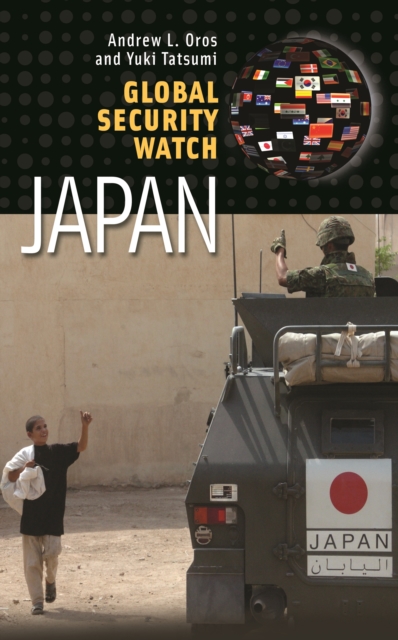
Global security watch, Japan
This book offers a comprehensive overview of Japan's national security institutions and policy today, including a detailed discussion of Japan's regional security environment and its alliance with the United States in the context of the Democratic Party of Japan's rise to power in August 2009. 2010 marks the 50th anniversary of the revision of the U.S.-Japan Security Treaty, making Japan one of the United States's longest and most important military allies. Over 40,000 US troops are based in Japan, as is the only U.S. aircraft carrier based outside the United States, the USS George Washington. Japan possesses one of the world's largest economies and strongest military forces, and as a result, its national security policies and institutions are highly significant—not just to America, but to the rest of the global community as well. This book provides an overview of Japan's transformation into one of the world's most capable military powers over the past 150 years. Particular attention is paid to developments in the past decade, such as the 2009 change in the controlling political party and Japan's responses to new global security threats.
eBook


Maritime Strategy and National Security in Japan and Britain
This thought-provoking volume explores how, across more than a century, sea power empowered both the UK and Japan with a defensive shield, an instrument of deterrence, and an enabling tool in expeditionary missions to implement courses of actions to preserve national economic and security interests worldwide.
eBook


Exploring perceptions of public good(s), government, and global contributions in Japanese higher education: a phenomenographic approach
This study explores the multifaceted concept of \"public good(s)\" in the context of Japanese higher education. Through interviews with 11 stakeholders, including policymakers, representatives from academic associations, and institutional leaders from two national universities, the research reveals that \"public good(s)\" are perceived as societal benefits transcending individual interests, emphasizing inclusivity and open access. It underscores higher education and research's diverse roles in fostering \"public good(s)\" by cultivating enlightened citizens, generating knowledge, and promoting collaboration. The study highlights the evolving government-higher education relationship in Japan, transitioning from traditional intervention to strategic planning and policy guidance while maintaining a delicate balance between financial support and institutional autonomy. Personal backgrounds and identities shape stakeholders' interpretations and recommendations, contributing to the nuanced understanding of \"public good(s)\" in Japan's higher education landscape. The research also draws comparisons with global trends, emphasizing Japan's distinctive reliance on government funding, STEM focus, and commitment to global contributions rooted in cultural values. Ultimately, this study provides valuable insights into the complex dynamics of government-higher education relationships and the concept of \"public good(s)\" in Japanese higher education. (HRK / Abstract übernommen).
Journal Article