
Catalogue Search | MBRL


Are you sure you want to remove the book from the shelf?

{{itemTitle}}
72
result(s) for
"Japan -- Foreign relations -- 1989"
Sort by:

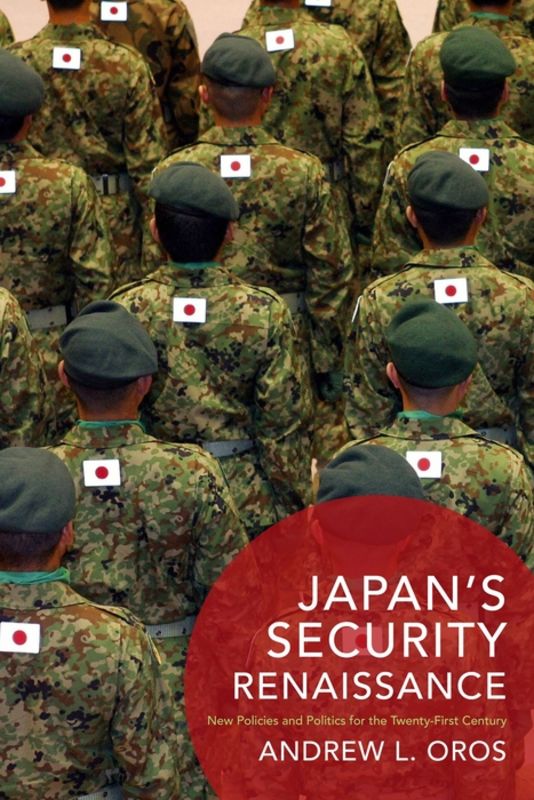
Japan's Security Renaissance
For decades after World War II, Japan chose to focus on soft power and economic diplomacy alongside a close alliance with the United States, eschewing a potential leadership role in regional and global security. Since the end of the Cold War, and especially since the rise of Prime Minister Shinzo Abe, Japan's military capabilities have resurged. In this analysis of Japan's changing military policy, Andrew L. Oros shows how a gradual awakening to new security challenges has culminated in the multifaceted \"security renaissance\" of the past decade.
Despite openness to new approaches, however, three historical legacies-contested memories of the Pacific War and Imperial Japan, postwar anti-militarist convictions, and an unequal relationship with the United States-play an outsized role. InJapan's Security RenaissanceOros argues that Japan's future security policies will continue to be shaped by these legacies, which Japanese leaders have struggled to address. He argues that claims of rising nationalism in Japan are overstated, but there has been a discernable shift favoring the conservative Abe and his Liberal Democratic Party. Bringing together Japanese domestic politics with the broader geopolitical landscape of East Asia and the world,Japan's Security Renaissanceprovides guidance on this century's emerging international dynamics.
eBook

Japan restored : how Japan can reinvent itself and why this is important for America and the world
\"In 1979, the book Japan as Number One: Lessons for America by Harvard University professor Ezra Vogel caused a sensation in the United States by pointing out that Japan was surpassing America as world economic leader; the book remains to this day the all-time bestseller in Japan of non-fiction by a Western author. The book was timely: Japan's subsequent \"bubble era\" of the 1980s saw the country booming. But since the economic bubble burst at the start of the 1990s, Japan has been in decline. Japan Restored by Clyde Prestowitz, taking up Vogel's baton, is written as a vision of Japan in the year 2050, when the country's economic recovery has made it a world leader in every area of human endeavor. Prestowitz looks back to the year 2014 as such a low point for Japan that a special reform commission was set up that helped the country regain its former position as a leader in technology, in business, and geopolitically. Looking at education, innovation, the role of women, corporate organization, energy, infrastructure, domestic government, and international alliances Prestowitz draws up a fascinating and controversial blueprint for the future success of Japan. As the eyes of the world turn towards Japan in the run-up to the 2020 Olympics, Japan Restored is as timely as the 1979 Vogel book that inspired it\"-- Provided by publisher.
Book

Japan and Germany as Regional Actors
The end of the Cold War and the bipolar era constituted a significant change in Germany's and Japan's foreign policy settings, granting both countries greater leeway to pursue policies divergent from Washington's strategy. This important book fills a gap in the existing literature by employing an explicitly comparative framework for analyzing and evaluating Germany's and Japan's post-Cold War regional foreign policy trajectories. Recent non-comparative studies diverge in their assessments of the extent to which the two countries' foreign policies are characterized by continuity or change, as while the majority of analyses on Germany find overall continuity in policies and guiding principles, prominent works on Japan see the country undergoing drastic change. Through a qualitative content analysis of key foreign policy speeches, this book traces and compares German and Japanese national role conceptions by identifying policymakers' perceived duties and responsibilities of their country in international politics. Further, through two case studies on missile defence policies and textbook disputes this study investigates actual foreign policy behaviour in order to question the assertion that post Cold War Germany and Japan are following very different paths.
Providing a much needed new analysis of German and Japanese foreign policies, this book will be of great use to students and scholars interested in Japanese politics, German politics, comparative politics and international relations more generally.
eBook

Japan and the G7/8
This book analyses Japan's international relations and participation in the multilateral forum, the G8, since its creation in 1975. The author explores the motivation of the Japanese government and non-governmental actor's aims and objectives and examines how and to what extent they have been achieved. Presenting a wealth of new research this theoretically informed book will be of interest to those studying interntional relations and Japanese politics.
eBook


Japan's China Policy
Japan's China Policy understands Japan's foreign policy in terms of power - one of the most central concepts of political analysis. It contributes a fresh understanding to the subject by developing relational power as an analytical framework and by applying it to significant issues in Japan's China policy: the negotiations for a bilateral investment protection treaty and the disputed Pinnacle (Senkaku/Diaoyu) Islands. Hagström demonstrates that Japan exerted power over China in such divergent empirical settings for the most part by using civilian instruments positively, defensively and through non-action. Given that Japan's foreign policy is often portrayed rather enigmatically in terms of power, the unique contribution of Japan's China Policy is to demonstrate how to analyze power aspects of Japan's foreign policy in a more coherent fashion. This revealing approach to Japan's foreign policy will be of huge interest to anyone studying Japanese politics, foreign policy or international relations.
eBook


Overcoming isolationism : Japan's leadership in East Asian security multilateralism
No detailed description available for \"Overcoming Isolationism\".
eBook