
Catalogue Search | MBRL


Are you sure you want to remove the book from the shelf?

{{itemTitle}}
15
result(s) for
"Japan -- Social life and customs -- 1600-1868"
Sort by:

What is a family? : answers from early modern Japan
\"What Is a Family? explores stories of the Japanese family under the political and social order established by the Tokugawa shogunate (1603-1868). This period showed variation in the ways that families navigated constraints and opportunities. But the circumstances and choices that made one family unlike another were framed, then as now, by the prevailing laws, norms, and controls on resources that shaped all lives. The selected family accounts in this collection of essays focus on a wide variety of individuals ranging from military elite to agrarian villagers and communities of outcastes. Each chapter incorporates diverse sources--from population registers and legal documents to personal letters and diaries--while combining wide accounts of collective practices with intimate portraits of individual actors\"--Provided by publisher.
Book

Imagery of the Orchid Pavilion Gathering
This book examines the cultural networks that connected people during the Edo period (1603-1868) by surveying a wide range of visual representations of the Orchid Pavilion Gathering produced mostly in Japan. The Orchid Pavilion Gathering is one of the most important painting themes in the cultural history of East Asia, yet there has hitherto been no monograph focused on this subject in the English language. This project introduces the many important images representing and related to the Gathering, some of which have never before been published.
eBook


Mabiki
This book tells the story of a society reversing deeply held worldviews and revolutionizing its demography. In parts of eighteenth-century Japan, couples raised only two or three children. As villages shrank and domain headcounts dwindled, posters of child-murdering she-devils began to appear, and governments offered to pay their subjects to have more children. In these pages, the long conflict over the meaning of infanticide comes to life once again. Those who killed babies saw themselves as responsible parents to their chosen children. Those who opposed infanticide redrew the boundaries of humanity so as to encompass newborn infants and exclude those who would not raise them. In Eastern Japan, the focus of this book, population growth resumed in the nineteenth century. According to its village registers, more and more parents reared all their children. Others persisted in the old ways, leaving traces of hundreds of thousands of infanticides in the statistics of the modern Japanese state. Nonetheless, by 1925, total fertility rates approached six children per women in the very lands where raising four had once been considered profligate. This reverse fertility transition suggests that the demographic history of the world is more interesting than paradigms of unidirectional change would have us believe, and that the future of fertility and population growth may yet hold many surprises.
eBook

Everyday people in early modern Kyoto : family, firm and community
\"This social history explores the lives of urban commoners in early modern Kyoto during the dramatic political shift from famine to revolution in the final decades of the Tokugawa regime, through an extensive survey of the detailed record changes from 1843 in response to these crises. The study focuses on three aspects of urban life, beginning with individual and household relations with the neighborhood communities that comprised the institutional framework of urban administration and provided financial and legal resources for residents. It then moves to the lives of ordinary people, taking a life-course approach to analyze life-cycle work: marriage, divorce, blended families, fertility, adoption, migration, mobility, and mortality. The final theme discusses households people lived in, headship succession and devolution of property; family business as a network of household shops and workshops; and the roles women played, while testing the patriarchy theories commonly used in this field and finding new explanations. Written for all levels of expertise and including many stories of everyday people, this book will appeal to undergraduate students and general readers interested in historical Kyoto\"-- Provided by publisher.
BOOK

Lust, commerce, and corruption
By 1816, Japan had recovered from the famines of the 1780s and moved beyond the political reforms of the 1790s. Despite persistent economic and social stresses, the country seemed to be approaching a new period of growth. The idea that the shogunate would not last forever was far from anyone's mind.
Yet, in that year, an anonymous samurai author completed one of the most detailed critiques of Edo society known today. Writing as Buyo Inshi, \"a retired gentleman of Edo,\" he expresses a profound despair with the state of the realm and with people's behavior and attitudes. He sees decay wherever he turns and believes the world will soon descend into war.
Buyo shows a familiarity with many corners of Edo life that one might not expect in a samurai. He describes the corruption of samurai officials; the suffering of the poor in villages and cities; the operation of brothels; the dealings of blind moneylenders; the selling and buying of temple abbotships; and the dubious strategies townspeople use in the law courts. Perhaps the frankness of his account, which contains a wealth of concrete information about Edo society, made him prefer to remain anonymous.
This volume contains a full translation of Buyo's often-quoted but rarely studied work by a team of specialists on Edo society. Together with extensive annotation of the translation, the volume includes an introduction that situates the text culturally and historically.
eBook


A shogun's guide
\"From being a successful warrior to making your own rules, this book will show you how to become a shogun and what to do--no matter how fiendish--to keep the position\"--Provided by publisher.
Book
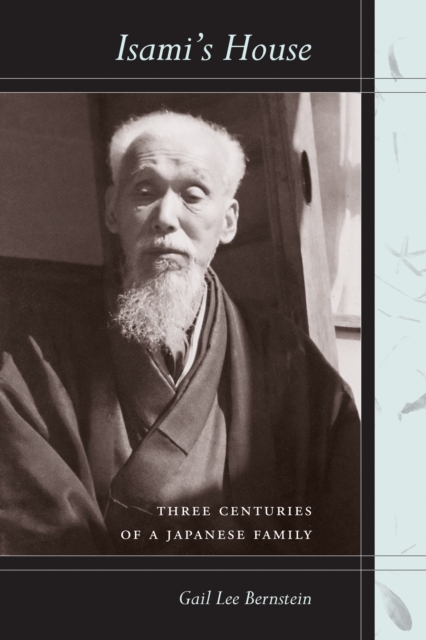
Isami's house
In this powerful and evocative narrative, Gail Lee Bernstein vividly re-creates the past three centuries of Japanese history by following the fortunes of a prominent Japanese family over fourteen generations. The first of its kind in English, this book focuses on Isami, the eleventh generation patriarch and hereditary village head. Weaving back and forth between Isami's time in the first half of the twentieth century and his ancestors' lives in the Tokugawa and Meiji eras, Bernstein uses family history to convey a broad panoply of social life in Japan since the late 1600s. As the story unfolds, she provides remarkable details and absorbing anecdotes about food, famines, peasant uprisings, agrarian values, marriage customs, child-rearing practices, divorces, and social networks. Isami's House describes the role of rural elites, the architecture of Japanese homes, the grooming of children for middle-class life in Tokyo, the experiences of the Japanese in Japan's wartime empire and on the homefront, the aftermath of the country's defeat, and, finally, the efforts of family members to rebuild their lives after the Occupation. The author's forty-year friendship with members of the family lends a unique intimacy to her portrayal of their history. Readers come away with an inside view of Japanese family life, a vivid picture of early modern and modern times, and a profound understanding of how villagers were transformed into urbanites and what was gained, and lost, in the process.
eBook