
Catalogue Search | MBRL


Are you sure you want to remove the book from the shelf?

{{itemTitle}}
2,299
result(s) for
"Japan Armed Forces"
Sort by:


Uneasy warriors
Following World War II, Japan's postwar constitution forbade the country to wage war or create an army. However, with the emergence of the cold war in the 1950s, Japan was urged to establish the Self-Defense Forces as a way to bolster Western defenses against the tide of Asian communism. Although the SDF's role is supposedly limited to self-defense, Japan's armed forces are equipped with advanced weapons technology and the world's third-largest military budget. Sabine Frühstück draws on interviews, historical research, and analysis to describe the unusual case of a non-war-making military. As the first scholar permitted to participate in basic SDF training, she offers a firsthand look at an army trained for combat that nevertheless serves nontraditional military needs.
eBook


Samurai to Soldier
In Samurai to Soldier , D. Colin Jaundrill rewrites the
military history of nineteenth-century Japan. In fifty years
spanning the collapse of the Tokugawa shogunate and the rise of the
Meiji nation-state, conscripts supplanted warriors as Japan's
principal arms-bearers. The most common version of this story
suggests that the Meiji institution of compulsory military service
was the foundation of Japan's efforts to save itself from the
imperial ambitions of the West and set the country on the path to
great power status. Jaundrill argues, to the contrary, that the
conscript army of the Meiji period was the culmination-and not the
beginning-of a long process of experimentation with military
organization and technology.
Jaundrill traces the radical changes to Japanese military
institutions, as well as the on-field consequences of military
reforms in his accounts of the Boshin War (1868-1869) and the
Satsuma Rebellions of 1877. He shows how pre-1868 developments laid
the foundations for the army that would secure Japan's Asian
empire.
eBook


Japan's Security Identity
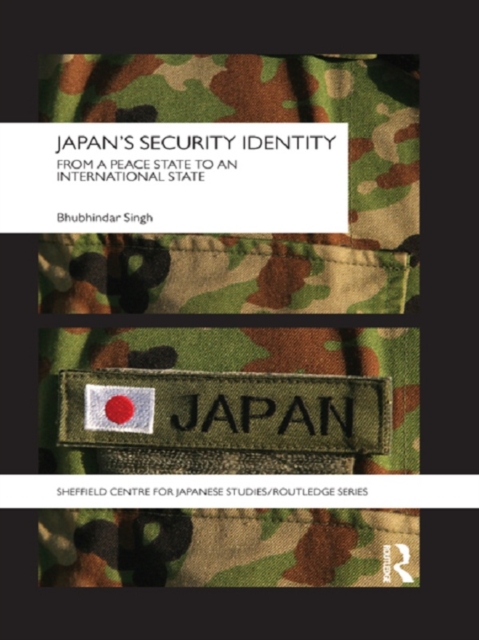
Since the end of the Cold War, there has been a significant change in Japanese security policy, as Japan's security identity has shifted from a peace state, to an international state. In this book, Bhubhindar Singh argues that from the 1990s onwards, the Japanese security policymaking elite recognized that its earlier approach to security policy which was influenced by the peace-state security identity was no longer appropriate. Rather, as a member of the international community, Japan had to carve out a responsible role in regional and international security affairs, which required greater emphasis on the role of the military in Japan's security policy.
To explore the change in Japan's security identity and its associated security behaviour, this book contrasts the three areas that define and shape Japanese security policy: Japan's conception (or definition) of national security; the country's contribution, in military terms, to regional and international affairs; and the changes to the security policy regime responsible for the security policy formulation. Further, it seeks to challenge the dominant realist interpretation of Japanese security policy by adopting an identity-based approach and showing how whilst realist accounts correctly capture the trajectory of Japanese post-Cold War security policy, they fail to explain the underlying causes of the change in Japanese security behaviour in the post-Cold War period.
This book is an important addition to the current literature on Japanese security policy, and will be of great use to students and scholars interested in Japanese and Asian politics, as well as security studies and international relations more broadly.
eBook

Japan's economic planning and mobilization in wartime, 1930s-1940s : the competence of the state
\"Although most economists maintain a mistrust of a government's goals when it intervenes in an economy, many continue to trust its actual ability. They retain, in other words, a faith in state competence. For this faith, they adduce no evidence. Sharing little skepticism about the government's ability, they continue to expect the best of governmental intervention. To study government competence in World War II Japan offers an intriguing laboratory. In this book, Yoshiro Miwa shows that the Japanese government did not conduct requisite planning for the war by any means. It made its choices on an ad hoc basis and the war itself quickly became a dead end. That the government planned for the war incompetently casts doubts on the accounts of Japanese government leadership more generally\"-- Provided by publisher.
Book
Creating Japan's Ground Self-Defense Force, 1945-2015
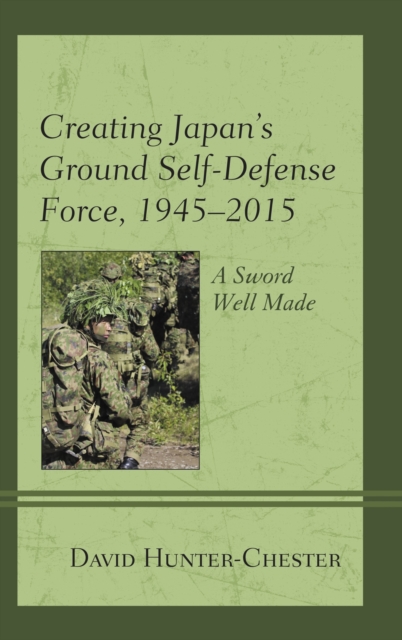
Creating Japan’s Ground Self-Defense Force, 1945–2015 is a timely contribution to postwar Japan security studies. It is the first comprehensive account of Japan’s post-1945 army, including a comprehensive institutional history, together with the evolution of roles and missions and the adoption of successive professional identities. The organizational history is embedded within a thorough examination of Japan’s own defense policy, as well as of America’s policy of alliance with Japan. The book examines and challenges assumptions about the drafting and adoption of the War Renunciation clause of Japan’s postwar Peace Constitution, Article 9, which uniquely not only renounces war, but the arms to wage war. Thus Japan’s army is not called an army, but the Ground Self-Defense Force (GSDF). The work also examines the place of an army and soldiers in the formation of Japan’s national identity after its last devastating war, and explores the impact of constitutional, legal and policy restrictions, as well as the power of the legacy of the still-largely vilified Imperial Japanese Army on GSDF members who seek to serve because “there are people we want to protect.” The study is rounded by an examination of the place of soldiers in Japan’s popular culture, focused on movies, manga and anime, assessing the impact on the GSDF of a public imagination that most often ignores or villainizes soldiers, though ending with a note that some positive images of soldiers and of the GSDF members themselves have started to appear in the last few years. The book’s author, a retired U.S. Army soldier who spent more than twenty years working, studying and training with the GSDF, offers a broad-ranging exploration of a unique organization. This work is extensively researched, using English and Japanese sources, and will appeal to anyone interested in Japanese security studies, alliance studies, and military imagery in Japanese pop culture, as well as to students of military history, international security, international relations, and cultural identity.
eBook