
Catalogue Search | MBRL


Are you sure you want to remove the book from the shelf?

{{itemTitle}}
47
result(s) for
"Japan Commerce Netherlands History."
Sort by:


The Company and the Shogun
The Dutch East India Company was a hybrid organization combining the characteristics of both corporation and state that attempted to thrust itself aggressively into an Asian political order in which it possessed no obvious place and was transformed in the process.
This study focuses on the company's clashes with Tokugawa Japan over diplomacy, violence, and sovereignty. In each encounter the Dutch were forced to retreat, compelled to abandon their claims to sovereign powers, and to refashion themselves again and again -- from subjects of a fictive king to loyal vassals of the shogun, from aggressive pirates to meek merchants, and from insistent defenders of colonial sovereignty to legal subjects of the Tokugawa state. Within the confines of these conflicts, the terms of the relationship between the company and the shogun first took shape and were subsequently set into what would become their permanent form.
The first book to treat the Dutch East India Company in Japan as something more than just a commercial organization,The Company and the Shogunpresents new perspective on one of the most important, long-lasting relationships to develop between an Asian state and a European overseas enterprise.
eBook

The Deshima Diaries
English translation of the marginalia, or marginal notes, that were added to the text of the Deshima Diaries diaries from the 1670's onwards in order to provide the Dutch chief of Deshima (Dutch East India Company (VOC)) with a quick reference to the notes of his predecessors. This volume covers the marginalia from the 1740-4800 diaries.
eBook


Dutch Ships in Tropical Waters
The end of the 16th century saw Dutch expansion in Asia, as The Dutch East India Company (the VOC) was fast becoming an Asian power, both political and economic. By 1669, the VOC was the richest private company the world had ever seen. This landmark study looks at perhaps the most important tool in the Company' trading - its ships. In order to reconstruct the complete shipping activities of the VOC, the author created a unique database of the ships' movements, including frigates and other, hitherto ingored, smaller vessels. Parthesius's research into the routes and the types of ships in the service of the VOC proves that it was precisely the wide range of types and sizes of vessels that gave the Company the ability to sail - and continue its profitable trade - the year round. Furthermore, it appears that the VOC commanded at least twice the number of ships than earlier historians have ascertained. Combining the best of maritime and social history, this book will change our understanding of the commercial dynamics of the most successful economic organization of the period.
Robert Parthesius brengt de scheepvaart en handel van de VOC volledig in kaart. Hij toont aan dat de intra-Aziatische handel sleutel was tot het succes van de maatschappij in de zeventiende eeuw. Met dit boek rekent Robert Parthesius af met het bestaande beeld van de Verenigde Oostindische Compagnie (VOC). Parthesius reconstrueert tot in detail de grootte en de activiteiten van de maatschappij. Hij toont aan dat het aantal schepen onder bevel van de VOC minstens twee keer zo groot was als tot nu toe gedacht. Voorheen is vooral onderzoek gedaan naar het scheepvaartverkeer tussen Azië en Europa, de zogenaamde 'Retourvaart'. Parthesius keek verder dan deze retourvaart en analyseerde de ontwikkeling van het Nederlandse scheepvaartnetwerk in Azië van 1595 tot 1660. Voor deze studie verzamelde hij alle gegevens over VOC-schepen in een database. Zo bracht hij de scheepsroutes van de fregatten maar ook die van de kleinere schepen uitgebreid in kaart. Door de intra-Aziatische handel in de zeventiende eeuw en door de diversiteit aan schepen kon de VOC het hele jaar door varen en streefde zo concurrerende maatschappijen als die van de Portugezen voorbij. Dutch Ships in Tropical Waters is een unieke combinatie van maritiem en sociaal-historisch onderzoek. Dit boek verandert onze kijk op de commerciële dynamiek van de meest succesvolle organisatie in de zeventiende eeuw.
eBook
The Netherlands, Indies and Japan
This volume chronicles the facts concerning the relations between the Netherlands in Asia and Japan during the last two years before the outbreak of war in the Pacific and concentrates on political and economic affairs.
1. Background 2. Relations Before 1940 3. The Opening Moves 4. The Kobayashi Mission 5. The Yoshizawa Mission 6. The Last Months of Crumbling Peace 7. Retrospect
eBook
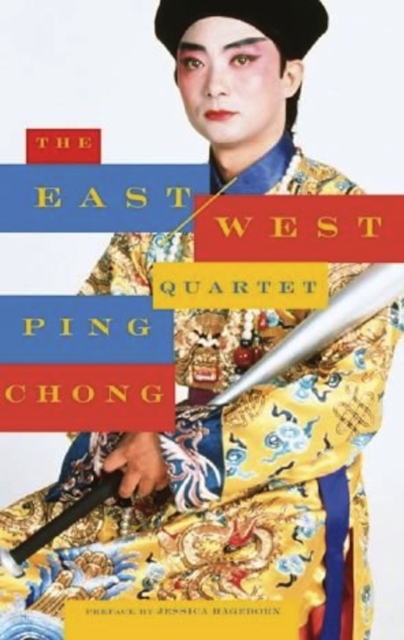
The East/West Quartet
For nearly three decades, Ping Chong and his company have written and staged some of the most innovative and arresting examinations of \"the Other\" on stages in the U.S., Europe, and Asia. His work more than any other artist has explored the ways Asian cultures have intersected with contemporary American society and throughout history. This volume collects four of his masterworks created over the past decade, including: Deshima(1990), a documentary collage of the history of the West and Japan; Chinoiserie(1995), spans centuries, continents and cultures, where the mysterious East meets the mysterious West; After Sorrow(1997), explores the legacy of war in Vietnam; Pojagi(1999), a poetic documentary on Korea from the sixteenth century to today. The Washington Posthas said these works are \"like poems in their simplicity and power to evoke . . . -carefully wrought and beautifully designed. Artfully and elegantly conceived, rich in metaphor, political yet deeply personal, the four works inThe East-West Quartettell us much about the pitfalls and ironies of history, the various contradictions, collisions and collusions within the East and the West, and the search for national and personal identity. A true citizen of the world, Ping Chong refuses to be pigeonholed and goes his own way, as much at home on the streets of Beijing and Paris as he is on the Canal Street in New York. He continues to make work that bristles with intelligence, that is filled with empathy for the human condition, that is angry yet beautiful - work that matters. It is all here in this book.\" - Jessica Hagedorn, from her preface \"As an artist , I'm an outsider in American society. As an experimental artist, I'm an outsider in the art world. As a person of color, I'm an outsider; as an immigrant, I'm an outsider; as a gay man, I'm an outsider. It's the position that fate has allotted me, but it's a valuable postion to be in, because I think every society should have a mirror held to it by the outsider.\"-Ping Chong, 1999 Ping Chongwas born in 1946 and raised in the Chinatown section of New York City. He began his theatrical career with Meredith Monk and later founded his own company in 1975, which later became Ping Chong and Company. It was created to explore the meaning of contemporary theatre and art on a national and international level. He has created over fifty major works for the stage, includingHumboldt's Current, Nosferatu, Kind Ness, andUndesirable Elements. His works have received numerous Obie and Bessie Awards and are performed throughout the world.
eBook

A Case of Business Failure: The Netherlands Trading Company (NHM) in Japan, 1859 to 1881
In late December 1880 the Nederlandsche Handel-Maatschappij N.V. (Netherlands Trading Company Ltd. hereafter: NHM) closed its last remaining sales office in Japan. The NHM was probably one of the largest and most successful Dutch trading houses from the mid-1850s. Why did the NHM fail and decided to pull out of Japan? I will argue that the failure was mainly due to the loss of old and profitable networks after the Meiji Restoration of 1868 and the inability of the NHM to establish the same kind of links with the new Japanese government. The exit of the NHM mirrors the decline of Dutch economic relations with Japan after 1859. The once prominent position of the Dutch was lost to other western countries, notably Great Britain, the United States, France and Germany. The failure of the NHM can hardly be attributed to only exogenous or endogenous factors. The revolutionary changes introduced after the Meiji Restoration could not have been foreseen by any businessmen. The NHM sales offices may have failed in Japan, but the company as a whole continued to prosper in the Dutch East Indies and other markets. Business history is mainly concerned with investigating and explaining the successes of entrepreneurs and shows relatively little interest in business failures creating an unbalanced view of the history of business. The history of the NHM in Japan provides an opportunity to investigate a case of business failure and the many factors that influence entrepreneurship. Entrepreneurs often try out new products and probe new markets. When the results are disappointing, they pull out. Failed investments can provide valuable lessons and a company may try to enter the same market again as the NHM did successfully in the 1920s when it opened offices in Kobe, and after the Second World War in Osaka and Tokyo.
Journal Article

Cocaine
Cocaine examines the rise and fall of this notorious substance from its legitimate use by scientists and medics in the nineteenth century to the international prohibitionist regimes and drug gangs of today. Themes explored include:
Amsterdam's complex cocaine culture
the manufacture, sale and control of cocaine in the United States
Japan and the Southeast Asian cocaine industry
export of cocaine prohibitions to Peru
sex, drugs and race in early modern London Cocaine unveils new primary sources and covert social, cultural and political transformations to shed light on cocaine's hidden history.
eBook