
Catalogue Search | MBRL


Are you sure you want to remove the book from the shelf?

{{itemTitle}}
1,584
result(s) for
"Japan Ethnic relations."
Sort by:


Resilient borders and cultural diversity
This book discusses how the evolution of market-driven cultural globalization has reinforced the administration of national cultural borders in Japan. As a result of these processes, a particular kind of cross-border connectivity and exchange is embraced while cross-border dialogue and engagement with multicultural questions within Japan are discouraged.
eBook


Diaspora without homeland
More than one-half million people of Korean descent reside in Japan today--the largest ethnic minority in a country often assumed to be homogeneous. This timely, interdisciplinary volume blends original empirical research with the vibrant field of diaspora studies to understand the complicated history, identity, and status of the Korean minority in Japan. An international group of scholars explores commonalities and contradictions in the Korean diasporic experience, touching on such issues as citizenship and belonging, the personal and the political, and homeland and hostland.
eBook
Engaging the other : 'Japan' and its alter egos, 1550-1850
\"In Engaging the Other : 'Japan' and Its Alter Egos, 1550-1850, Ronald P. Toby examines new discourses of identity and difference in early modern Japan, a discourse catalyzed by the 'Iberian irruption,' the appearance of Portuguese and other new, radical others in the sixteenth century. The encounter with peoples and countries unimagined in earlier discourse provoked an identity crisis, a paradigm shift from a view of the world as comprising only 'three countries' (sangoku), i.e., Japan, China and India, to a world of 'myriad countries' (bankoku) and peoples. In order to understand the new radical alterities, the Japanese were forced to establish new parameters of difference from familiar, proximate others, i.e., China, Korea and Ryukyu. Toby examines their articulation in literature, visual and performing arts, law, and customs\"-- Provided by publisher.
Book

Redefining Japaneseness
There is a rich body of literature on the experience of Japanese immigrants in the United States, and there are also numerous accounts of the cultural dislocation felt by American expats in Japan. But what happens when Japanese Americans, born and raised in the United States, are the ones living abroad in Japan?
Redefining Japanesenesschronicles how Japanese American migrants to Japan navigate and complicate the categories of Japanese and \"foreigner.\" Drawing from extensive interviews and fieldwork in the Tokyo area, Jane H. Yamashiro tracks the multiple ways these migrants strategically negotiate and interpret their daily interactions. Following a diverse group of subjects-some of only Japanese ancestry and others of mixed heritage, some fluent in Japanese and others struggling with the language, some from Hawaii and others from the US continent-her study reveals wide variations in how Japanese Americans perceive both Japaneseness and Americanness.
Making an important contribution to both Asian American studies and scholarship on transnational migration,Redefining Japanesenesscritically interrogates the common assumption that people of Japanese ancestry identify as members of a global diaspora. Furthermore, through its close examination of subjects who migrate from one highly-industrialized nation to another, it dramatically expands our picture of the migrant experience.
eBook

Rights make might : global human rights and minority social movements in Japan
\"Rights Make Might examines why the three most salient minority groups in Japan all expanded their activism since the late 1970s and chronicles the galvanizing effects of global human rights ideas and institutions on local social movements. The prehistory of the three groups reveals that minority politics in Japan before the 1970s featured politically dormant Ainu - an indigenous people in northern Japan -, active but unsuccessful Koreans - a stateless colonial legacy group -, and active and established Burakumin - a former outcaste group that still faced social discrimination. Despite the unfavorable domestic political environment, the infusion of global human rights ideas and the opening of international human rights arenas as new venues for contestation transformed minority activists' movement actorhood, or subjective understanding about their position and entitled rights in Japan, as well as the views of the Japanese public and political establishment toward those groups, thus catalyzing substantial gains for all three groups. Having benefited from global human rights, all three groups also repaid their debt by contributing to the consolidation and expansion of global human rights principles and instruments. Drawing on interviews and archival data, Rights Make Might offers a detailed historical and comparative analysis of the co-constitutive relationship between international human rights activities and local politics that contributes to our understanding of international norms, multilateral institutions, social movements, human rights, and ethno-racial politics\"-- Provided by publisher.
Book

Multiculturalism in the New Japan
Like other industrial nations, Japan is experiencing its own forms of, and problems with, internationalization and multiculturalism. This volume focuses on several aspects of this process and examines the immigrant minorities as well as their Japanese recipient communities. Multiculturalism is considered broadly, and includes topics often neglected in other works, such as: religious pluralism, domestic and international tourism, political regionalism and decentralization, sports, business styles in the post-Bubble era, and the education of immigrant minorities.
eBook

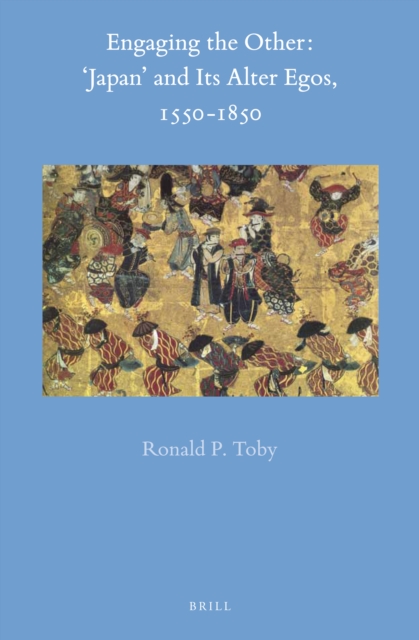
Engaging the other : \Japan\ and its alter egos, 1550-1850
In Engaging the Other: \"Japan and Its Alter-Egos\", 1550-1850 Ronald P. Toby examines new discourses of identity and difference in early modern Japan, a discourse catalyzed by the \"Iberian irruption,\" the appearance of Portuguese and other new, radical others in the sixteenth century. The encounter with peoples and countries unimagined in earlier discourse provoked an identity crisis, a paradigm shift from a view of the world as comprising only \"three countries\" (sangoku), i.e., Japan, China and India, to a world of \"myriad countries\" (bankoku) and peoples. In order to understand the new radical alterities, the Japanese were forced to establish new parameters of difference from familiar, proximate others, i.e., China, Korea and Ryukyu. Toby examines their articulation in literature, visual and performing arts, law, and customs.
eBook