
Catalogue Search | MBRL


Are you sure you want to remove the book from the shelf?

{{itemTitle}}
179
result(s) for
"Japan History 1868-"
Sort by:


Selling the Future
In Selling the Future
, Ryan Moran explains how the life insurance industry in
Japan exploited its association with mutuality and community to
commodify and govern lives. Covering the years from the
start of the industry in 1881 through the end of World War II,
Moran describes insurance companies and government officials
working together to create a picture of the future as precarious
and dangerous. Since it was impossible for individual consumers to
deal with every contingency on their own, insurance industry
administrators argued that their usage of statistical data enabled
them to chart the predictable future for the aggregate. Through
insurance, companies and the state thus offered consumers a means
to a perfectible future in an era filled with repeated crises.
Life insurance functioned as an important modernist technology
within Japan and its colonies to instantiate expectations for
responsibility, to reconfigure meanings of mutuality, and to
normalize new social formations (such as the nuclear family) as
essential to life. Life insurance thus offers an important vehicle
for examining the confluence of modes of mobilizing and organizing
bodies, the expropriation of financial resources, and the action of
disciplining workers into a capitalist system.
eBook


Japan Emerging
Japan Emerging provides a comprehensive survey of Japan from prehistory to the nineteenth century. Incorporating the latest scholarship and methodology, leading authorities writing specifically for this volume outline and explore the main developments in Japanese life through ancient, classical, medieval, and early modern periods. Instead of relying solely on lists of dates and prominent names, the authors focus on why and how Japanese political, social, economic, and intellectual life evolved. Each part begins with a timeline and a set of guiding questions and issues to help orient readers and enhance continuity. Engaging, thorough, and accessible, this is an essential text for all students and scholars of Japanese history.
eBook


Punishment and Power in the Making of Modern Japan
The kinds of punishment used in a society have long been considered an important criterion in judging whether a society is civilized or barbaric, advanced or backward, modern or premodern. Focusing on Japan, and the dramatic revolution in punishments that occurred after the Meiji Restoration, Daniel Botsman asks how such distinctions have affected our understanding of the past and contributed, in turn, to the proliferation of new kinds of barbarity in the modern world.
While there is no denying the ferocity of many of the penal practices in use during the Tokugawa period (1600-1868), this book begins by showing that these formed part of a sophisticated system of order that did have its limits. Botsman then demonstrates that although significant innovations occurred later in the period, they did not fit smoothly into the \"modernization\" process. Instead, he argues, the Western powers forced a break with the past by using the specter of Oriental barbarism to justify their own aggressive expansion into East Asia. The ensuing changes were not simply imposed from outside, however. The Meiji regime soon realized that the modern prison could serve not only as a symbol of Japan's international progress but also as a powerful domestic tool. The first English-language study of the history of punishment in Japan, the book concludes by examining how modern ideas about progress and civilization shaped penal practices in Japan's own colonial empire.
eBook

Designing Modern Japan
A revealing look at Japanese design weaving together the stories of people who shaped Japan's design industries with social history, economic conditions, and geopolitics. From cars to cameras, design from Japan is ubiquitous. So are perceptions of Japanese design, from calming, carefully crafted minimalism to avant-garde catwalk fashion, or the cute, Kawaii aesthetic populating Tokyo streets. But these portrayals overlook the creativity, generosity, and sheer hard work that has gone into creating and maintaining design industries in Japan. In Designing Modern Japan, Sarah Teasley deftly weaves together the personal stories of people who shaped and shape Japan's design industries with social history, economic conditions, and geopolitics.. Key to her account is how design has been a strategy to help communities thrive during turbulent times, and for making life better along the way. Deeply researched and superbly illustrated, Designing Modern Japan appeals to a wide audience for Japanese design, history, and culture.
eBook

Give and take : poverty and the status order in early modern Japan
\"Offers a new history of early modern Japan that focuses on ordinary subjects: merchants, artisans, peasants, and people at the margins of society such as entertainers, laborers, and outcastes. This is the first book to explore how high and low people in Tokugawa society negotiated and collaborated with one other\"--Provided by publisher.
Book
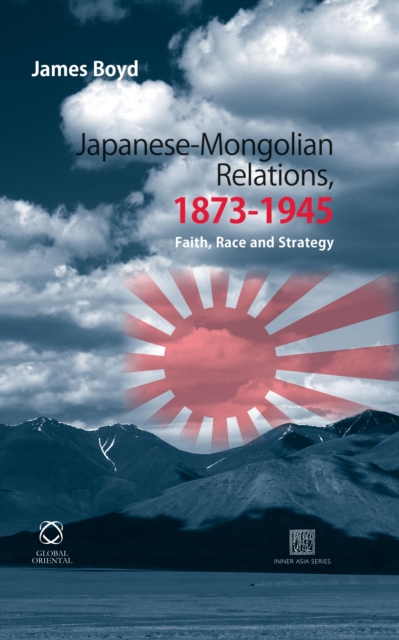
Japanese-Mongolian Relations, 1873-1945
This book offers the first in-depth examination of Japanese-Mongolian relations from the late nineteenth century through to the middle of the twentieth century and in the process repositions Mongolia in Sino-Japanese and Russo-Japanese relations. Beginning in 1873, with the intrepid journey to Mongolia by a group of Buddhist monks from one of Kyoto's largest orders, the relationship later included groups and individuals from across Japanese society, with representatives from the military, academia, business and the bureaucracy. Throughout the book, the interplay between these various groups is examined in depth, arguing that to restrict Japan's relationship with Mongolia to merely the strategic and as an adjunct to Manchuria, as has been done in other works, neglects important facets of the relationship, including the cultural, religious and economic. It does not, however, ignore the strategic importance of Mongolia to the Japanese military. The author considers the cultural diplomacy of the Zenrin kyôkai, a Japanese quasi-governmental humanitarian organization whose activities in inner Mongolia in the 1930s and 1940s have been almost completely ignored in earlier studies and whose operations suggest that Japanese-Mongolian relations are quite distinct from other Asian peoples. Accordingly, the book makes a major contribution to our understanding of Japanese activities in a part of Asia that figured prominently in pre-war and wartime Japanese strategic and cultural thinking.
eBook