
Catalogue Search | MBRL


Are you sure you want to remove the book from the shelf?

{{itemTitle}}
457
result(s) for
"Japan Kyoto."
Sort by:


Tradition, Democracy and the Townscape of Kyoto
As the historic capital of the country and the stronghold of the nation's most celebrated traditions, the city of Kyoto holds a unique place in the Japanese imagination. Widely praised for the beauty of its townscape and natural environments, it is both a popular destination for tourists and home to one and a half million inhabitants. There has been a sustained, lively debate about how best to develop the city, with a large number of local government officials, citizen activists, urban planners, real-estate developers, architects, builders, proprietors, academic researchers, and ordinary Kyotoites involved in discussions, forming a highly peculiar social arena that has no match elsewhere in Japan.
This book, based on extensive fieldwork and interviews, provides an ethnographic study of this particular social field. It analyses how people in Kyoto deal with their most cherished traditions, such as the traditional town houses and the famous Gion matsuri festival, which calls into question several of the standard social scientific assumptions about the functions of cultural heritage for present-day societies. The book looks at the way concerned citizens, government bureaucrats, and other important players interact with each other over contentious modern buildings, often with the best intentions but constrained by set role expectations and by the superior power of national-level regulations and agencies. This book contributes to debates on the social uses of tradition and heritage, and the question of how to create sustainable, liveable urban environments.
eBook

A guide to the gardens of Kyoto
\"Designed for the layman as well as the professional, this concise yet comprehensive guide provides both practical information and theoretical insights into the design of the Japanese garden. Kyoto, the capital of Japan for over one thousand years, possesses a richness of garden art without equal as a living chronicle of Japanese cultural history and environmental design. Following the introductory essays are individual entries for more than 50 temple and palace gardens. The text is augmented by an excellent selection of photographs, historical prints, maps, and colour plates.\"--Book flap.
Book
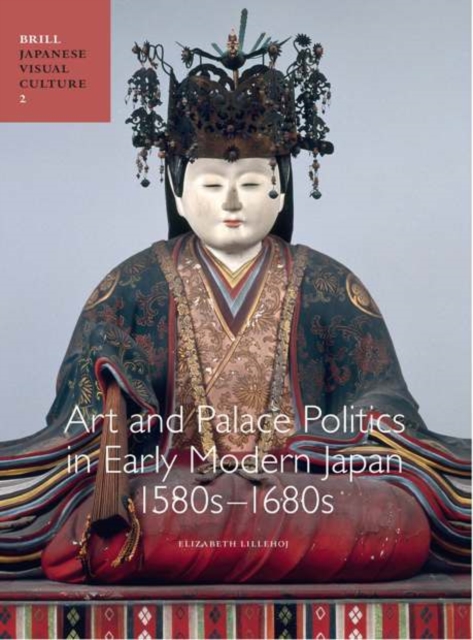
Art and Palace Politics in Early Modern Japan, 1580s-1680s
Magnificent art and architecture created for the emperor with the financial support of powerful warlords at the beginning of Japan's early modern era (1580s-1680s) testify to the continued cultural and ideological significance of the imperial family. Works created in this context are discussed in this groundbreaking study, with over 100 illustrations in color.
eBook


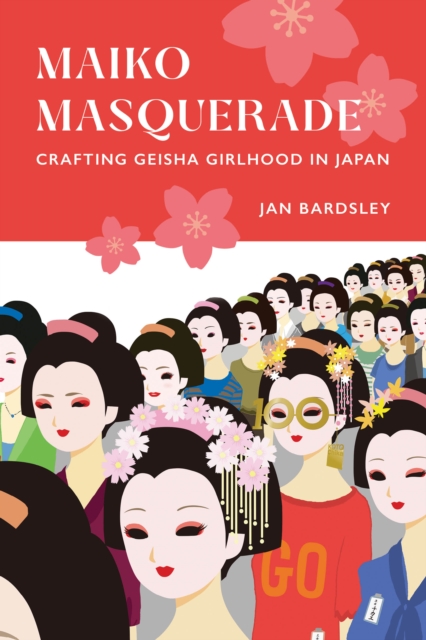
Maiko Masquerade
Maiko Masquerade explores Japanese representations of the
maiko, or apprentice geisha, in films, manga, and other popular
media as an icon of exemplary girlhood. Jan Bardsley traces how the
maiko, long stigmatized as a victim of sexual exploitation, emerges
in the 2000s as the chaste keeper of Kyoto's classical artistic
traditions. Insider accounts by maiko and geisha, their leaders and
fans, show pride in the training, challenges, and rewards maiko
face. No longer viewed as a toy for men's amusement, she serves as
catalyst for women's consumer fun. This change inspires stories of
ordinary girls-and even one boy-striving to embody the maiko ideal,
engaging in masquerades that highlight questions of personal
choice, gender performance, and national identity.
eBook

Kyoto visual culture in the early Edo and Meiji periods : the arts of reinvention
\"The city of Kyoto has undergone radical shifts in its significance as a political and cultural centre, as a hub of the national bureaucracy, as a symbolic and religious centre, and as a site for the production and display of art. However, the field of Japanese history and culture lacks a book which considers Kyoto on its own terms as a historic city with a changing identity. Examining cultural production in the city of Kyoto in two periods of political transition, this book promises to be a major step forward in advancing our knowledge of Kyoto's history and culture. Its chapters focus on two centuries in Kyoto's history in which the old capital was politically marginalised: the seventeenth century, when the centre of power shifted from the old imperial capital to the new warriors' capital of Edo; and the nineteenth century, when the imperial court itself was moved to the new modern centre of Tokyo. The contributors argue that in both periods the response of Kyoto elites--emperors, courtiers, tea masters, municipal leaders, monks, and merchants--was artistic production and cultural revival. As an artistic, cultural and historical study of Japan's most important historic city, this book will be invaluable to students and scholars of Japanese history, Asian history, the Meiji and Edo periods, art history, visual culture and cultural history\"--Provided by publisher.
Book

Labour Contracts and Labour Relations in Early Modern Central Japan
Based on a collection of labour contracts and other documents, this book examines the legal, economic and social relations of labour as they developed in the commercial enterprises of Tokugawa Japan. The urban focus is Kyoto, the cultural capital and smallest of the three great cities of the Tokugawa period, but the data comes from a wider region of commercial and castle towns and rural villages in central Japan.
eBook