
Catalogue Search | MBRL


Are you sure you want to remove the book from the shelf?

{{itemTitle}}
59
result(s) for
"Japanese Colonization History."
Sort by:

Brokers of empire : Japanese settler colonialism in Korea, 1876-1945
Between 1876 and 1945, thousands of Japanese civilians-merchants, traders, prostitutes, journalists, teachers, and adventurers-left their homeland for a new life on the Korean peninsula. Although most migrants were guided primarily by personal profit and only secondarily by national interest, their mundane lives and the states ambitions were inextricably entwined in the rise of imperial Japan. Despite having formed one of the largest colonial communities in the twentieth century, these settlers and their empire-building activities have all but vanished from the public memory of Japans presence in Korea. Drawing on previously unused materials in multi-language archives, Jun Uchida looks behind the official organs of state and military control to focus on the obscured history of these settlers, especially the first generation of pioneers between the 1910s and 1930s who actively mediated the colonial management of Korea as its grassroots movers and shakers. By uncovering the downplayed but dynamic role played by settler leaders who operated among multiple parties-between the settler community and the Government-General, between Japanese colonizer and Korean colonized, between colony and metropole-this study examines how these brokers of empire advanced their commercial and political interests while contributing to the expansionist project of imperial Japan. -- Publisher description.
Book

Emerging Memory
This incisive volume brings together postcolonial studies, visual culture and cultural memory studies to explain how the Netherlands continues to rediscover its history of violence in colonial Indonesia. Dutch commentators have frequently claimed that the colonial past and especially the violence associated with it has been 'forgotten' in the Netherlands. Uncovering 'lost' photographs and other documents of violence has thereby become a recurring feature aimed at unmasking a hidden truth. The author argues that, rather than absent, such images have been consistently present in the Dutch public sphere and have been widely available in print, on television and now on the internet. Emerging Memory: Photographs of Colonial Atrocity in Dutch Cultural Remembrance shows that between memory and forgetting there is a haunted zone from which pasts that do not fit the stories nations live by keep on emerging and submerging while retaining their disturbing presence.
eBook

Constructing empire : the Japanese in Changchun, 1905-45
While diplomats and soldiers may carve out empires, civilians also play a crucial role in building nation-states. Constructing Empire shows how planners, architects, and civilians contributed? often enthusiastically? to constructing a modern colonial enclave in the Japanese puppet state of Manchuria. Japanese imperialism in Manchuria before 1931 developed in a manner similar to that of other imperialists elsewhere in China, but beginning in 1932 the Japanese sought to surpass their rivals by transforming the northeastern city of Changchun into a grand capital for the new client state of Manchukuo, putting it on the cutting edge of Japanese propaganda. Providing a thematic assessment of the evolving nature of planning, architecture, economy, and society in Changchun, Bill Sewell examines the key organizations involved in developing Japan?s empire there as part of larger efforts to assert its place in the world order. This engaging book sheds light on colonial attitudes, changing definitions of national identity, and the responsibilities that civilians bear for historical events.
Book

Primitive selves
This remarkable book examines the complex history of Japanese colonial and postcolonial interactions with Korea, particularly in matters of cultural policy. E. Taylor Atkins focuses on past and present Japanese fascination with Korean culture as he reassesses colonial anthropology, heritage curation, cultural policy, and Korean performance art in Japanese mass media culture. Atkins challenges the prevailing view that imperial Japan demonstrated contempt for Koreans through suppression of Korean culture. In his analysis, the Japanese preoccupation with Koreana provided the empire with a poignant vision of its own past, now lost--including communal living and social solidarity--which then allowed Japanese to grieve for their former selves. At the same time, the specific objects of Japan's gaze--folk theater, dances, shamanism, music, and material heritage--became emblems of national identity in postcolonial Korea.
eBook

Negotiating Otherness? Mission Discourse of Difference among the Swiss and German Schooling Projects in 19th Century Japan
This article explores the personal encounters between the Swiss–German missionaries and their Japanese students through their school projects in the late nineteenth century, as a fresh approach to disclose an entirely new analytical angle to mission education and the production of otherness. By examining the personal encounter of missionaries with their students, it problematizes scholars’ reliance on the concept of otherness as a unidirectional transfer of knowledge from West to non-West. Instead, this study argues, that the process of “othering” should be looked at as a negotiation beyond an East–West hierarchical divide, in which new forms of beliefs and practices for Japanese converts emerged. An analysis of relevant missionary sources reveals that in the period 1885 to 1893 the missionaries’ work with the Japanese students evolved into a seemingly contradictory state. On the one side, the missionaries devoted a great number of resources and time in educating their Japanese subjects into what they perceived to be true Christians. On the other side, they repeatedly expressed deep doubts about their students’ potential to become the type of Christians they envisioned. Focusing on three cases of missionaries’ encounters with Japanese students, this article argues that the attempts and results of negotiating otherness in the Swiss–German mission school projects opened new possibilities for identity formation among Japanese Christians.
Journal Article
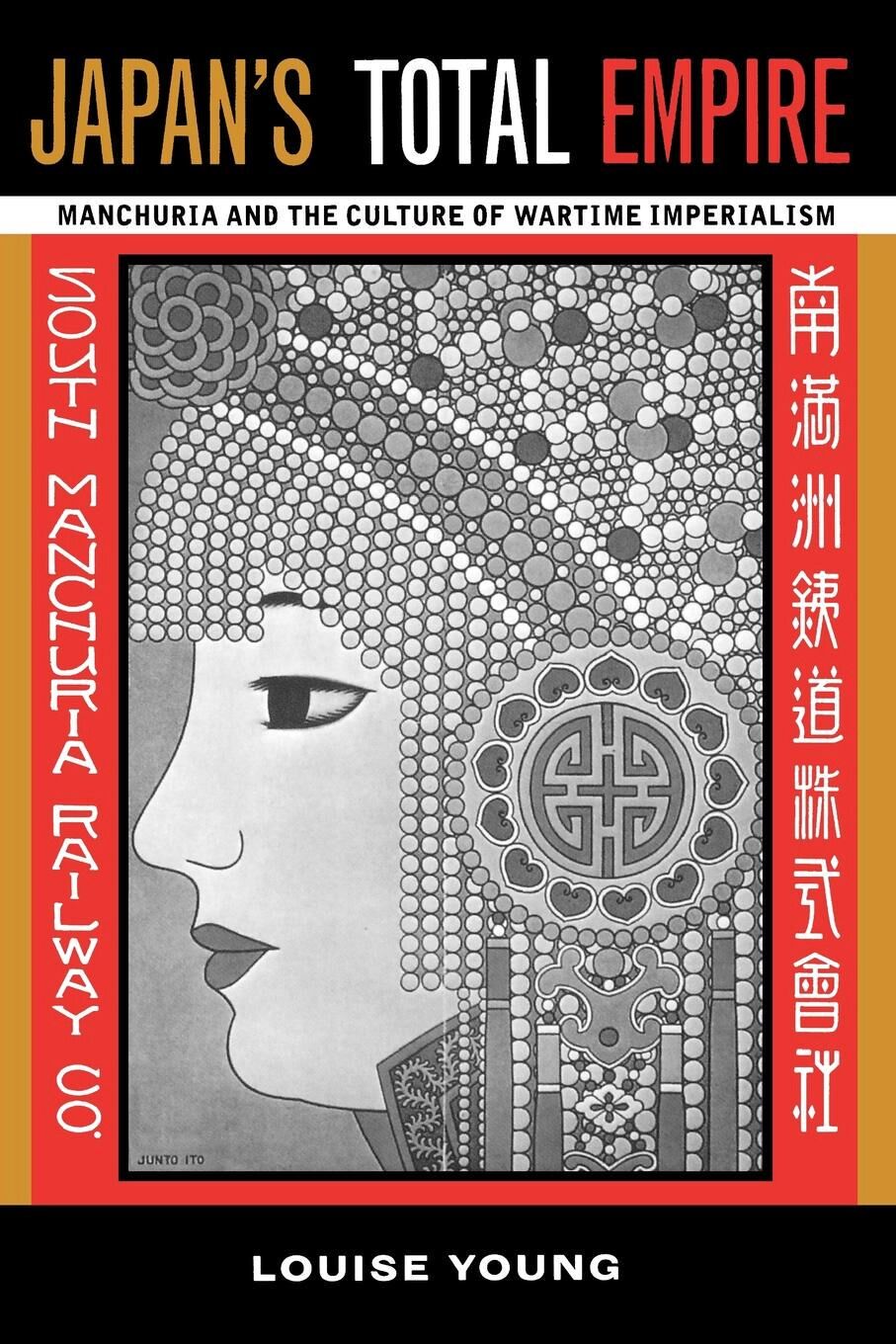
Japan's Total Empire
In this first social and cultural history of Japan's construction of Manchuria, Louise Young offers an incisive examination of the nature of Japanese imperialism. Focusing on the domestic impact of Japan's activities in Northeast China between 1931 and 1945, Young considers \"metropolitan effects\" of empire building: how people at home imagined and experienced the empire they called Manchukuo.Contrary to the conventional assumption that a few army officers and bureaucrats were responsible for Japan's overseas expansion, Young finds that a variety of organizations helped to mobilize popular support for Manchukuo—the mass media, the academy, chambers of commerce, women's organizations, youth groups, and agricultural cooperatives—leading to broad-based support among diverse groups of Japanese. As the empire was being built in China, Young shows, an imagined Manchukuo was emerging at home, constructed of visions of a defensive lifeline, a developing economy, and a settler's paradise.
eBook

Korean NGOs and Reconciliation with Japan
Strained South Korea–Japan ties are frequently attributed to the use and abuse of history by national leaders. This article considers a more bottom-up explanation by examining how Korean civil society is taking three different pathways to exert influence on bilateral relations. First, non-governmental organizations are expanding domestic and international awareness of grievances regarding Japan's 1910–1945 colonization of the Korean Peninsula. Second, activists are pushing court cases in attempts to change legal interpretations and government policies. Third, certain civic groups demand maximalist positions on history and stigmatize cooperation with Tokyo. While influential over Korean public opinion, these efforts win few hearts and minds in Japan and complicate productive diplomacy. With particular attention to the 2015 Korea–Japan agreement for “comfort women” survivors and the 2018 South Korean Supreme Court decisions on wartime labor, this article unpacks the relationship between activist Korean civil society and historical reconciliation with Japan, offering implications for foreign policy and state-society relations.
Journal Article
HISTORY OF LAND CONSERVATION IN AUSTRALIA SINCE 20TH CENTURY AND ITS IMPACT ON HUMAN SOCIAL BEHAVIOUR & GLOBAL BIODIVERSITY
The emerging erudition within land conservation methods represents a rapidly mounting focus. It is predominantly marked by the consideration that every life form on the earth depends directly upon the land that surrounds the life. In the recent past, researchers have turned their focus on Australia’s land following the European colonization since 1788. Landuse change has been a key focus and how the Australian Government was upfront to fight land deterioration by initiating land conservation methods since the end of the 20th century
Journal Article

Colonial Rule and Social Change in Korea, 1910-1945
Colonial Rule and Social Change in Korea 1910-1945 highlights the complex interaction between indigenous activity and colonial governance, emphasizing how Japanese rule adapted to Korean and missionary initiatives, as well as how Koreans found space within the colonial system to show agency. Topics covered range from economic development and national identity to education and family; from peasant uprisings and thought conversion to a comparison of missionary and colonial leprosariums. These various new assessments of Japan's colonial legacy may open up new and illuminating approaches to historical memory that will resonate not just in Korean studies, but in colonial and postcolonial studies in general, and will have implications for the future of regional politics in East Asia.
eBook

Picturing Gentlemen: Japanese Portrait Photography in Colonial Taiwan
This essay investigates the conditions of portrait photography in Taiwan during Japanese colonization. After a brief introduction to the theoretical issues concerning the indexical nature of the photograph, I consider the Japanese colonial photographic industry and its products (portraits) in three contexts: the state of photographic technology in the world at that time, the ideological machinery of colonization in Taiwan, and the wider phenomenon of colonial mimicry. In this consideration, I offer a diachronic analysis of photo albums and commercial directories that contain formal portraits of politically and economically influential (almost exclusively) men. Bringing these considerations together suggests an aspect of the colonial ideological machinery that has been underrepresented in other studies: the colonial portrait as a mask in several forms.
Journal Article