
Catalogue Search | MBRL


Are you sure you want to remove the book from the shelf?

{{itemTitle}}
10
result(s) for
"Japanese-British Columbia-History"
Sort by:

Witness to loss : race, culpability, and memory in the dispossession of Japanese Canadians
\"When the federal government uprooted and interned Japanese Canadians en masse in 1942, Kishizo Kimura saw his life upended along with tens of thousands of others. But his story is also unique: as a member of two controversial committees that oversaw the forced sale of the property of Japanese Canadians in Vancouver during the Second World War, Kimura participated in the dispossession of his own community. In Witness to Loss, Kimura's previously unknown memoir--written in the last years of his life--is translated from Japanese to English and published for the first time. This remarkable document chronicles a history of racism in British Columbia, describes the activities of the committees on which Kimura served, and seeks to defend his actions. Diverse reflections of leading historians, sociologists, and a community activist and educator who lived through this history give context to the memoir, inviting readers to grapple with a rich and contentious past. More complex than just hero or villain, oppressor or victim, Kimura raises important questions about the meaning of resistance and collaboration and the constraints faced by an entire generation. Illuminating the difficult, even impossible, circumstances that confronted the victims of racist state action in the mid-twentieth century, Witness to Loss reminds us that the challenge of understanding is greater than that of judgment.\"-- Provided by publisher.
Book

An Archaeology of Asian Transnationalism
In the early twentieth century, an industrial salmon cannery thrived along the Fraser River in British Columbia. Chinese factory workers lived in an adjoining bunkhouse, and Japanese fishermen lived with their families in a nearby camp. Today the complex is nearly gone and the site overgrown with vegetation, but artifacts from these immigrant communities linger just beneath the surface.
In this groundbreaking comparative archaeological study of Asian immigrants in North America, Douglas Ross excavates the Ewen Cannery to explore how its immigrant workers formed a new cultural identity in the face of dramatic displacement. Ross demonstrates how some homeland practices persisted while others changed in response to new contextual factors, reflecting the complexity of migrant experiences. Instead of treating ethnicity as a bounded, stable category, Ross shows that ethnic identity is shaped and transformed as cultural traditions from home and host societies come together in the context of local choices, structural constraints, and consumer society.
eBook

An archaeology of Asian transnationalism
An exploration of migration and ethnicity of diasporic communities based on the archaeological study of a community of Chinese and Japanese immigrants in British Columbia.
Book

The triumph of citizenship : the Japanese and Chinese in Canada, 1941-67
This final volume to Patricia E. Roy's pivotal trilogy exploring racial discrimination against Chinese- and Japanese-Canadians examines the removal of all Japanese-Canadians from the BC coast during WWII, while Chinese-Canadians gained the right to vote in 1947.
eBook

From slave girls to salvation : gender, race, and Victoria's Chinese Rescue Home, 1886-1923
\"From its origins as a project to rescue Chinese prostitutes and slave girls from a life of supposed depravity, the Chinese Rescue Home became a feature of the moral and racial landscape of Victoria--a place where the Methodist Women's Missionary Society attempted to reform Chinese and Japanese girls and women, in part by teaching them domestic skills meant to ease their integration into Western society. Between 1886 and 1923, the home sheltered over 400 Chinese and Japanese women. Yet, despite the historical significance of this important institution, little has been written on its history. Drawing on a rich collection of archival materials, From Slave Girls to Salvation uncovers the organizational hierarchies, as well as the religious and racial tropes, which permeated the home. Shelly D. Ikebuchi uses the concept of domesticity as a tool for examining the history of Chinese and Japanese immigration in BC. In doing so, she expands our understanding of the complex interplay of gender, race, and class in the province during this time period\"--Publisher description.
Book

The Oriental question : consolidating a white man's province, 1914-41
Patricia E. Roy continues her study into why British Columbians were historically so opposed to Asian immigration.
eBook


Nikkei in the Pacific Northwest
Challenging the notion that Nikkei individuals before and during World War II were helpless pawns manipulated by forces beyond their control, the diverse essays in this rich collection focus on the theme of resistance within Japanese American and Japanese Canadian communities to twentieth-century political, cultural, and legal discrimination. They illustrate how Nikkei groups were mobilized to fight discrimination through assertive legal challenges, community participation, skillful print publicity, and political and economic organization.
Comprised of all-new and original research, this is the first anthology to highlight the contributions and histories of Nikkei within the entire Pacific Northwest, including British Columbia.
eBook
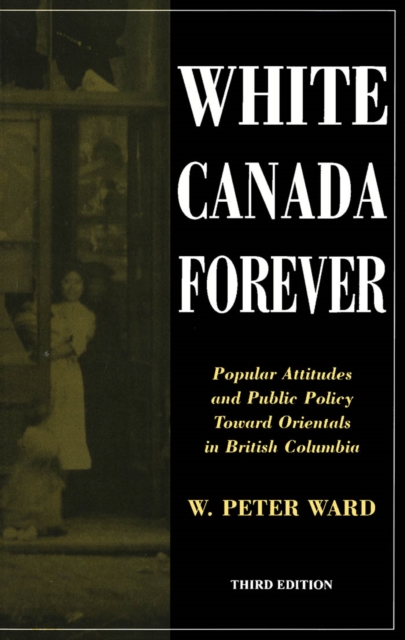
White Canada Forever
Ward draws upon a rich record of events and opinion in the provincial press, manuscript collections, and successive federal enquiries and royal commissions on Asian immigration. He locates the origins of west coast racism in the frustrated vision of a white British Columbia and an unshakeable belief in the unassimilability of the Asian immigrant. Canadian attitudes were dominated by a series of interlocking, hostile stereotypes derived from western perceptions of Asia and modified by the encounter between whites and Asians on the north Pacific coast. Public pressure on local, provincial, and federal governments led to discriminatory policies in the field of immigration and employment, and culminated in the forced relocation of west coast Japanese residents during World War II.
eBook
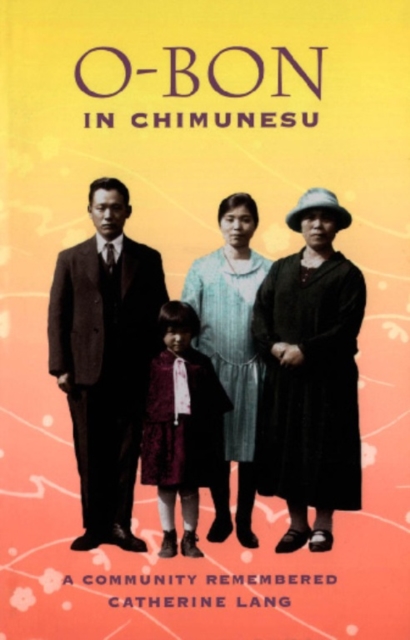
O-Bon in Chimunesu : a community remembered
O-Bon in Chimunesu: A Community Remembered is a moving tribute to a community of Japanese-Canadians and the way they lived their lives. Prior to the Second World War, when Canada's official policy of internment changed the lives of Japanese-Canadians forever, the Vancouver Island town of Chemainus (\"Chimunesu\") was home to a thriving Japanese-Canadian community, whose members struggled to adapt to the difficulties of life in a new country, while at the same time keeping their own traditions alive. During the war, Japanese-Canadians on the west coast were shunted off to internment camps in the British Columbia interior, and were not permitted to return until 1949. Most decided to take up new roots elsewhere, and what had been a significant community in Chemainus was relegated to memory. Catherine Lang was a freelance reporter working on a story when she attended a 1991 reunion of Chemainus' former Japanese-Canadian community. The reunion occurred during O-bon, the annual Buddhist festival for the dead, in which burning candles light the way for the souls of ancestors. Lang couldn't resist such a meaningful encounter with living history. O-Bon in Chimunesu consists of poignant personal narratives of former residents of Chemainus' Japanese-Canadian community. They include the stories of Shige Yoshida, who after being refused entry into the Boy Scouts, formed his own troop, made up entirely of Japanese boys; Matsue Taniwa, who moved to Chemainus after an arranged marriage to raise children and tend a store; and Kaname Izumi, who remembers as a boy throwing candy from his boat to the children at the Native residential school on Kuper Island. Winner of the Hubert Evans Non-Fiction Prize.
eBook