
Catalogue Search | MBRL


Are you sure you want to remove the book from the shelf?

{{itemTitle}}
58
result(s) for
"Jaspers, Karl (1883-1969)"
Sort by:
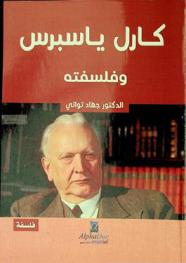
كارل ياسبرس وفلسفته
هذا الكتاب يتحدث عن قضية التوجه الإنساني في فلسفة التربية، حيث كان تصور كارل ياسبرس متوافقا مع معاني التربية، بحكم أنها تنطلق من الإنسان وتنتهي إلى الإنسان. بين من خلاله كيف أن الفلسفة يمكن أن تشكل تأصيلا للفعل التربوي، على أساس أن وجودية ياسبرس ما هي إلا فلسفة في الموقف من حيث هي فلسفة قادرة على التحكم في التربية عن طريق صنع مختلف صيغ التكيف و التوافق بين المشاريع التربوية ومختلف الظروف النفسية والاجتماعية والثقافية الراهنة التي تحيط بالمتلقي بعيدا عن كل بناء قبلي للفعل التربوي.
Book

Death 'Deathlessness' and Existenz in Karl Jaspers' Philosophy
Karl Jaspers is one of the most misunderstood twentieth century philosophers, yet his philosophical ideas are relevant to our contemporary existence and our understanding of human finitude and in particular and most specifically, death.
eBook

Karl Jaspers
This book sets out a new reading of the much-neglected philosophy of Karl Jaspers. By questioning the common perception of Jaspers either as a proponent of irrationalist cultural philosophy or as an early, peripheral disciple of Martin Heidegger, it re-establishes him as a central figure in modern European philosophy. Giving particular consideration to his position in epistemological, metaphysical and political debate, the author argues that Jaspers's work deserves renewed consideration in a number of important discussions, particularly in hermeneutics, anthropological reflections on religion, the critique of idealism, and debates on the end of metaphysics.
eBook

Varieties of German Guilt and Their Consequences: The Question of German Guilt, Karl Jaspers
Karl Jaspers considers four varieties of guilt—criminal, moral, metaphysical, and political—and whether Germans are collectively or individually guilty for the crimes of the Nazis. What influence did Jasper's thinking about guilt have on his former pupil Hannah Arendt? What was the impact of such thinking on the political development of Germany in the period after World War II and up to contemporary times?
Journal Article

Existential Vulnerability: Toward a Psychopathology of Limit Situations
Jaspers' concept of limit situations seems particularly appropriate not only to elucidate outstanding existential situations in general, but also basic preconditions for the occurrence of mental disorders. For this purpose, the concept is first explained in Jaspers' sense and then related to an ‘existential vulnerability' of mentally ill persons that makes them experience even inconspicuous events as distressing limit situations. In such situations, an otherwise hidden fundamental condition of existence becomes manifest for them, e.g. the fragility of one's own body, the inevitability of freedom, or the finiteness of life. This fundamental condition is found unbearable and, as a reaction, gives rise to mental illness. This concept of existential vulnerability is illustrated by some psychopathological examples.
Journal Article

Karl Jaspers
Karl Jaspers cast dappled sunshine onto the vagaries of human experience, illuminating and allowing us to make sense of other people, especially our patients, as they are rather than through the distorting prism of our own preconceptions. This has given greater understanding of our patients, improving clinical practice. Jaspers' distinction between form and content in the subjective experience of those psychiatrically distressed has greatly helped us to formulate their complaints. Other leaders of psychiatric thought have been more glamorous, with more literary éclat and greater hold on the imagination of the general public, but none has helped so much in developing that unique skill of the psychiatrist, empathy. Jaspers' General Psychopathology has an unusual place among psychiatric texts.
Journal Article

Citizens' Political Responsibility and Collective Identity: A Spinozistic Answer to Jaspers's Question on Guilt
The question on guilt that Jaspers poses to the Germans was not only valid after the Holocaust, it can be raised to other peoples who must answer for the crimes committed by the state which act on behalf of the people that gave support to them. In this paper, I elaborate a notion of citizens' political responsibility in order to argue to what extent—and under what circumstances—the citizens of a political community must respond for the deeds of the political institutions that govern them. For that purpose, I try to explain Spinoza's notion of political authority in relation to Jaspers' notion of political guilt. This Spinozistic approach has the advantage of freeing us from moral guilt—a misleading notion in political arena as I will argue—but it demands from us a genuine self-reflective and therapeutic procedure that if applied to politics would reveal a diiferent path from Jaspers' guilt. The aim of this therapeutic is to bring about a profound change in the personal and political identity of both citizen and political community.
Journal Article

Ortega y Jaspers, en torno al origen de la filosofía
Este artículo examina las diversas interpretaciones sobre el origen de la filosofía en José Ortega y Gasset y Karl Jaspers. Ortega redactó “Fragmentos de Origen de la filosofía” para celebrar el septuagésimo cumpleaños de Jaspers. Sin embargo, este ensayo aparentemente conmemorativo incluye una crítica sustancial a la interpretación jaspersiana del origen de la filosofía. En este contexto, analizamos tanto el concepto jaspersiano del “tiempo-eje (Achsenzeit)” como la tesis orteguiana que interpreta el origen de la filosofía como un fenómeno colonial y ateo. Y, en realidad, la discrepancia entre Ortega y Jaspers en este tema se debe a sus concepciones radicalmente opuestas de la filosofía misma.
Journal Article

The biographical approach in Karl Jaspers’ work: From philosophy of life to autobiography
This study considers the origins and characteristics of Karl Jaspers’ biographical approach. Specifically, we analyse how this approach manifests itself in Jaspers’ work, namely, in his understanding of psychology, his psychology of worldviews, his views on the history of philosophy and his philosophical method. The biographical approach was a central strategy in Jaspers’ work as an appeal to life and was closely linked with how Jaspers understood both philosophy and his thought. For Jaspers, biography could restore mental unity and reveal the existence behind creativity.
Journal Article
Jaspers, the Body, and Schizophrenia: The Bodily Self
Karl Jaspers laid the foundations of contemporary psychopathology. Among Jaspers' contributions was his powerful vision of psychiatry as a crucial way to shed light on the human condition and existence by integrating the scientific study of psychic diseases with a theoretical approach focused on human experience. This perspective should be revitalized. In the present paper we start from the role Jaspers assigns to the body when discussing the notion of ‘personalization'. We explore the relationship between a minimal notion of the self, the ‘bodily self', and its potentiality for movement - the self's ‘power for action'. Based on recent empirical evidence, we then propose a connection between the implicit bodily self-experience and important psychopathological aspects of schizophrenia by showing that schizophrenic patients exhibit a disruption of implicit bodily self-knowledge. We propose that the bodily nature of the implicitly experiencing self might enable the continuum of experience along which all visions of the world are located - both in healthy and psychotic individuals. The power for action might provide the possibility to give form to the bodily presence characterizing in the first place our being selves.
Journal Article