
Catalogue Search | MBRL


Are you sure you want to remove the book from the shelf?

{{itemTitle}}
1,270
result(s) for
"Java (Indonesia)"
Sort by:


Mobilizing Labour for the Global Coffee Market
Coffee has been grown on Java for the commercial market since the early eighteenth century, when the Dutch East India Company began buying from peasant producers in the Priangan highlands. What began as a commercial transaction, however, soon became a system of compulsory production. This book shows how the Dutch East India Company mobilised land and labour, why they turned to force cultivation, and what effects the brutal system they installed had on the economy and society.
eBook

Dutch Commerce and Chinese Merchants in Java
Dutch Commerce and Chinese Merchants in Javadescribes the vanished commercial world of colonial Java. Alexander Claver shows the challenges of a demanding business environment by highlighting trade and finance mechanisms, and the relationships between the participants involved.
eBook

The tea lords
\"Born into wealth and privilege, Rudolf Kerkhoven is destined to follow his father's footsteps into the Dutch colonies, with its uncleared jungle foothills and potential for riches. When he arrives in Java he is immediately smitten by the landscape and the life, and over the seasons, Rudolf's dedication and diligence gradually transform the land into a productive estate for tea, coffee and quinine. When he meets the independent-minded Jenny and their two sons are born, Rudolf is happier than he thought possible. But for Jenny, the damp austerity of their home, her fertility, her father's secret, and the native spirits of the land grow to overshadow their marriage and the life they've strived for together. \"--Amazon.com
Book

The Sugar Plantation in India and Indonesia
European markets almost exclusively relied on Caribbean sugar produced by slave labor until abolitionist campaigns began around 1800. Thereafter, importing Asian sugar and transferring plantation production to Asia became a serious option for the Western world. In this book, Ulbe Bosma details how the British and Dutch introduced the sugar plantation model in Asia and refashioned it over time. Although initial attempts by British planters in India failed, the Dutch colonial administration was far more successful in Java, where it introduced in 1830 a system of forced cultivation that tied local peasant production to industrial manufacturing. A century later, India adopted the Java model in combination with farmers' cooperatives rather than employing coercive measures. Cooperatives did not prevent industrial sugar production from exploiting small farmers and cane cutters, however, and Bosma finds that much of modern sugar production in Asia resembles the abuses of labor by the old plantation systems of the Caribbean.
eBook

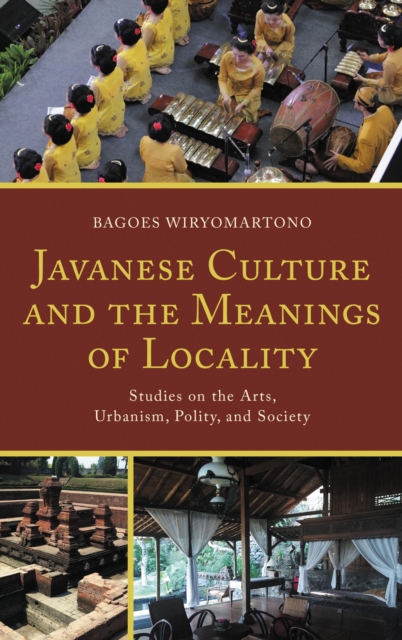
Javanese culture and the meanings of locality
\"Analyzes various aspects of Javanese culture and society, including its history, customs, arts, architecture, polity, and society. This study strongly emphasizes the importance of local cultures over global monoculture and examines how localities have adapted to foreign influences\". The book analyzes various aspects of Javanese culture and society, including its history, customs, arts, architecture, polity, and society. This study strongly emphasizes the importance of local cultures over global monoculture and examines how localities have adapted to foreign influences.
eBook


A History of Plague in Java, 1911–1942
In A History of Plague in Java,
1911-1942 , Maurits Bastiaan Meerwijk
demonstrates how the official response to the 1911 outbreak of
plague in Malang led to one of the most invasive health
interventions in Dutch colonial Indonesia. Eager to combat
disease, Dutch physicians and officials integrated the traditional
Javanese house into the \"rat-flea-man\" theory of transmission.
Hollow bamboo frames and thatched roofs offered hiding spaces for
rats, suggesting a material link between rat plague and human
plague. Over the next thirty years, 1.6 million houses were
renovated or rebuilt, millions more were subjected to periodic
inspection, and countless Javanese were exposed to health messaging
seeking to \"rat-proof\" their beliefs along with their houses.
The transformation of houses, villages, and people was
documented in hundreds of photographs and broadcast to overseas
audiences as evidence of the \"ethical\" nature of colonial rule,
proving so effective as propaganda that the rebuilding continued
even as better alternatives, such as inoculation, became available.
By systematically reshaping the built environment, the Dutch plague
response dramatically expanded colonial oversight and influence in
rural Java.
eBook