
Catalogue Search | MBRL


Are you sure you want to remove the book from the shelf?

{{itemTitle}}
45
result(s) for
"Java (Indonesia) Social conditions"
Sort by:
Power, Change, and Gender Relations in Rural Java
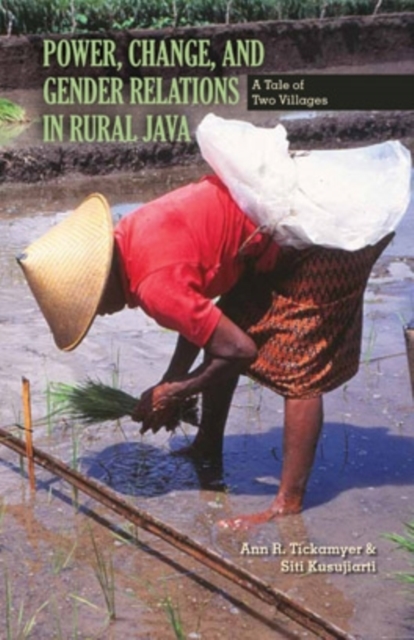
Women's status in rural Java can appear contradictory to those both inside and outside the culture. In some ways, women have high status and broad access to resources, but other situations suggest that Javanese women lack real power and autonomy. Javanese women have major responsibilities in supporting their families and controlling household finances. They may also own and manage their own property. Yet these symbols and potential sources of independence and influence are determined by a culturally prescribed, state-reinforced, patriarchal gender ideology that limits women's autonomy.Power, Change, and Gender Relations in Rural Javaexamines this contradiction as well as sources of stability and change in contemporary Javanese gender relations.The authors conducted their research in two rural villages in Yogyakarta, Indonesia, during three important historical and political periods: the end of the New Order regime; the transitional period of reformation; and the subsequent establishment of a democratic government. Their collaboration brings a unique perspective, analyzing how gender is constructed and reproduced and how power is exercised as Indonesia faces the challenges of building a new social order.
eBook

The tea lords
\"Born into wealth and privilege, Rudolf Kerkhoven is destined to follow his father's footsteps into the Dutch colonies, with its uncleared jungle foothills and potential for riches. When he arrives in Java he is immediately smitten by the landscape and the life, and over the seasons, Rudolf's dedication and diligence gradually transform the land into a productive estate for tea, coffee and quinine. When he meets the independent-minded Jenny and their two sons are born, Rudolf is happier than he thought possible. But for Jenny, the damp austerity of their home, her fertility, her father's secret, and the native spirits of the land grow to overshadow their marriage and the life they've strived for together. \"--Amazon.com
Book

A History of Plague in Java, 1911–1942
In A History of Plague in Java,
1911-1942 , Maurits Bastiaan Meerwijk
demonstrates how the official response to the 1911 outbreak of
plague in Malang led to one of the most invasive health
interventions in Dutch colonial Indonesia. Eager to combat
disease, Dutch physicians and officials integrated the traditional
Javanese house into the \"rat-flea-man\" theory of transmission.
Hollow bamboo frames and thatched roofs offered hiding spaces for
rats, suggesting a material link between rat plague and human
plague. Over the next thirty years, 1.6 million houses were
renovated or rebuilt, millions more were subjected to periodic
inspection, and countless Javanese were exposed to health messaging
seeking to \"rat-proof\" their beliefs along with their houses.
The transformation of houses, villages, and people was
documented in hundreds of photographs and broadcast to overseas
audiences as evidence of the \"ethical\" nature of colonial rule,
proving so effective as propaganda that the rebuilding continued
even as better alternatives, such as inoculation, became available.
By systematically reshaping the built environment, the Dutch plague
response dramatically expanded colonial oversight and influence in
rural Java.
eBook

A peaceful Jihad : negotiating identity and modernity in Muslim Java
Based on extensive ethnographic research, this book examines how the Islamic community in Java, Indonesia, is actively negotiating both modernity and tradition in the contexts of nation-building, globalisation, and a supposed clash of civilizations. The pesantren community, so-called because it is centered around an educational institution called the pesantren, uses education as a central arena for dealing with globalization and the construction and maintenance of an Indonesian Islamic identity. However, the community's efforts to wrestle with these issues extend beyond education into the public sphere in general and specifically in the area of leadership and politics. The case material is used to understand Muslim strategies and responses to civilizational contact and conflict. Scholars, educated readers, and advanced undergraduates interested in Islam, religious education, the construction of religious identity in the context of national politics and globalization will find this work useful.
eBook


The domestication of desire
While doing fieldwork in the modernizing Javanese city of Solo during the late 1980s, Suzanne Brenner came upon a neighborhood that seemed like a museum of a bygone era: Laweyan, a once-thriving production center of batik textiles, had embraced modernity under Dutch colonial rule, only to fend off the modernizing forces of the Indonesian state during the late twentieth century. Focusing on this community, Brenner examines what she calls the making of the \"unmodern.\" She portrays a merchant enclave clinging to its distinctive forms of social life and highlights the unique power of women in the marketplace and the home--two domains closely linked to each other through local economies of production and exchange. Against the social, political, and economic developments of late-colonial and postcolonial Java, Brenner describes how an innovative, commercially successful lifestyle became an anachronism in Indonesian society, thereby challenging the idea that tradition invariably gives way to modernity in an evolutionary progression. Brenner's analysis centers on the importance of gender to processes of social transformation. In Laweyan, the base of economic and social power has shifted from families, in which women were the main producers of wealth and cultural value, to the Indonesian state, which has worked to reorient families toward national political agendas. How such attempts affect women's lives and the meaning of the family itself are key considerations as Brenner questions long-held assumptions about the division between \"domestic\" and \"public\" spheres in modern society.
eBook

The Social Resilience of Women in Coastal Villages of East Java during the COVID-19 Pandemic
During the COVID-19 pandemic, the living conditions of rural women in coastal areas of East Java became increasingly difficult. The aim of this study is to reveal the important roles of women and their social resilience to survive during the pandemic. This research was conducted in poor coastal villages in the province of East Java, namely: 1) Surabaya City with multicultural characteristics; 2) Situbondo Regency with Javanese-Madurese mixed cultural characteristics and 3) Tuban Regency with Javanese cultural characteristics. The subjects of this study were married women who have children. Data collection was conducted for 2 months (June-July 2021) using a structured interview technique (questionnaire) with 185 respondents and an in-depth interview technique with 18 informants, including women and local leaders. The results of this study indicate the \"coping\" and \"adaptive\" capacities of women during the COVID-19 pandemic. Although women's work in these coastal villages was categorized as unskilled work generating little income, women were still working to overcome the direct threat of the pandemic through available resources such as skills, time, family, and neighborhood ties. However, this study shows only a few capacities of the \"transformative\" type, whereby women have access to assets and assistance from wider social and political networks. This study shows a strong patriarchal culture influencing the lives of poor coastal rural women, but also reveals that the role of women was very important in maintaining family health and meeting income shortages for family needs during the COVID-19 pandemic.
Journal Article

Forgotten People
In Forgotten People Gerben Nooteboom describes and analyses the livelihoods and social security of peasants and migrant Madurese. It offers a new way to categorise and analyse livelihood security of marginal people in Indonesia by using the concept of style.
Book