
Catalogue Search | MBRL


Are you sure you want to remove the book from the shelf?

{{itemTitle}}
19
result(s) for
"Jerusalem History Sources."
Sort by:

A Jerusalem anthology : travel writing through the centuries
Jerusalem has a special status as a city that is both terrestrial and celestial. The name includes a cognate for 'peace, ' but the old stones of the city have witnessed epic bloodshed and destruction over the centuries. The three great monotheistic religions all regard it with especial fervor, and it has for at least two millennia attracted pilgrims intent on seeing it before they die. This rich and compelling anthology of travelers' writings attempts to convey something of the diverse experiences of visitors to this most complex and enigmatic of cities. A Jerusalem Anthology takes us on a journey through a city, not just of illusion and powerful accumulated religious emotion, but of colors, lights, smells, and sounds, an inhabited city as it was directly experienced and lived in through the ages. Memoirs of visitors such as as sixth-century AD pilgrim Saint Silvia of Bordeaux, medieval Jerusalemite al-Muqaddasi, Grand Tour voyagers Gustave Flaubert and Alexander Kinglake, the humorous Mark Twain, or the cynical T.E. Lawrence provide vivid and sometimes disturbing vignettes of the Holy City at very different times in its tumultuous history.
Book

John of Ibelin : Le livre des assises
This critical edition of the legal treatise by John of Ibelin, count of Jaffa and Ascalon (died 1266) is the first to take into account all the surviving medieval manuscripts and the first to be published since 1841.
eBook

The Jewish Temple
Robert Hayward offers a careful analysis of surviving accounts of the Temple and its service. All the central texts are provided in translation, with a detailed commentary. While descriptions of the Temple and its service are available, discussions of the meaning of these things are less easily found. This study clearly illustrates how the Temple was seen as a meeting point between heaven and earth, its service being an earthly representation of heavenly reality. Jews regarded the Temple service therefore as having significance for the whole created world. The Jewish Temple offers a valuable collection of materials both for those looking for an introduction to the topic and for the scholar interested in grasping the meanings beyond those texts.
eBook
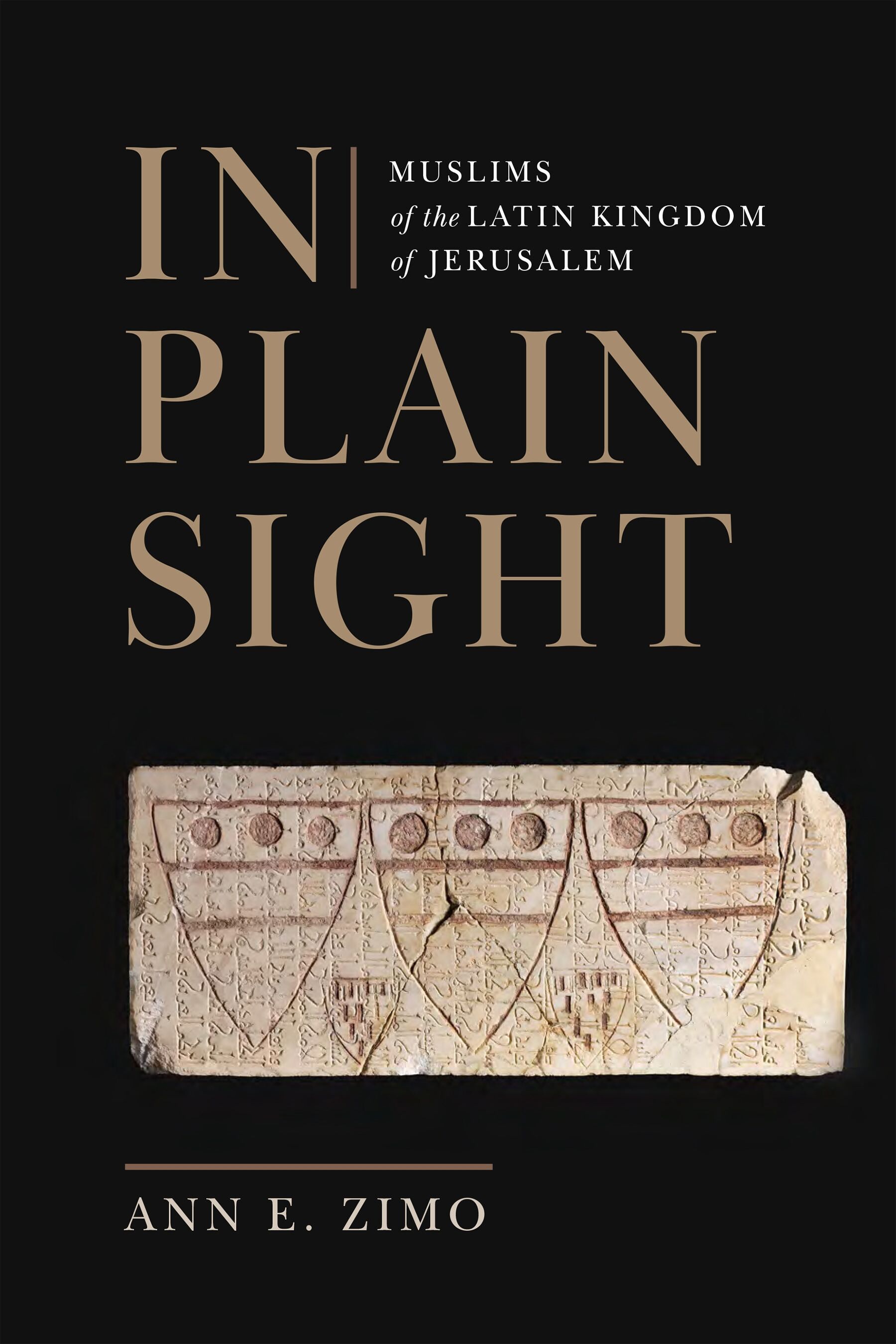
In Plain Sight
How Muslims integrated themselves into the Kingdom of Jerusalem, founded in the wake of the First Crusade In Plain Sight draws from a wide array of interdisciplinary sources to show how Muslims, seemingly hostile to the entire crusading enterprise, integrated themselves into the kingdom founded in the wake of the First Crusade. The book examines how Muslims, whether Sunni or Shi'a or Druze, fit into society in the crusader Kingdom of Jerusalem, uncovering the daily reality of their experience. Exploring how and to what extent Muslims interacted with the Frankish ruling elite, historian Ann E. Zimo presents a new vantage point from which to reconsider the popularly accepted notion that the crusades, and by extension the crusader states, were a locus of a monolithic clash between West and East or between Christianity and Islam. By untangling the relations between the Muslim communities and their rulers, Zimo offers a more fully realized image of a society too multifaceted to be reasonably reduced to a black-and-white binary opposition.Zimo not only re-reads the well-known Frankish sources, including narrative chronicles, letters, charters, and legal treatises, but combines them with an investigation of the Arabic documentary base, including chronicles, biographies, fatwa literature, pilgrimage guides, and treaties which are not translated and largely inaccessible to most historians of the crusades. She also draws from the enormous and growing body of scholarship generated by archaeologists whose work can often provide insights into the aspects of the past not recorded in the historical record. By casting such a wide evidentiary net, In Plain Sight sheds new light on Frankish society and how Muslims fit into it, offering major revisions to the current conception of population distribution within the kingdom and the nature of the Frankish polity itself.
eBook

Beyond Prestige and Magnificence: The Theological Significance of Gold in the Israelite Tabernacle
Examination of Exodus 25–31 and 35–40 shows that preciousness and aesthetic considerations were not the main precipitants of the use of gold in the tabernacle. Rather, the distribution of this metal in both the tabernacle and the priestly garments reveals a theological criterion for its use and distribution. It is suggested here that this criterion is rooted in pre-Israelite Yahwism, and that it emanates from the parallel of gold, approached as the metal produced by YHWH, and copper, its human-made counterpart. Accordingly, YHWH’s residence within the tabernacle is associated with pure gold, whereas the function of communion with the Israelites in this facility is attached to a gold-copper alloy (ordinary gold). It is shown that the theological significance of gold related in Exodus contrasts with the considerations of prestige and magnificence associated in Kings with the use of gold in the Jerusalem temple. These observations reveal a divergence between the Priestly and the Deuteronomistic sources in regard to the status of gold and, by extension, of the pre-Israelite background of Yahwism. It is concluded that the description of the tabernacle in Exodus challenges the abandonment of the theological dimension of gold and metallurgy in the Jerusalem temple in the late monarchic period or, alternately, serves as fundament for a theodicy that justifies the fall of the city.
Journal Article

Muslims and Crusaders
Muslims and Crusaders combines chronological narrative, discussion of important areas of scholarly enquiry and evidence from Islamic primary sources to give a well-rounded survey of Christianity's wars in the Middle East, 1095-1382.
Revised, expanded, and updated to take account of the most recent scholarship, this second edition enables readers to achieve a broader and more complete perspective on the crusading period by presenting the crusades from the viewpoints of those against whom they were waged, the Muslim peoples of the Levant. The book introduces the reader to the most significant issues that affected Muslim responses to the European crusaders and their descendants who would go on to live in the Latin Christian states that were created in the region. It considers not only the military encounters between Muslims and crusaders, but also the personal, political, diplomatic, and trade interactions that took place between the Muslims and Franks away from the battlefield.
Engaging with a wide range of translated primary source documents, including chronicles, dynastic histories, religious and legal texts, and poetry, Muslims and Crusaders is ideal for students and historians of the crusades.
eBook

The Palestinian Earthquake of May 363 in Philostorgius, the Syriac Chronicon miscellaneum, and the Letter Attributed to Cyril on the Rebuilding of the Jerusalem Temple
Of the sources that report the Palestinian earthquake of 363, only an eighth-century fragment of the fifth-century Ecclesiastical History of Philostorgius, the seventh-century Syriac Chronicon miscellaneum , and the (probably) fifth-century letter attributed to Cyril of Jerusalem on the rebuilding of the Temple record details of destruction outside Jerusalem. Analysis of these texts establishes a close but indirect connection among them, made even clearer by a new reading of the manuscript correcting an error in the standard edition of the Syriac chronicle, which inaccurately reports the textual evidence for the date of the earthquake. The most likely source of the information about the earthquake is the hypothetical Arian (Homoean) History, probably written in Antioch in the 370s, in which the earthquake was seen as punishment for the Palestinian cities that persecuted Christians in the reign of Julian, and is thus to be understood in the wider context of the debate over the reign of Julian between Antiochene Christians and pagans, such as Libanius, who interpreted the catastrophe as announcing and mourning the emperor's death. That Antiochene tradition, represented by John Chrysostom, Ammianus, and Theophanes, does not mention an earthquake in connection with the failure of Julian's attempt to rebuild the Temple suggests that the earthquake that hit the Palestinian cities and the fire that stopped the rebuilding of the Temple could be circulated and debated as independent events, raising the possibility that it was Christian tradition that conflated them, producing the early and widespread tradition that both an earthquake and a fire stopped Julian's project.
Journal Article

Voskresensky New Jerusalem Monastery: Place of Prince A.A. Chelakaev (Chelokaev) in the Family Necropolis of the Buturlins – Priklonskys – Volynskys – Wolfs – Sukhovo-Kobylins
Our research of necropolis of New Jerusalem Monastery has brought a new name. It is prince A.A. Chelakaev. He was buried on the unpaved section of the monastery cemetery. Historic burial place of one of the oldest princely family of Georgia in a noble part of monastery necropolis let us attribute prince A.A. Chelakaev to related families – the Buturlins – Priklonskys – Volynskis – Wolfs – Sukhovo-Kobylins (25/10/1778 – 04/11/1873), including 11 graves. Besides, that extends investigations based on the “monument / burial” principle. Genealogical research that affected the person buried in the monastery of Prince Alexander Anofrievich Chelakaev allowed to make up for the genealogy of Chelokashvili princes, one of the most noble families of Georgia so far very poorly studied. We used the sources associated with burials in Moscow the Georgian elite tombs of St. Nicholas Greek and the Donskoy Monastery. Georgian prince, buried in the Voskresensky New Jerusalem Monastery, was not an unauthorized person to a host of representatives of persons belonging to the aristocracy reigning House of Bagration. We note that the research material at our disposal expanded the results of archaeological discoveries of 2009-2013. Due to this facxt, we updated the list of monuments involving research field associated with the study of the necropolis of the New Jerusalem Monastery in the genealogical, heraldic and epigraphic monuments from 1656 to 1919, as we attributed several previously unknown and inaccessible tombstones before hidden in the ground. In particular, the findings of two new graves and tombstones proved to be especially valuable.
Journal Article
