
Catalogue Search | MBRL


Are you sure you want to remove the book from the shelf?

{{itemTitle}}
5,059
result(s) for
"Jerusalem."
Sort by:

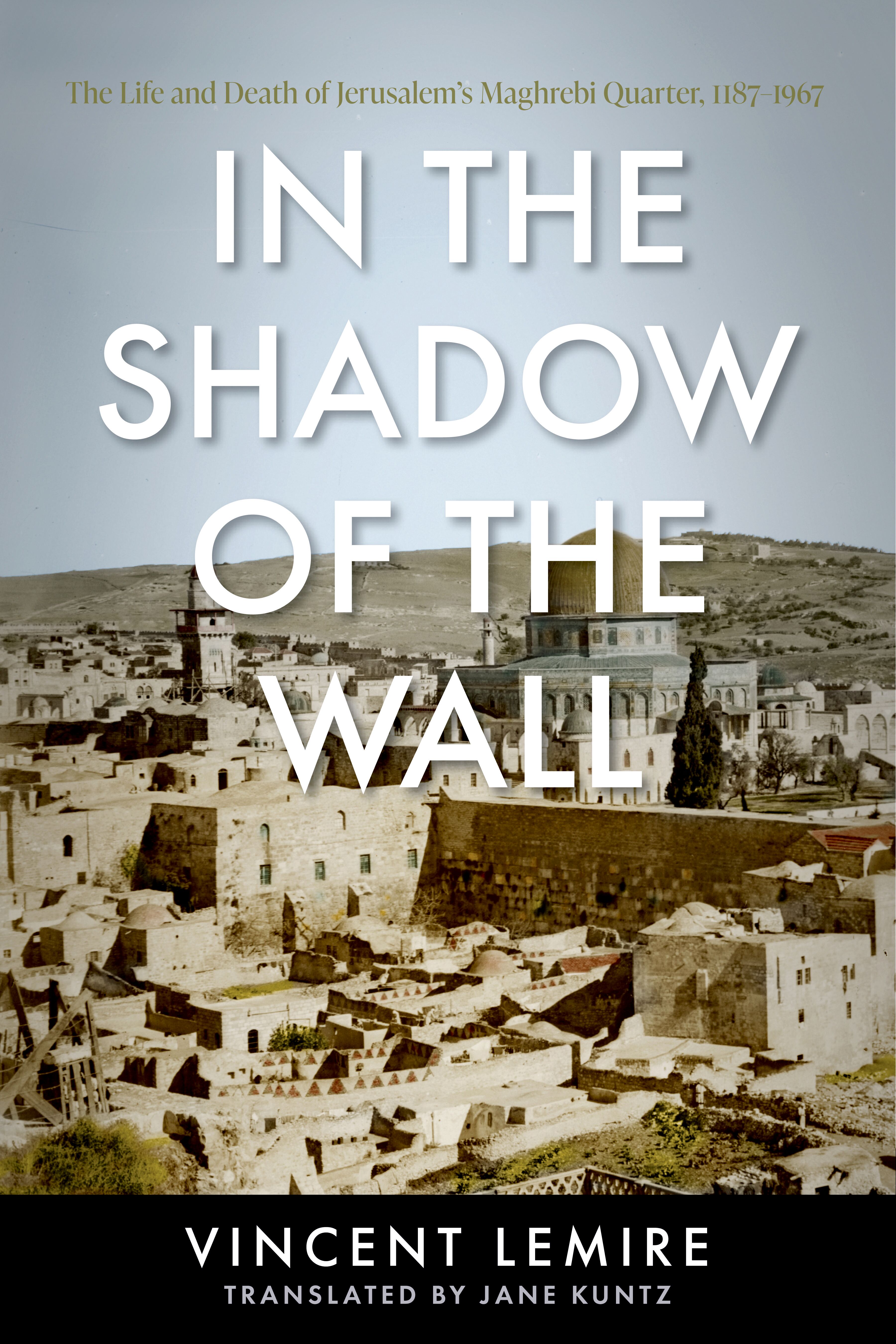
In the Shadow of the Wall
The Maghrebi Quarter of Jerusalem long sat in the shadow of the Western Wall, the last vestige of the Second Temple. Three days after the June '67 War, Israeli forces razed the Quarter, its narrow alleys widened and homes removed, to create the Western Wall Plaza. With this book, Vincent Lemire offers the first history of the Maghrebi Quarter—spanning 800 years from its founding by Saladin in 1187 to house North African Muslim pilgrims through to its destruction. To bring this vanished district back to life, Lemire gathers its now-scattered documentation in the archives of Muslim pious foundations in Jerusalem and the Red Cross in Geneva, in Ottoman archives in Istanbul and Israeli state archives. He engages testimonies of former residents and looks to recent archaeological digs that have resurfaced household objects buried during the destruction. Today, the Western Wall Plaza extends over the former Maghrebi Quarter. It is one of the most identifiable places in the world—yet one of the most occluded in history. In the Shadow of the Wall offers a new point of entry to understand this consequential place.
eBook



Year of the locust
Year of the Locust captures in page-turning detail the end of the Ottoman world and a pivotal moment in Palestinian history. In the diaries of Ihsan Hasan al-Turjman (1893–1917), the first ordinary recruit to describe World War I from the Arab side, we follow the misadventures of an Ottoman soldier stationed in Jerusalem. There he occupied himself by dreaming about his future and using family connections to avoid being sent to the Suez. His diaries draw a unique picture of daily life in the besieged city, bringing into sharp focus its communitarian alleys and obliterated neighborhoods, the ongoing political debates, and, most vividly, the voices from its streets—soldiers, peddlers, prostitutes, and vagabonds. Salim Tamari's indispensable introduction places the diary in its local, regional, and imperial contexts while deftly revising conventional wisdom on the disintegration of the Ottoman Empire.
eBook

From Empire To Empire
The history of Jerusalem as traditionally depicted is the quintessential history of conflict and strife, of ethnic tension, and of incompatible national narratives and visions. It is also a history of dramatic changes and moments, one of the most radical ones being the replacement of the Ottoman regime with British rule in December 1917. From Empire to Empire challenges these two major dichotomies, ethnic and temporal, which shaped the history of Jerusalem and its inhabitants. It links the experiences of two ethnic communities living in Palestine, Jews and Arabs, as well as bridging two historical periods, the Ottoman and British administrations. Drawing upon a variety of sources, Jacobson demonstrates how political and social alliances are dynamic, context-dependent, and purpose-driven. She also highlights the critical role of foreign intervention, governmental and nongovernmental, in forming local political alliances and in shaping the political reality of Palestine during the crisis of World War I and the transition between regimes.
eBook

