
Catalogue Search | MBRL


Are you sure you want to remove the book from the shelf?

{{itemTitle}}
42,351
result(s) for
"Jewish Studies"
Sort by:

Falafel nation : cuisine and the making of national identity in Israel
\"When people discuss food in Israel, their debates ask politically charged questions: Who has the right to falafel? Whose hummus is better? But Yael Raviv's Falafel Nation moves beyond the simply territorial to divulge the role food plays in the Jewish nation. She ponders the power struggles, moral dilemmas, and religious and ideological affiliations of the different ethnic groups that make up the \"Jewish State\" and how they relate to the gastronomy of the region. How do we interpret the recent upsurge in the Israeli culinary scene--the transition from ideological asceticism to the current deluge of fine restaurants, gourmet stores, and related publications and media?Focusing on the period between the 1905 immigration wave and the Six-Day War in 1967, Raviv explores foodways from the field, factory, market, and kitchen to the table. She incorporates the role of women, ethnic groups, and different generations into the story of Zionism and offers new assertions from a secular-foodie perspective on the relationship between Jewish religion and Jewish nationalism. A study of the changes in food practices and in attitudes toward food and cooking, Falafel Nation explains how the change in the relationship between Israelis and their food mirrors the search for a definition of modern Jewish nationalism. \"-- Provided by publisher.
Book

Music at World's End
In Iceland in the 1930s, classical music was only beginning
to be seriously practiced, at the same time when musicians of
Jewish heritage were fleeing Nazi Germany and Austria. Despite
the country's strict immigration policy, three outstanding young
musicians were allowed to settle there: Robert Abraham, Heinz
Edelstein, and Victor Urbancic. Their influence on Iceland's
music scene as conductors, instrumentalists, teachers, and
scholars proved invaluable. In
Music at World's End , the first in-depth study of the
lives and careers of these three musicians, musicologist
Árni Ingólfsson examines their formative years in
Germany and Austria, their dramatic escapes from the Nazi regime,
and their triumphs and frustrating setbacks in their new
homeland, a country in which Jews were virtually unknown. This
fascinating case study is a valuable addition to studies of
musical exile during World War II and beyond.
eBook

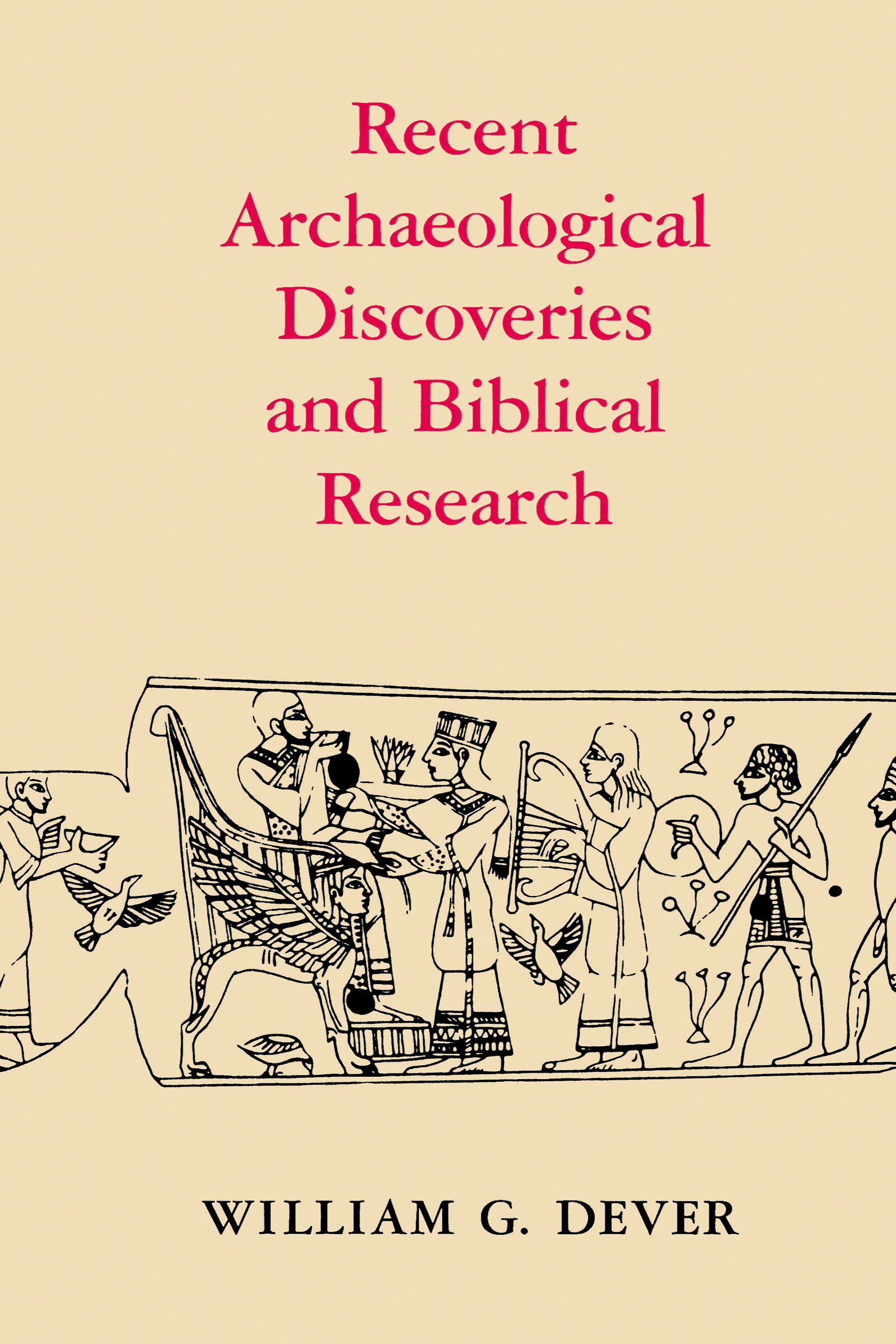
Recent Archaeological Discoveries and Biblical Research
Archaeology and Bible--two simple terms, often used together, understood by everybody. But are they understood properly? If so, why are both subject to such controversy? And what can archaeology contribute to our understanding of the Bible? These are the problems addressed by Professor Dever in this book.Dever first looks at the nature and recent development of both archaeology and Biblical studies, and then lays the groundwork for a new a productive relationship between these two disciplines. His \"case studies\" are three eras in Israelite history: the period of settlement in Canaan, the period of the United Monarchy, and the period of religious development, chiefly during the Divided Monarchy. In each case Dever explores by means of recent discoveries what archaeology, couples with textual study, can contribute to the illumination of the life and times of ancient Israel.Given the flood of new information that has come from recent archaeological discoveries, Dever has chosen to draw evidence largely from excavations and surveys done in Israel in the last ten years--many still unpublished--concerning archaeology and the Old Testament.Dever's work not only brings the reader up to date on recent archaeological discoveries as they pertain to the Hebrew Bible, but indeed goes further in offering an original interpretation of the relationship between the study of the Bible and the uncovering of the material culture of the ancient Near East. Extensive notes, plus the use of much new and/or unpublished data, will make the volume useful to graduate students and professors in the fields of Biblical studies and Syro-Palestinian archaeology, and the seminarians, pastors, rabbis, and others. This book provides stimulating, provocative, and often controversial reading as well as a compendium of valuable insights and marginalia that symbolizes the state of the art of Biblical archaeology today.
eBook

A shadow over Palestine : the imperial life of race in America
\"Upon signing the first U.S. arms agreement with Israel in 1962, John F. Kennedy assured Golda Meir that the United States had \"a special relationship with Israel in the Middle East,\" comparable only to that of the United States with Britain. After more than five decades such a statement might seem incontrovertible--and yet its meaning has been fiercely contested from the first. A Shadow over Palestine brings a new, deeply informed, and transnational perspective to the decades and the cultural forces that have shaped sharply differing ideas of Israel's standing with the United States--right up to the violent divisions of our day. Focusing on the period from 1960 to 1985, author Keith P. Feldman reveals the centrality of Israel and Palestine in postwar U.S. imperial culture. Some representations of the region were used to manufacture \"commonsense\" racial ideologies underwriting the conviction that liberal democracy must coexist with racialized conditions of segregation, border policing, poverty, and the repression of dissent. Others animated vital critiques of these conditions, often forging robust if historically obscured border-crossing alternatives. In this rich cultural history of the period, Feldman deftly analyzes how artists, intellectuals, and organizations--from the United Nations, the Black Panther Party, and the Association of Arab American University Graduates to James Baldwin, Daniel Patrick Moynihan, Edward Said, and June Jordan--linked the unfulfilled promise of liberal democracy in the United States with the perpetuation of settler democracy in Israel and the possibility of Palestine's decolonization. In one of his last essays, published in 2003, Edward Said wrote, \"In America, Palestine and Israel are regarded as local, not foreign policy, matters.\" A Shadow over Palestine maps the jagged terrain on which this came to be, amid a wealth of robust alternatives, and the undeterred violence at home and abroad that has been unleashed as a result of this special relationship. \"-- Provided by publisher.
Book
Zakhor
\"Mr. Yerushalmi's previous writings . . . established him as one of the Jewish community's most important historians. His latest book should establish him as one of its most important critics. Zakhor is historical thinking of a very high order - mature speculation based on massive scholarship.\" - New York Times Book Review
eBook

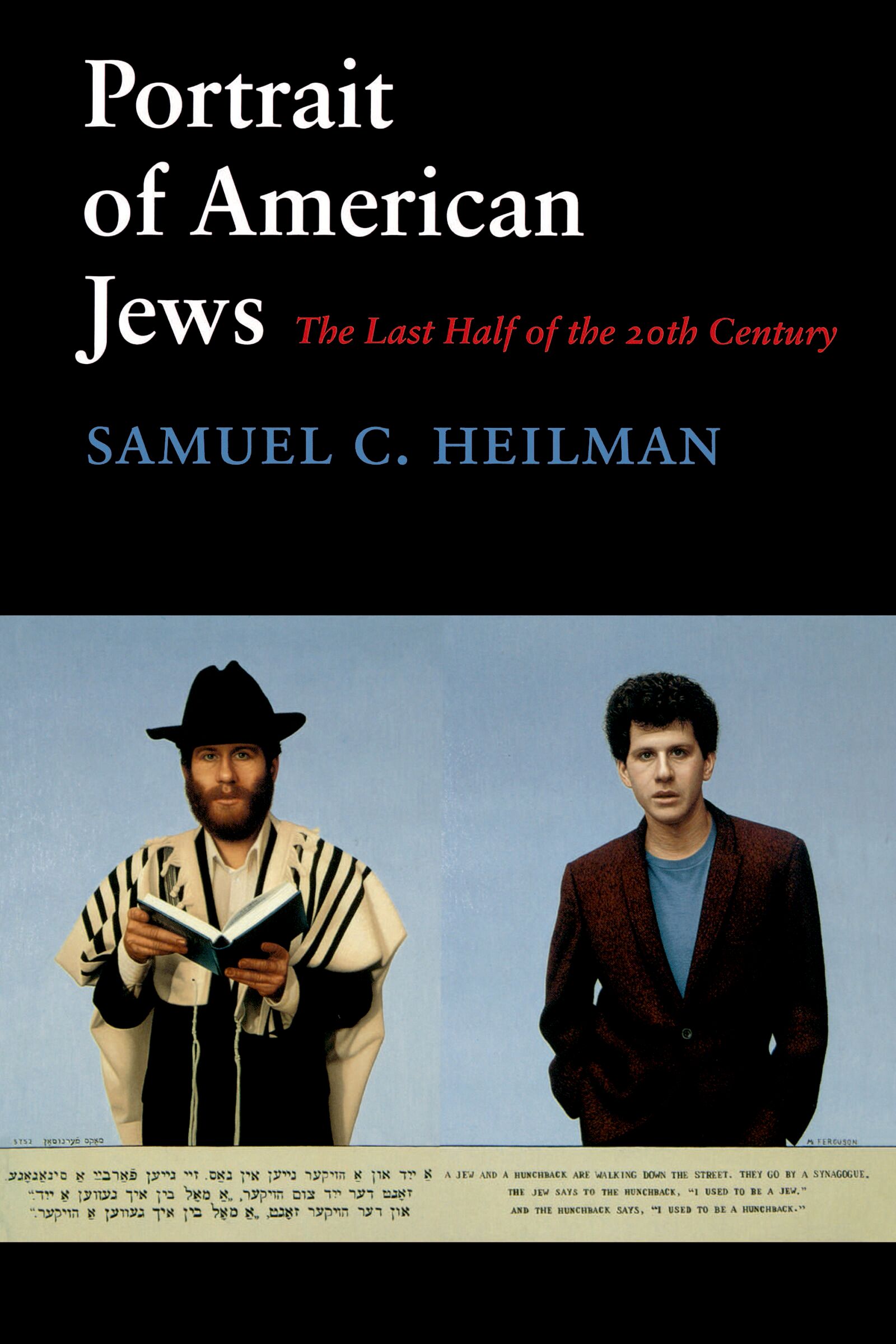
Portrait of American Jews
Has America been a place that has preserved and protected Jewish life? Is it a place in which a Jewish future is ensured? Samuel Heilman, long-time observer of American Jewish life, grapples with these questions from a sociologist's perspective. He argues that the same conditions that have allowed Jews to live in relative security since the 1950s have also presented them with a greater challenge than did the adversity and upheaval of earlier years.The second half of the twentieth century has been a time when American Jews have experienced a minimum of prejudice and almost all domains of life have been accessible to them, but it has also been a time of assimilation, of swelling rates of intermarriage, and of large numbers ignoring their Jewishness completely. Jews have no trouble building synagogues, but they have all sorts of trouble filling them. The quality of Jewish education is perhaps higher than ever before, and the output of Jewish scholarship is overwhelming in its scope and quality, but most American Jews receive a minimum of religious education and can neither read nor comprehend the great corpus of Jewish literature in its Hebrew (or Aramaic) original. This is a time in America when there is no shame in being a Jew, and yet fewer American Jews seem to know what being a Jew means.How did this come to be? What does it portend for the Jewish future? This book endeavors to answer these questions by examining data gleaned from numerous sociological surveys. Heilman first discusses the decade of the fifties and the American Jewish quest for normalcy and mobility. He then details the polarization of American Jewry into active and passive elements in the sixties and seventies. Finally he looks at the eighties and nineties and the issues of Jewish survival and identity and the question of a Jewish future in America. He also considers generational variation, residential and marital patterns, institutional development (especially with regard to Jewish education), and Jewish political power and influence.This book is part of a stocktaking that has been occurring among Jews as the century in which their residence in America was firmly established comes to an end. Grounded in empirical detail, it provides a concise yet analytic evaluation of the meaning of the many studies and surveys of the last four and a half decades. Taking a long view of American Jewry, it is one of very few books that build on specific sociological data but get beyond its detail. All those who want to know what it means and has meant to be an American Jew will find this volume of interest.
eBook

Ghetto images in twentieth-century American literature : writing apartheid
\"In this comprehensive work, Tyrone R. Simpson, II, explores how six American writers--Anzia Yezierska, Michael Gold, Hubert Selby Jr., Chester Himes, Gloria Naylor, and John Edgar Wideman--have artistically responded to the racialization of U.S. frostbelt cities in the twentieth century. By using the critical tools of spatial theory, critical race theory, urban history, and urban sociology, Simpson accounts for how these writers imagine the subjective response to the race-making power of space\"-- Provided by publisher.
Book
Studying the Jewish Future
Studying the Jewish Future explores the power of Jewish culture and assesses the perceived threats to the coherence and size of Jewish communities in the United States, Europe, and Israel. In an unconventional and provocative argument, Calvin Goldscheider departs from the limiting vision of the demographic projections that have shaped predictions about the health and future of Jewish communities and asserts that \"the quality of Jewish life has become the key to the future of Jewish communities.\"Through the lens of individual biographies, Goldscheider shows how context shapes Jewish senses of the future and how conceptions of the future are shaped and altered by life experiences. Goldscheider's distinctive comparative approach includes a critical review of population issues, a consideration of biographies as a basis for understanding Jewish values, and an analysis of biblical texts for studying contemporary values. He combines demographic and sociological analyses in historical and comparative perspectives to dispel the notion that quantitative issues are at the heart of the challenge of Jewish continuity in the future.Numbers are clearly the building blocks of community. But the interpretations of these demographic issues are often confusing and biased by ideological preconceptions. As a basis for studying the core themes of the Jewish future, \"hard facts\" are less \"hard\" and less \"factual\" than interpreters have made them out to be. Population projections are limited by the vision of those who prepare them.Goldscheider concludes that the futures of Jewish communities--in America, Europe, and Israel--are much more secure than has been presented in most scholarly and popular publications, and discussions about the Jewish future should shift to other patterns of distinctiveness.This book will appeal to the general Jewish reader as well as to social scientists and modern Jewish historians. It is appropriate for Jewish studies courses, particularly, but not exclusively, those focusing on Jews in the United States, the American Jewish community, and modern Jewish society, and in courses on ethnicity, multiculturalism, cultural diversity, and ethnic relations.
eBook