
Catalogue Search | MBRL


Are you sure you want to remove the book from the shelf?

{{itemTitle}}
2,419
result(s) for
"Jewish authors"
Sort by:

Vasily Grossman and the Soviet Century
If Vasily Grossman's 1961 masterpiece, Life and Fate, had been published during his lifetime, it would have reached the world together with Pasternak's Doctor Zhivago and before Solzhenitsyn's Gulag. But Life and Fate was seized by the KGB. When it emerged posthumously, decades later, it was recognized as the War and Peace of the twentieth century. Always at the epicenter of events, Grossman (1905-1964) was among the first to describe the Holocaust and the Ukrainian famine. His 1944 article \"The Hell of Treblinka\" became evidence at Nuremberg. Grossman's powerful anti-totalitarian works liken the Nazis' crimes against humanity with those of Stalin. His compassionate prose has the everlasting quality of great art. Because Grossman's major works appeared after much delay we are only now able to examine them properly. Alexandra Popoff's authoritative biography illuminates Grossman's life and legacy.
Book
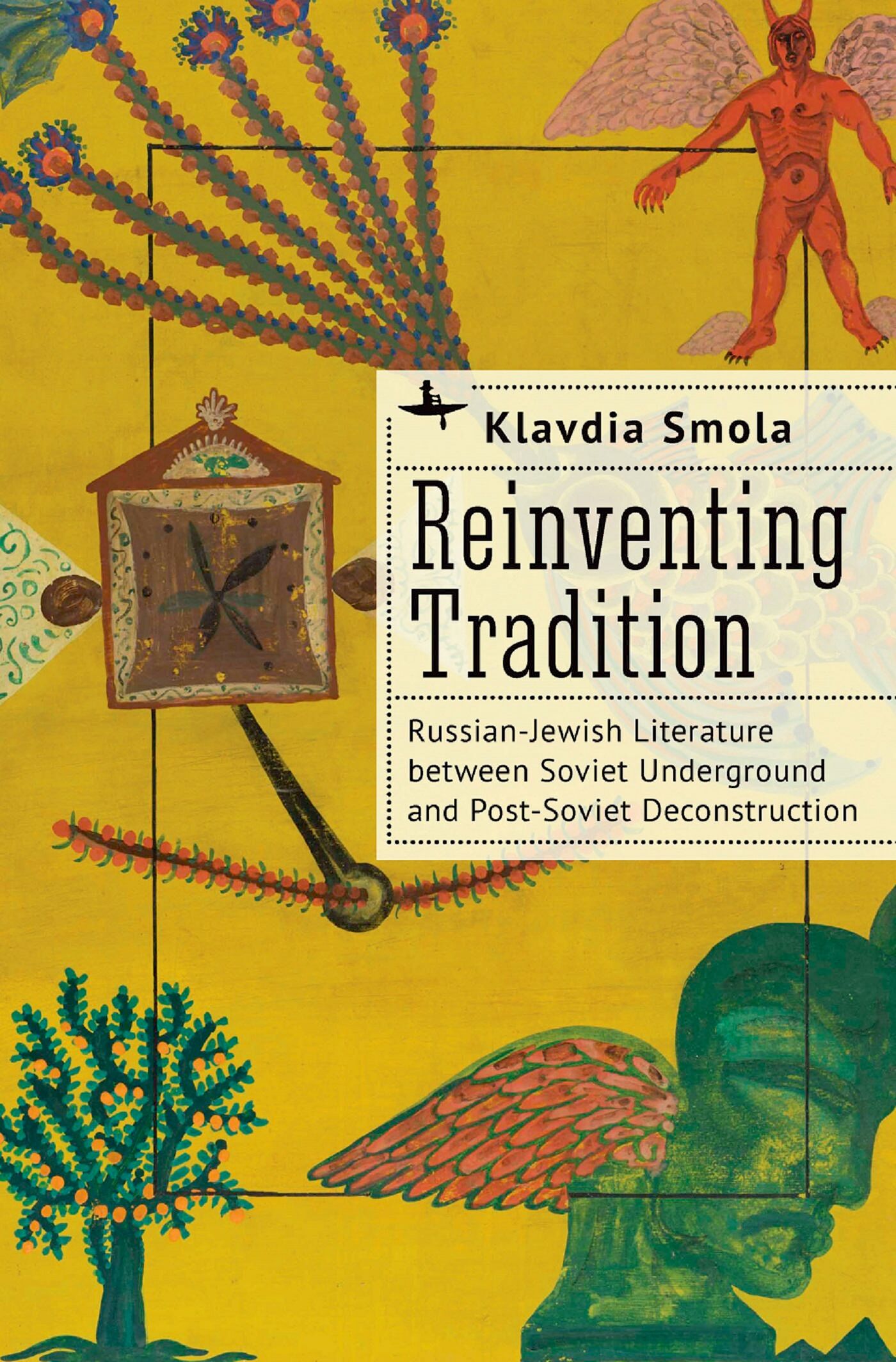
Reinventing Tradition
How was the Jewish tradition reinvented in Russian-Jewish literature after a long period of assimilation, the Holocaust, and decades of Communism? The process of reinventing the tradition began in the counter-culture of Jewish dissidents, in the midst of the late-Soviet underground of the 1960-1970s, and it continues to the present day. In this period, Jewish literature addresses the reader of the ‘post-human’ epoch, when the knowledge about traditional Jewry and Judaism is received not from the family members or the collective environment, but rather from books, paintings, museums and popular culture.
Klavdia Smola explores how contemporary Russian-Jewish literature turns to the traditions of Jewish writing, from biblical Judaism to early-Soviet (anti-)Zionist novels, and how it ‘re-writes’ Haskalah satire, Hassidic Midrash or Yiddish travelogues.
eBook

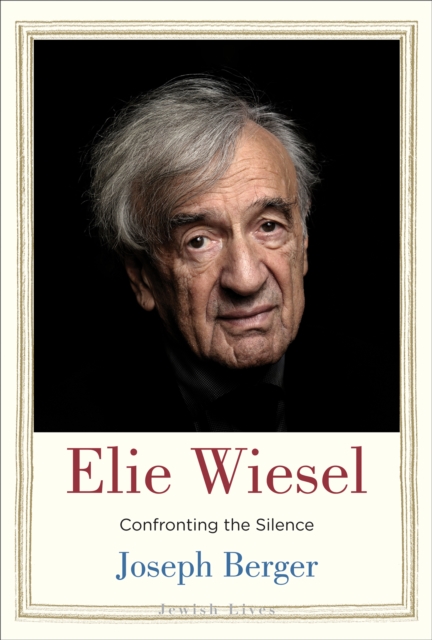
Elie Wiesel
BAn intimate look at Elie Wiesel, author of the seminal Holocaust memoir INight/I and recipient of the Nobel Peace Prize/BBR / BR / As an orphaned survivor and witness to the horrors of Auschwitz, Elie Wiesel (1928-2016) compelled the world to confront the Holocaust with his searing memoir INight/I. How did this soft-spoken man from a small Carpathian town become such an influential figure on the world stage? Drawing on Wiesel's prodigious literary output and interviews with his family, friends, scholars, and critics, Joseph Berger seeks to answer this question.BR / BR / Berger explores Wiesel's Hasidic childhood in Sighet, his postwar years spent rebuilding his life from the ashes in France, his transformation into a Parisian intellectual, his failed attempts at romance, his years scraping together a living in America as a journalist, his decision to marry and have a child, his emergence as a spokesperson for Holocaust survivors and persecuted peoples throughout the world, his lifelong devotion to the state of Israel, and his difficult final years. Through this penetrating portrait we come to know intimately the man the Norwegian Nobel Committee called \"a messenger to mankind.\"
eBook


The Colors of Zion
This comparative study focuses on three groups often seen as antagonistic—Blacks, Jews, and Irish. Resolutely aware of past tensions, Bornstein argues that the pendulum has swung too far in that direction and that it is time to recover the history of lost connections and cooperation among the groups. The chronological range stretches from Frederick Douglass’s tour of Ireland during the Great Famine of the 1840s through the 1940s with the catastrophe of World War II. The study ends with the concept of the Righteous Gentile commemorated at the Israeli Holocaust Memorial, Yad Vashem--non-Jews who during the Holocaust risked their own lives to rescue Jews from the horror of the Holocaust. Bornstein expands the term here to include all those Irish, Jewish, or African American figures who fought against narrow identification only with their own group and instead championed a wider and more humane vision of a shared humanity that sees hybridity rather than purity and love rather than resentment. The identity politics and culture wars of recent decades often made recognizing those positive qualities problematic. But with the election of a mixed-race president who himself embodies mixture and mutual respect (and who famously described himself as a “mutt\"), the shallow and arbitrary nature of narrow identity politics become evident. This study recuperates strong voices from the past of all three groups in order to let them speak for themselves.
eBook

Arthur Koestler
Born in Budapest in 1905, Arthur Koestler was a pivotal European writer and intellectual who inspired, provoked and intrigued in equal measure. Koestler wrote enduring works of reportage and memoir but he is most famous for his political novel Darkness at Noon, which received widespread international acclaim upon its publication in 1940. Born to a secular Jewish middle-class family in Austro-Hungary a decade before the First World War, [he] was a leading documentarist of some of the key moments in twentieth-century European history [while self-staging as a witness to them]. For years he struggled with his Jewish identity, becoming committed to progressive causes early on, notably Zionist politics, before embracing more esoteric ideas later in life. Koestler's interest and science and technology influenced his writing and journalism, and inspired his reflections on rationalism, mysticism and the future of humankind. Following controversial claims of sexual violence that emerged shortly after his suicide in 1983, his name was brought into public disrepute, and his legacy today remains problematic.-- Back cover and publisher information.
Book
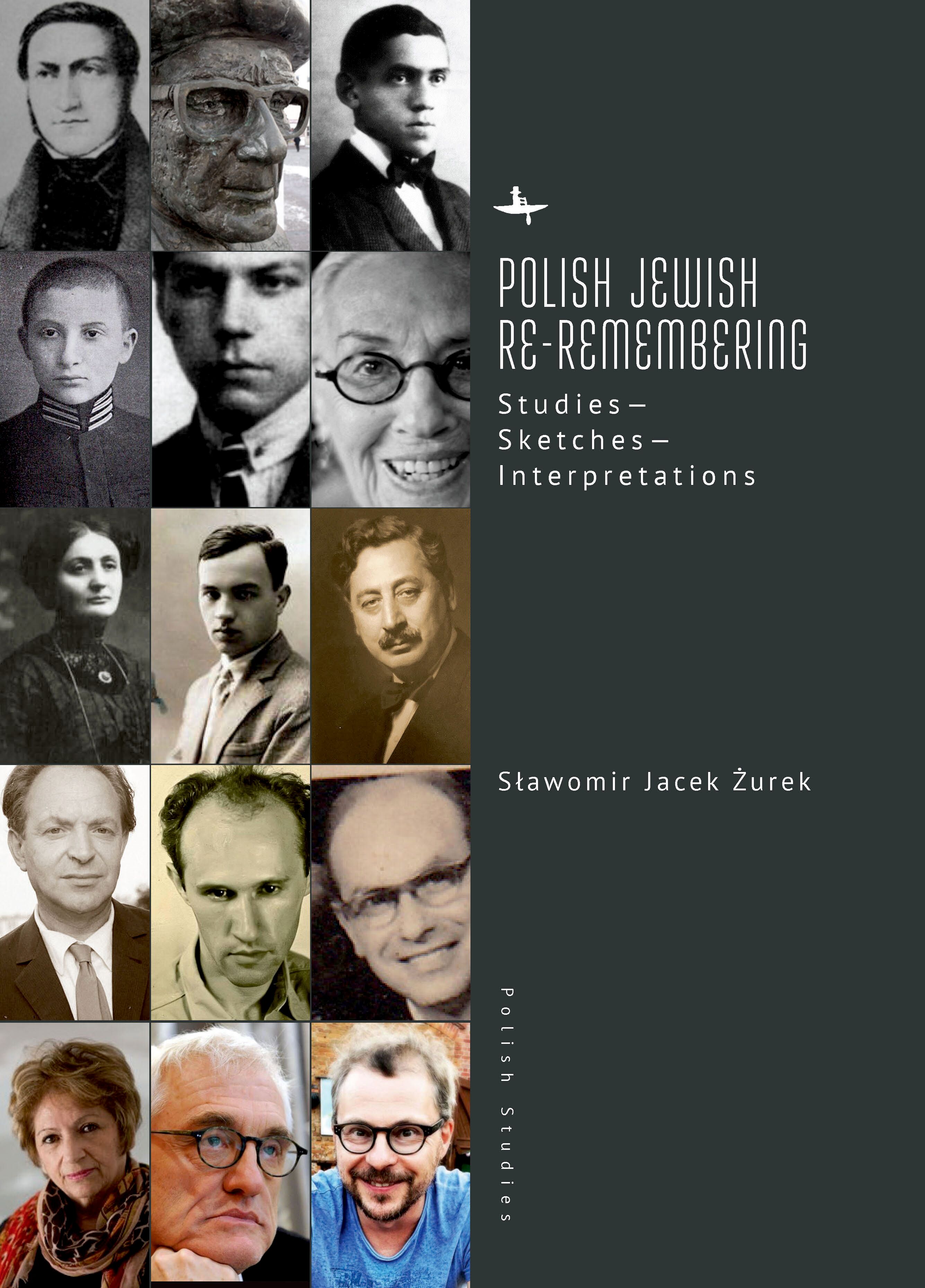
Polish Jewish Re-Remembering
The title of this monograph, ‘Polish Jewish Re-Remembering’, refers to the post-1989, thirty-year-long process of reviving attention to Polish-Jewish relations in historical, cultural, and literary studies, including the impact of Jews on the development of Polish culture, their presence in Polish social life, and the relationships between Jews and non-Jews in Poland. The book consists of four parts: the first focuses on Polish, Jewish and Polish-Jewish Literature (dealing mainly with pre-1939 literary works); the second, on the post-war literary output of the Polish-Jewish writer Arnold Słucki (1920–1972); the third, on Polish-Israeli literary images in the works of writers who were active in Israel (1948–2018); and the fourth, on recent (after 2000) Polish Holocaust literature.
eBook


The Edinburgh Companion to Modern Jewish Fiction
WINNER of the Association of Jewish Libraries' Judaica Reference AwardProvides critical overviews of the main writers and key themes of Anglophone Jewish fiction
This collection of essays represents a new departure for, and a potentially (re)defining moment in, literary Jewish Studies. It is the first volume to bring together 28 chapters covering a wide range of American, British, South African, Canadian and Australian Jewish fiction.
The volume is divided into 3 parts - American Jewish Fiction; British Jewish Fiction; and International and Transnational Anglophone Jewish Fiction - but many of the essays cross over these boundaries and speak to each other implicitly, as well as, on occasion, explicitly. Extending and redefining the canon of modern Jewish fiction, the volume juxtaposes major authors with more marginal figures, revising and recuperating individual reputations, rediscovering forgotten and discovering new work, and in the process remapping the whole terrain. This volume opens windows onto vistas that previously had been obscured and opens doors for the next generation of studies that could not proceed without a wide-ranging, visionary empiricism grounding their work.
Key FeaturesHighlights the rich diversity of the field and identifies its key themes, including immigration, the Diaspora, the Holocaust, Judaism, assimilation, antisemitism and ZionismAnalyses the main trends in Anglophone Jewish fiction and situates them in historical contextDiscusses the place of Anglophone Jewish fiction in relation to critical debates concerning transatlanticism and transnationalism; ethnicity and identity politics; postcolonial studies, feminist studies and Jewish StudiesWith a preface by Mark Shechner, the volume's contributors include Vicki Aarons (Trinity University, Texas), Debra Shostak (Wooster College, Ohio), Ira Nadel (University of British Columbia), Efraim Sicher (Ben-Gurion University), Phyllis Lassner (Northwestern University), Sue Vice (University of Sheffield), Lori Harrison-Kahan (Boston College), Ruth Gilbert (University of Winchester), Beate Neumeier (University of Cologne) and Sandra Singer (University of Guelph)
eBook