
Catalogue Search | MBRL


Are you sure you want to remove the book from the shelf?

{{itemTitle}}
2,228
result(s) for
"Jewish children in the Holocaust"
Sort by:

Anne Frank
In 1942, a young Jewish girl named Anne Frank received a diary from her parents for her thirteenth birthday. Today, millions of people have read the compelling, heartfelt diary entries Frank recorded while living in hiding to escape Nazi persecution. Her work is an invaluable account of the Holocaust, an iconic classic of war literature, and a testament to her own hopeful and unbreakable spirit. This biography introduces readers to Frank's life and the legacy she left behind, complete with photographs and fact boxes. Readers will be inspired by Frank's incredible story and her essential contribution to recorded history.
BOOK

Children during the Holocaust
Children during the Holocaust, from the United States Holocaust Memorial Museum's Center for Advanced Holocaust Studies, tells the story of the Holocaust through the eyes, and fates, of its youngest victims. The ten chapters follow the arc of the persecutory policies of the Nazis and their sympathizers and the impact these measures had on Jewish children and adolescents—from the years leading to the war, to the roundups, deportations, and emigrations, to hidden life and death in the ghettos and concentration camps, and to liberation and coping in the wake of war. This volume examines the reactions of children to discrimination, the loss of livelihood in Jewish homes, and the public humiliation at the hands of fellow citizens and explores the ways in which children's experiences paralleled and diverged from their adult counterparts. Additional chapters reflect upon the role of non-Jewish children as victims, perpetrators, and bystanders during World War II. Offering a collection of personal letters, diaries, court testimonies, government documents, military reports, speeches, newspapers, photographs, and artwork, Children during the Holocaust highlights the diversity of children's experiences during the nightmare years of the Holocaust.
eBook
Four scraps of bread : (quatre petits bouts de pain)
\"Born in Hungary in 1927, Magda Hollander-Lafon was among the 437,000 Jews deported from Hungary between May and July 1944. Magda, her mother, and her younger sister survived a three-day deportation to Auschwitz-Birkenau; there, she was considered fit for work and so spared, while her mother and sister were sent straight to their deaths. Hollander-Lafon recalls an experience she had in Birkenau: \"A dying woman gestured to me: as she opened her hand to reveal four scraps of moldy bread, she said to me in a barely audible voice, 'Take it. You are young. You must live to be a witness to what is happening here. You must tell people so that this never happens again in the world.' I took those four scraps of bread and ate them in front of her. In her look I read both kindness and release. I was very young and did not understand what this act meant, or the responsibility that it represented.\" Years later, the memory of that woman's act came to the fore, and Magda Hollander-Lafon could be silent no longer. In her words, she wrote her book not to obey the duty of remembering but in loyalty to the memory of those women and men who disappeared before her eyes. Her story is not a simple memoir or chronology of events. Instead, through a series of short chapters, she invites us to reflect on what she has endured. Often centered on one person or place, the scenes of brutality and horror she describes are intermixed with reflections of a more meditative cast. Four Scraps of Bread is both historical and deeply evocative, melancholic, and at times poetic in nature. Following the text is a \"Historical Note\" with a chronology of the author's life that complements her kaleidoscopic style. After liberation and a period in transit camps, she arrived in Belgium, where she remained. Eventually, she chose to be baptized a Christian and pursued a career as a child psychologist. The author records a journey through extreme suffering and loss that led to radiant personal growth and a life of meaning. As she states: \"Today I do not feel like a victim of the Holocaust but a witness reconciled with myself.\" Her ability to confront her experiences and free herself from her trauma allowed her to embrace a life of hope and peace. Her account is, finally, an exhortation to us all to discover life-giving joy\"-- Provided by publisher.
Book

Two Rings
Judged only as a World War Two survivor's chronicle, Millie Werber's story would be remarkable enough. Born in central Poland in the town of Radom, she found herself trapped in the ghetto at the age of fourteen, a slave laborer in an armaments factory in the summer of 1942, transported to Auschwitz in the summer of 1944, before being marched to a second armaments factory. She faced death many times; indeed she was certain that she would not survive. But she did.Many years later, when she began to share her past with Eve Keller, the two women rediscovered the world of the teenage girl Millie had been during the war. Most important, Millie revealed her most precious private memory: of a man to whom she was married for a few brief months. He was-if not the love of her life-her first great unconditional passion. He died, leaving Millie with a single photograph taken on their wedding day, and two rings of gold that affirm the presence of a great passion in the bleakest imaginable time.
eBook
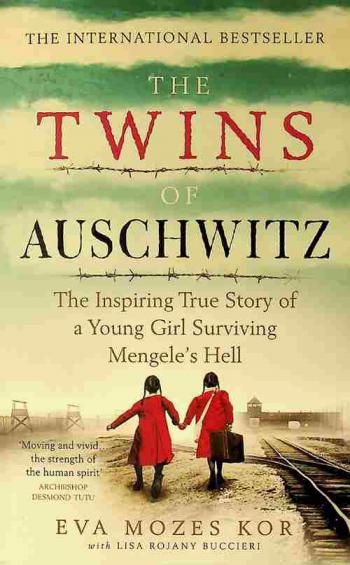
The twins of Auschwitz : the inspiring true story of a young girl surviving Mengele's hell
In the summer of 1944, Eva Mozes Kor and her family arrived at Auschwitz.Within thirty minutes, they were separated. Her parents and two older sisters were taken to the gas chambers, while Eva and her twin, Miriam, were herded into the care of the man who became known as the Angel of Death: Dr. Josef Mengele. They were 10 years old. While twins at Auschwitz were granted the 'privileges' of keeping their own clothes and hair, they were also subjected to Mengele's sadistic medical experiments. They were forced to fight daily for their own survival and many died as a result of the experiments, or from the disease and hunger rife in the concentration camp. In a narrative told simply, with emotion and astonishing restraint, The Twins of Auschwitz shares the inspirational story of a child's endurance and survival in the face of truly extraordinary evil. Also included is an epilogue on Eva's incredible recovery and her remarkable decision to publicly forgive the Nazis. Through her museum and her lectures, she dedicated her life to giving testimony on the Holocaust, providing a message of hope for people who have suffered, and worked toward goals of forgiveness, peace, and the elimination of hatred and prejudice in the world.

Holocaust Mothers and Daughters
In this brave and original work, Federica Clementi focuses on the mother-daughter bond as depicted in six works by women who experienced the Holocaust, sometimes with their mothers, sometimes not. The daughters' memoirs, which record the \"all-too-human\" qualities of those who were persecuted and murdered by the Nazis, show that the Holocaust cannot be used to neatly segregate lives into the categories of before and after. Clementi's discussions of differences in social status, along with the persistence of antisemitism and patriarchal structures, support this point strongly, demonstrating the tenacity of trauma-individual, familial, and collective-among Jews in twentieth-century Europe.
eBook

The brave princess and me : inspired by a true story
Born deaf, Princess Alice of Greece knows what it is like to face discrimination. With the arrival of the Nazis, all the Jews living in Greece are in danger. Tilda Cohen and her mother must find a safe place to hide. When they arrive, unannounced, on Princess Alice's doorstep and beg her to hide them, the princess's kindness is put to the test.
Book

A Final Reckoning
A work of both childhood memory and adult reflection
undergirded with scholarly research Ruth Herskovits
Gutmann’s powerful memoir recounts her life not only as a
concentration camp inmate and survivor, but also as a sister and
daughter. Born in 1928, Gutmann and her twin sister, Eva, escaped
the growing Nazi threat in Germany on a
Kindertransport to Holland in 1939 . Gutmann’s
compelling story captures many facets of the Jewish experience in
Nazi Germany. She describes her early life in Hannover as the
daughter of a prominent and patriotic member of the Jewish
community. Her flight on the
Kindertransport offers a vivid, firsthand account of
that effort to save the children of Jewish families. Her memories
of the camps include coming to the attention of Josef Mengele,
who often used twins in human experiments. Gutmann writes with
moving clarity and nuance about the complex feelings of
survivorship.
A Final Reckoning provides not only insights into
Gutmann’s own experience as a child in the midst of the
atrocities of the Holocaust, but also a window into the lives of
those, like her father, who were forced to carry on and comply
with the regime that would ultimately bring about their
demise.
eBook


In Her Father's Eyes
Translated from the German for the first time, In Her Father's Eyes is the diary of Béla Weichherz, in which he documents the life of his only daughter, Kitty, in prewar Czechoslovakia. Started as a baby book before her birth in 1929, the journal contains frequent entries about the ups and downs of Kitty's childhood, often written in vivid detail. Weichherz included photographs, developmental charts, and Kitty's own drawings to enhance the text. The journal entries stop in early spring 1942, just days before the family's deportation to a Nazi death camp. In its final pages, a recognizable tale of one anonymous life becomes a heartbreaking story about how anti-Semitism and nationalism in Slovakia shattered this normalcy.
In Her Father's Eyesis a moving tale about Jewish life and a father's profound love for his only child. By bridging prewar and wartime periods, the diary also provides a rich context for understanding the history from which the Holocaust emerged.
eBook