
Catalogue Search | MBRL


Are you sure you want to remove the book from the shelf?

{{itemTitle}}
2
result(s) for
"Jewish clothing and dress Yemen (Republic)"
Sort by:
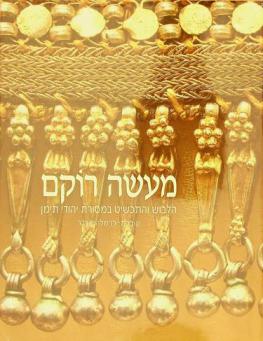

Between Lulu and Penina: The Yemenite Woman, Her Jewelry, and Her Embroidery in the New Hebrew Culture
Even in its early stages, the Hebrew culture in Eretz Israel molded the image of the Yemenite Jews according to the duality in its perception of Eastern Jews: as exotic types on the one hand, but as bearers of a primitive, materialistic, low-level culture on the other. Their borderline \"otherness\" had a role to play in the overarching national purpose of \"creating a new Jewish man in the ancestral Land of Israel.\" The characters of Yemenite Jews populate poems, stories, novels, plays, and songs written by male and female writers from the first, second, and third aliyot (waves of Jewish immigration). As early as the beginning of the twentieth century, we meet images of Yemenite Jews that reflect the invented \"Yemeniteness\" of these figures, both in plastic art and in the domains of the national folk art that was also being invented. The way in which the new Hebrew culture constructed the Yemenite woman's gendered cultural identity, marked as it was by her clothes, jewelry, and embroidery, highlights its instrumentality. The jewelry and embroidery that were received as Yemenite-Israeli were foreign to the Yemenites themselves, and their reception did not aid the process by which the women were supposed to \"cross beyond ethnic identity and include national identity within it.\" The appropriation process activated towards an object that was never seen as a subject created complex dynamics of inclusion and exclusion, resulting in the estrangement of the product within the community with which it had previously been identified.
Journal Article