
Catalogue Search | MBRL


Are you sure you want to remove the book from the shelf?

{{itemTitle}}
13
result(s) for
"Jewish composers Austria."
Sort by:

The Eighth : Mahler and the world in 1910
\"The world premiere of Gustav Mahler's Eighth Symphony in Munich in 1910 was the artistic breakthrough for which the composer had yearned all his life, filling Munich's huge Neue Musik-Festhalle on two successive evenings to rapturous and tumultuous applause. Representatives of many European royal houses were in attendance, along with luminaries of literary and musical world. Also in attendance were Alma Mahler, the composer's young wife, and Alma's longtime lover, the architect Walter Gropius. Knowledge of their relationship would precipitate an emotional crisis in Mahler that, compounded with his heart condition and the death of his young daughter Maria, would lead to his premature death the next year, in 1911. In The Eighth, Stephen Johnson provides a masterful account of the symphony's far-reaching effect on composers, conductors, and writers of the time--Berg and Schoenberg, the teenage Korngold, Bruno Walter and Klemperer, and Zweig and Mann. Johnson's story of the masterpiece and of the fate of the man who created it makes for absorbing reading and will be a must-read for classical music lovers\"-- Provided by publisher.
BOOK

\Ein hypermoderner Dirigent\: Mahler and Anti-Semitism in \Fin-de-siècle\ Vienna
The images and descriptions of Mahler are part of a complex network of stereotypes that were used to define the Jew's body as different. Mahler received much specific criticism as a Jew living in anti-Semitic Vienna.
Journal Article

\Your Songs Proclaim God's Return\ — Arnold Schoenberg, the Composer and His Jewish Faith
Die hier vorgelegte neue Interpretation von Arnold Schönbergs jüdischer Musik erforscht die Symbiose zweier anscheinend gegensätzlicher Ideologien, deren eine jüdisch ist, während die andere auf Schopenhauer und Wagner fußt. In den ausdrücklich jüdischen Werken verbindet Schönberg Wagners schopenhauerianische Tonsymbolik mit eigenen post-tonalen und seriellen Metaphern für jüdische Vorstellungen von Gott, Exil und Erlösung. Die Studie verfolgt verschiedene metaphorische Bedeutungen der Linearität in Schönbergs Musik und legt drei Schlüsse nahe: 1. Lineare Progressionen werden dazu verwendet, um symmetrische Klangkomplexe auszukomponieren, die der Gottesidee entsprechen (Unentrinnbar, Op. 27, Nr. 1), 2. Registerverschiebungen malen Exil und Rückkehr des jüdischen Volkes ins angestammte Vaterland (Dreimal tausend Jahre, Op. 50 a). 3. Wie bei Wagner werden lineare Progressionen \"liquidiert\", um die erlösende Auslöschung des Willens darzustellen (A Survivor of Warsaw, Op. 46).
Journal Article
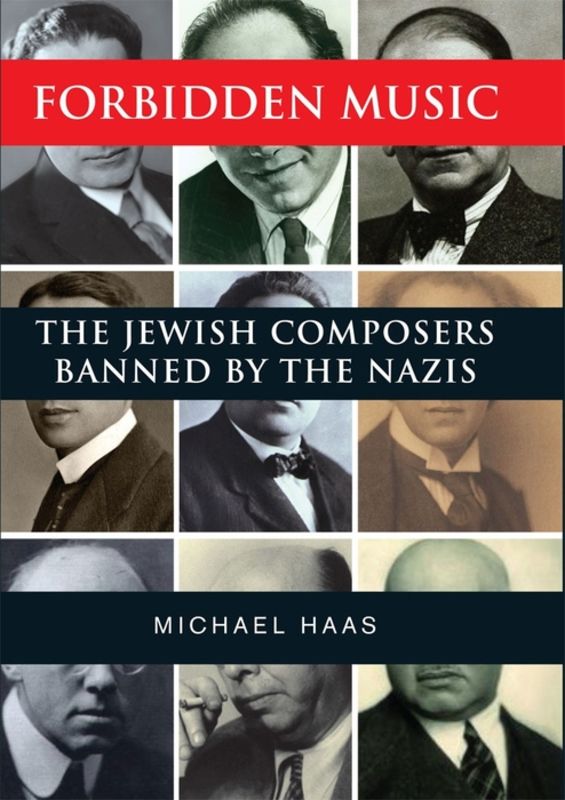
Forbidden Music
With National Socialism's arrival in Germany in 1933, Jews dominated music more than virtually any other sector, making it the most important cultural front in the Nazi fight for German identity. This groundbreaking book looks at the Jewish composers and musicians banned by the Third Reich and the consequences for music throughout the rest of the twentieth century. Because Jewish musicians and composers were, by 1933, the principal conveyors of Germany's historic traditions and the ideals of German culture, the isolation, exile and persecution of Jewish musicians by the Nazis became an act of musical self-mutilation.
Michael Haas looks at the actual contribution of Jewish composers in Germany and Austria before 1933, at their increasingly precarious position in Nazi Europe, their forced emigration before and during the war, their ambivalent relationships with their countries of refuge, such as Britain and the United States and their contributions within the radically changed post-war music environment.
eBook
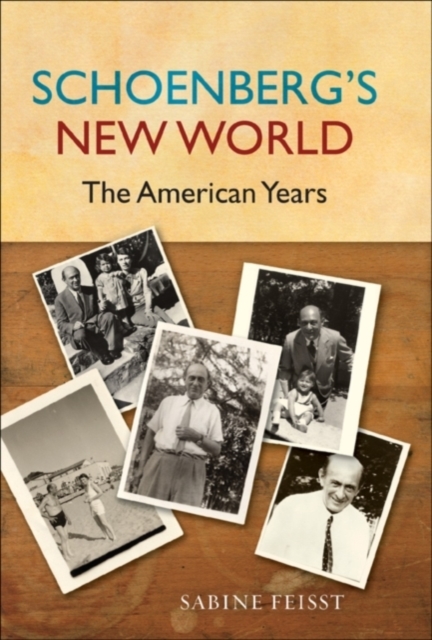
Schoenberg's new world : the American years
The first full-length study dedicated to Schoenberg’s life and music in the United States, this book dispels many myths and fills significant gaps in the existing literature on Schoenberg. Drawing on much new information, the book traces early American Schoenberg champions, who set the stage for Schoenberg’s arrival in 1933. The volume addresses in detail how Schoenberg, while coming to terms with his German and Jewish identities, developed an American identity both privately and professionally. New light is cast on Schoenberg’s relations with Americans, his interest in American culture, and changes in his religious and political thinking and lifestyle. As Schoenberg was committed to the advancement of American music and composed music inspired by and composed for American musicians, his American works are examined anew with regard to their contexts and the history of their performance and publication. Schoenberg’s many interactions with performers and publishers in the United States are explored as well. Illustrating how Schoenberg adjusted to the American educational system, the book delves into Schoenberg’s American teaching career, teaching methods, and materials and features some of the many remarkable students he taught in Boston and Los Angeles. Finally the impact of Schoenberg’s music and ideas on American performers, composers, and scholars after World War II is gauged in the light of major political and cultural changes during the Cold War era.
eBook

Arnold Schoenberg's A survivor from Warsaw in postwar Europe
Joy H. Calico examines the cultural history of postwar Europe through the lens of the performance and reception of Arnold Schoenberg's A Survivor from Warsaw—a short but powerful work, she argues, capable of irritating every exposed nerve in postwar Europe. Schoenberg, a Jewish composer whose oeuvre had been one of the Nazis’ prime exemplars of entartete (degenerate) music, immigrated to the United States and became an American citizen. Both admired and reviled as a pioneer of dodecaphony, he wrote this twelve-tone piece about the Holocaust in three languages for an American audience. This book investigates the meanings attached to the work as it circulated through Europe during the early Cold War in a kind of symbolic musical remigration, focusing on six case studies: West Germany, Austria, Norway, East Germany, Poland, and Czechoslovakia. Each case is unique, informed by individual geopolitical concerns, but this analysis also reveals common themes in anxieties about musical modernism, Holocaust memory and culpability, the coexistence of Jews and former Nazis, anti-Semitism, dislocation, and the presence of occupying forces on both sides of the Cold War divide.
eBook

Mahler, Victim of the 'New' Anti-Semitism
An abyss separates the research of Mahler from that of social historians on anti-Semitism in fin-de-siècle Austria and Germany. Mahler specialists tend to study the assaults he endured in terms of the centuries-old intolerance. Social historians, however, have pursued a different tack. They trace the liberal thought of the mid-nineteenth century, the legal emancipation of the Jews and its aftermath to the rise of 'new' anti-Semitism in the 1870s, centred in Vienna. The reasons why Mahler resigned as director of the Vienna Court Opera involve many more factors and subtleties, even concerning the expression of anti-Semitism. It is on these elements that this article attempts to shed light.
Journal Article

Beethoven and His Jewish Contemporaries
Scholars have drawn attention to the significance of Beethoven's circle in biographical and critical evaluation of his music and influence on music of the nineteenth century. The particular circumstances of the Jewish population in Europe during this important period, that of the Emancipation and Haskalah, with its changes of socio-political profile, add a significant perspective to a consideration of Beethoven's Jewish contemporaries, and his relationships with them highlight both the composer's own rapport with Judaism and their contribution to nineteenth-century culture. The article deals with close colleagues such as the pianist-composer Moscheles, poet Jeitteles, and publisher Schlesinger, all of whom were instrumental in the genesis and reception of many of Beethoven's masterworks as well as the wider circle of Hiller, Heller, Meyerbeer, Thalberg, and Sir Julius Benedict, who came into contact with Beethoven and whose influence extended into the Romantic era. Beethoven's Jewish friends and patrons are also discussed as well as the possibility that his commission to compose for Vienna's Seitenstettengasse Synagogue inspired his greatest, last quartet in C sharp minor, op. 131.
Journal Article
Mahler as a Jew in the Literature
Gustav Mahler was a Jew from the Czech Lands which were part of the Austrian empire in the late nineteenth and early twentieth centuries. A combination of his fame as composer and conductor with the effects of longstanding antisemitism in the German-speaking countries results in a wide spectrum of musicological writings addressing the effect of his Jewish background on his work. Antisemi tic commentary on Mahler's work, begun in his own lifetime, is widely known, but prosemitic and neutral assessment has not been afforded comparable study by present-day historians. This is unfortunate, since positive representations of the effect of Mahler's Jewish identity on his work have a longer history in the Mahler literature than those others which, essentially, ended with the Third Reich. In this essay, comparative balances between the two extremes will be examined, with examples from Mahler's contemporaries through the Nazi period and since.
Journal Article