
Catalogue Search | MBRL


Are you sure you want to remove the book from the shelf?

{{itemTitle}}
10,026
result(s) for
"Jewish diaspora"
Sort by:


Beyond the Land
This dynamic understanding of both an Israeli and a Jewish diaspora works to envision a non-hegemonic Jewish nationalism that can negotiate both political imagination and reality.
eBook

The modern Israeli and Palestinian diasporas : a comparative approach
A comparative study of contemporary Israeli and Palestinian diasporas.Exilic and diasporic experience have become ubiquitous in recent decades.Jews, lacking a homeland, spread to various parts of the world, making the Jewish diaspora paradigmatic.
eBook


Jewish Bialystok and its diaspora
The mass migration of East European Jews and their resettlement in cities
throughout Europe, the United States, Argentina, the Middle East and Australia in
the late 19th and early 20th centuries not only transformed the demographic and
cultural centers of world Jewry, it also reshaped Jews' understanding and
performance of their diasporic identities. Rebecca Kobrin's study of the dispersal
of Jews from one city in Poland -- Bialystok -- demonstrates how the act of
migration set in motion a wide range of transformations that led the migrants to
imagine themselves as exiles not only from the mythic Land of Israel but most
immediately from their east European homeland. Kobrin explores the organizations,
institutions, newspapers, and philanthropies that the Bialystokers created around
the world and that reshaped their perceptions of exile and diaspora.
eBook


New Jews
For many contemporary Jews, Israel no longer serves as the Promised Land, the center of the Jewish universe and the place of final destination. In New Jews, Caryn Aviv and David Shneer provocatively argue that there is a new generation of Jews who don't consider themselves to be eternally wandering, forever outsiders within their communities and seeking to one day find their homeland. Instead, these New Jews are at home, whether it be in Buenos Aires, San Francisco or Berlin, and are rooted within communities of their own choosing. Aviv and Shneer argue that Jews have come to the end of their diaspora; wandering no more, today's Jews are settled.In this wide-ranging book, the authors take us around the world, to Moscow, Jerusalem, New York and Los Angeles, among other places, and find vibrant, dynamic Jewish communities where Jewish identity is increasingly flexible and inclusive. New Jews offers a compelling portrait of Jewish life today.
eBook

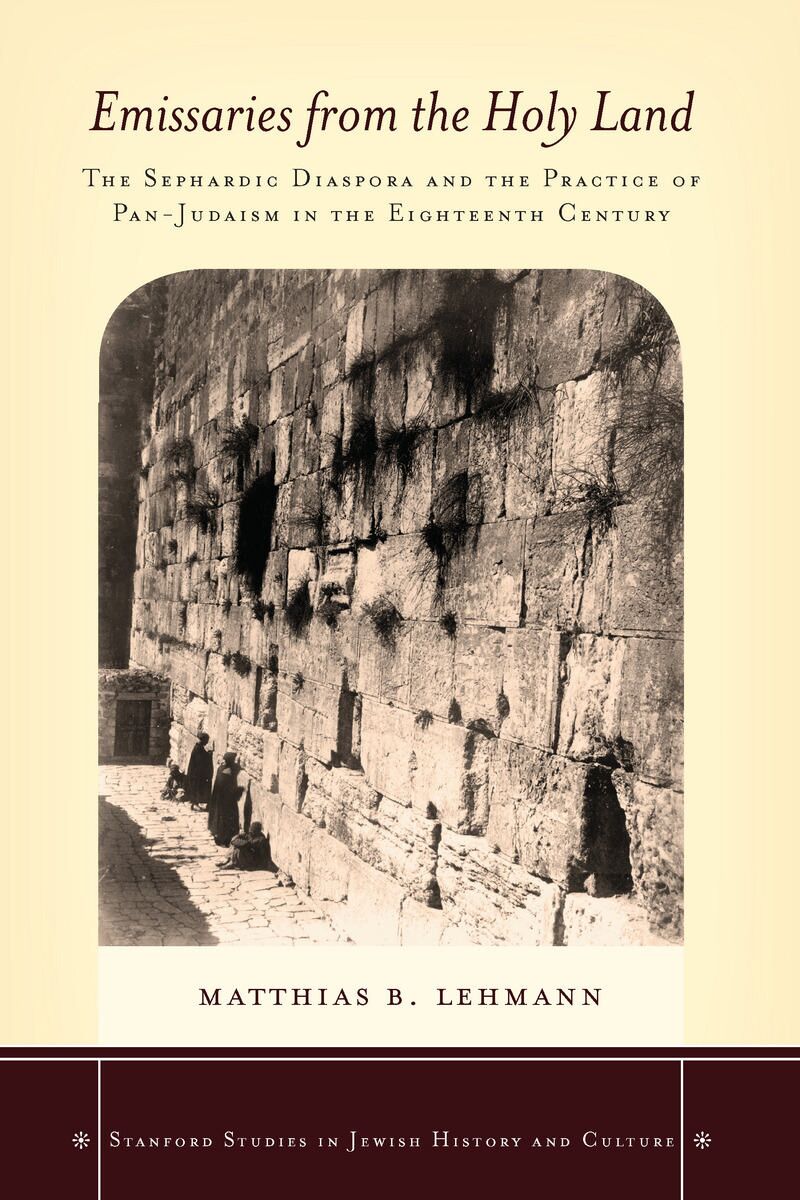
Emissaries from the Holy Land
For Jews in every corner of the world, the Holy Land has always been central. But that conviction was put to the test in the eighteenth century when Jewish leaders in Palestine and their allies in Istanbul sent rabbinic emissaries on global fundraising missions. From the shores of the Mediterranean to the port cities of the Atlantic seaboard, from the Caribbean to India, these emmissaries solicited donations for the impoverished of Israel's homeland.
Emissaries from the Holy Land explores how this eighteenth century philanthropic network was organized and how relations of trust and solidarity were built across vast geographic differences. It looks at how the emissaries and their supporters understood the relationship between the Jewish Diaspora and the Land of Israel, and it shows how cross-cultural encounters and competing claims for financial support involving Sephardic, Ashkenazi, and North African emissaries and communities contributed to the transformation of Jewish identity from 1720 to 1820.
Solidarity among Jews and the centrality of the Holy Land in traditional Jewish society are often taken for granted. Lehmann challenges such assumptions and provides a critical, historical perspective on the question of how Jews in the early modern period encountered one another, how they related to Jerusalem and the land of Israel, and how the early modern period changed perceptions of Jewish unity and solidarity. Based on original archival research as well as multiple little-known and rarely studied sources,Emissaries from the Holy Land offers a fresh perspective on early modern Jewish society and culture and the relationship between the Jewish Diaspora and Palestine in the eighteenth century.
eBook