
Catalogue Search | MBRL


Are you sure you want to remove the book from the shelf?

{{itemTitle}}
1,745
result(s) for
"Jewish philosophers"
Sort by:

Spinoza : a life
Baruch Spinoza (1632-1677) was one of the most important philosophers of all time; he was also one of the most radical and controversial. The story of Spinoza's life takes the reader into the heart of Jewish Amsterdam in the seventeenth century and, with Spinoza's exile from Judaism, into the midst of the tumultuous political, social, intellectual, and religious world of the young Dutch Republic. This new edition of Steven Nadler's biography, winner of the Koret Jewish Book Award for biography and translated into a dozen languages, is enhanced by exciting new archival discoveries about his family background, his youth, and the various philosophical, political, and religious contexts of his life and works. There is more detail about his family's business and communal activities, about his relationships with friends and correspondents, and about the development of his writings, which were so scandalous to his contemporaries. -- Provided by publisher.
Book

The Dialectics of Feeling: Hugo Bergman?s and Gershom Scholem?s Political Theologies of Zionism
The current article has several aims. First, it seeks to underscore the importance of Hugo Bergman?s and Gershom Scholem?s late critiques of Zionism, and to argue that they should be understood as politico-theological commentaries on the Israeli political reality in which they lived. Second, it argues for the relevance of approaching these critiques through the theoretical prism of political theology. Third, it aims to chart the overlaps and differences between the Bergmanesque and Scholemian theological interpretations of Zionism by charting their common premises and differences. I argue that the former derive from their shared view of Zionism as a religious project, and the latter derive from their arrival at polar conclusions: Bergman seeking a positive potential; Scholem identifying a destructive potential. Hence, their political theologies of Zionism are understood as a ?dialectic of feeling?.
Journal Article

Ernst Ludwig Ehrlich
Ernst Ludwig Ehrlich (1921-2007), Wegbereiter des jüdisch-christlichen Dialogs im deutschsprachigen Raum, zählt zu den ersten jüdischen Denkern, die nach der Shoa ein Gespräch mit Angehörigen beider christlicher Konfessionen führten. Seine Schriften sind Zeugnisse eines Berliner Juden, der durch eine Flucht in die Schweiz sein Leben rettete, und zugleich Dokumente des jüdisch-christlichen Gesprächs zu einer Zeit, in der weder die Voraussetzungen hierfür noch Dialogerfahrungen vorhanden waren. Die Analyse der Interaktion Ehrlichs belegt eindrucksvoll den christlichen Lernprozess, die bleibende Angewiesenheit christlicher TheologInnen auf jüdische PartnerInnen bei der Überwindung der Tradition des christlichen Antijudaismus und die Relevanz des jüdisch-christlichen Dialogs für die christliche Theologie. Die Verschränkung von Biographie und Lebenswerk Ernst Ludwig Ehrlichs verdeutlicht, dass ihm der Dialog trotz und wegen der Shoa zur Lebensaufgabe wurde.
eBook

Derrida's Marrano Passover : exile, survival, betrayal, and the metaphysics of non-identity
\"The first book devoted to Derrida's Marranism - his paradoxical 'non-Jewish Jewishness' - connecting it to the Derridean themes of exile, survival, betrayal and autobiography\"-- Provided by publisher.
BOOK
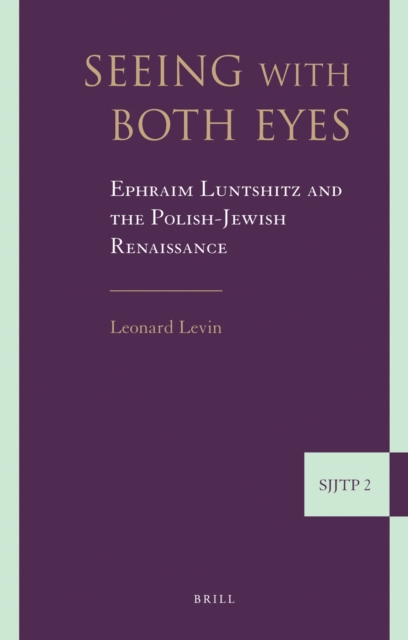
Seeing with Both Eyes
This intellectual biography of Rabbi Ephraim Luntshitz and his contemporaries (Isserles, Maharal, etc.) provides an in-depth study of the philosophical interests of the major thinkers of the Polish-Jewish Renaissance in the context of the European Renaissance and Reformation.
eBook

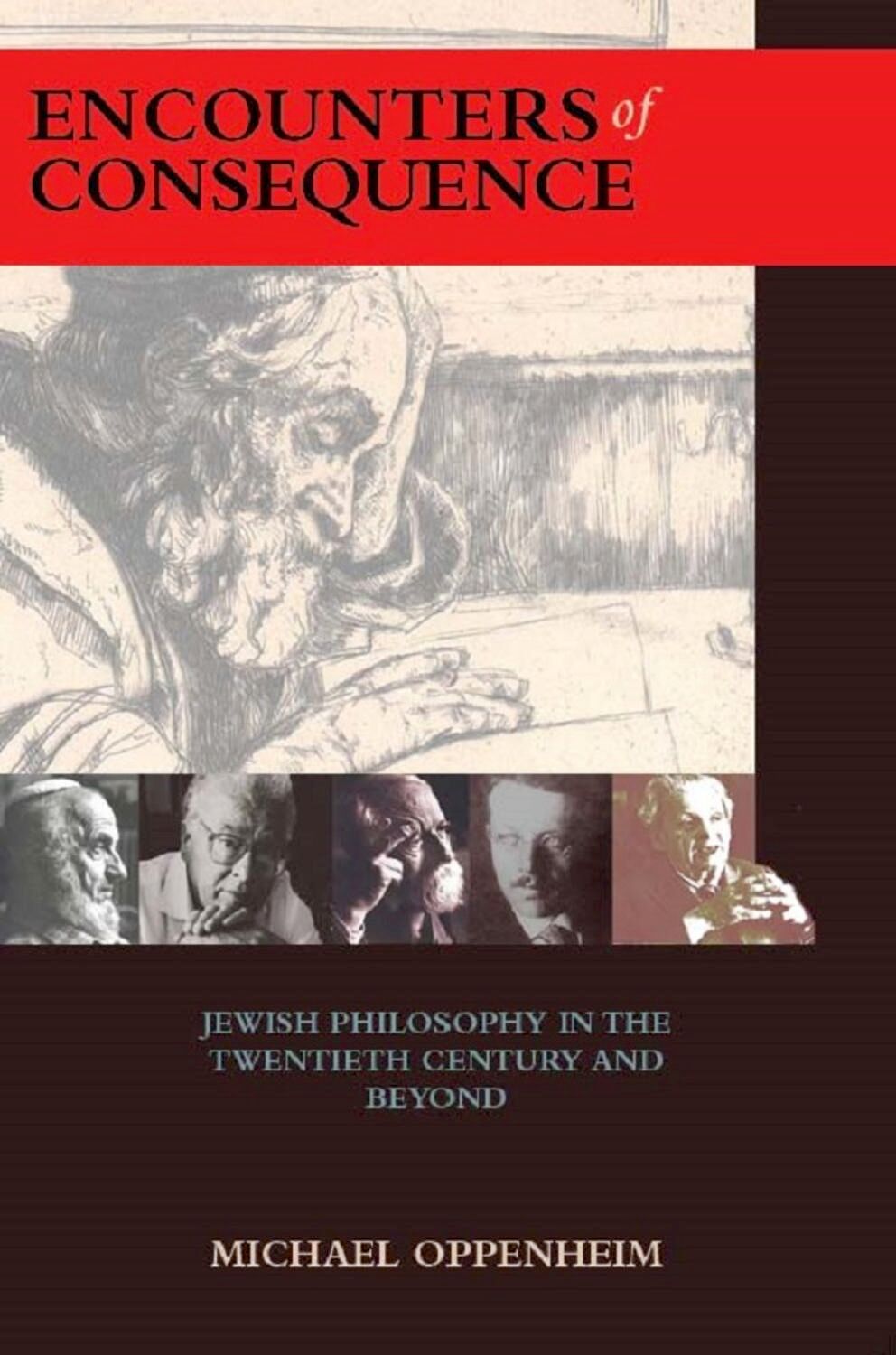
Encounters of Consequence
Charts Jewish philosophy's engagement with modernity and post-modernity along two overlapping axes - issues and persons - which often intersect. Key issues in modern Jewish philosophy are raised, including: the nature of Judaism and Jewish identity, the quests for meaning and continuity, the value of remaining a Jew, and the relevance of Jewish law, as well as the challenges of secularism, modern history, feminism and religious pluralism.
eBook
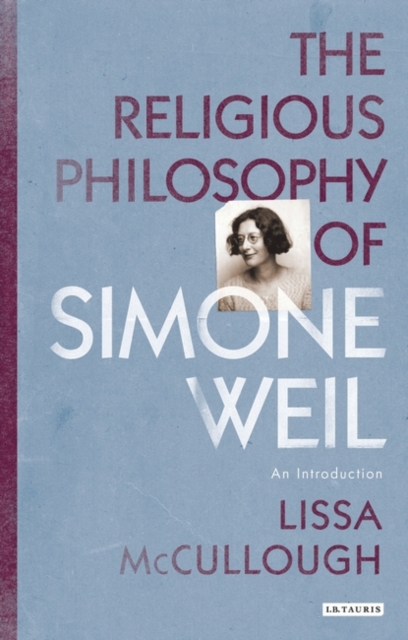
The Religious Philosophy of Simone Weil
The French philosopher Simone Weil (1909-1943), a contemporary of Simone de Beauvoir and Jean-Paul Sartre, remains in every way a thinker for our times. She was an outsider, in multiple senses, defying the usual religious categories: at once atheistic and religious; mystic and realist; sceptic and believer. She speaks therefore to the complex sensibilities of a rationalist age. Yet despite her continuing relevance, and the attention she attracts from philosophy, cultural studies, feminist studies, spirituality and beyond, Weil's reflections can still be difficult to grasp, since they were expressed in often inscrutable and fragmentary form. Lissa McCullough here offers a reliable guide to the key concepts of Weil's religious philosophy: good and evil, the void, gravity, grace, beauty, suffering and waiting for God. In addressing such distinctively contemporary concerns as depression, loneliness and isolation, and in writing hauntingly of God's voluntary 'nothingness', Weil's existential paradoxes continue to challenge and provoke. This is the first introductory book to show the essential coherence of her enigmatic but remarkable ideas about religion.
eBook
