
Catalogue Search | MBRL


Are you sure you want to remove the book from the shelf?

{{itemTitle}}
9,332
result(s) for
"Jewish refugees"
Sort by:

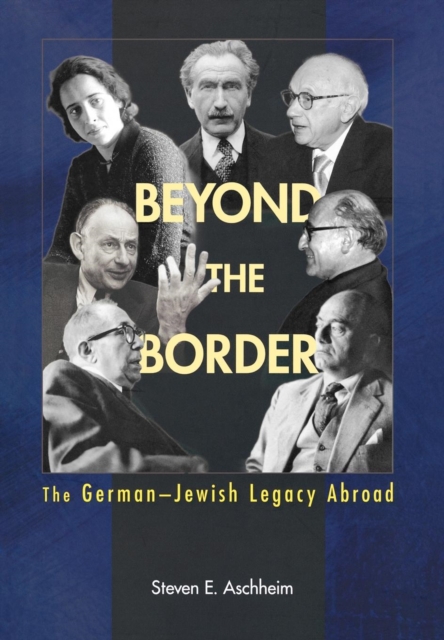
Beyond the Border : The German-Jewish Legacy Abroad
The modern German-Jewish experience through the rise of Nazism in 1933 was characterized by an explosion of cultural and intellectual creativity. Yet well after that history has ended, the influence of Weimar German-Jewish intellectuals has become ever greater. Hannah Arendt, Gershom Scholem, Theodor Adorno, Walter Benjamin, Franz Rosenzweig, and Leo Strauss have become household names and possess a continuing resonance. \"Beyond the Border\" seeks to explain this phenomenon and analyze how the German-Jewish legacy has continuingly permeated wider modes of Western thought and sensibility, and why these Émigrés occupy an increasingly iconic place in contemporary society. Steven Aschheim traces the odyssey of a fascinating group of German-speaking Zionists--among them Martin Buber and Hans Kohn--who recognized the moral dilemmas of Jewish settlement in pre-Israel Palestine and sought a binationalist solution to the Arab-Israel conflict. He explores how German-Jewish Émigré historians like Fritz Stern and George Mosse created a new kind of cultural history written against the background of their exile from Nazi Germany and in implicit tension with postwar German social historians. And finally, he examines the reasons behind the remarkable contemporary canonization of these Weimar intellectuals--from Arendt to Strauss--within Western academic and cultural life. Beyond the Border is about more than the physical act of departure. It also points to the pioneering ways these Émigrés questioned normative cognitive boundaries and have continued to play a vital role in addressing the predicaments that engage and perplex us today.
eBook


(Private) Archival Lives and Afterlives: Clara Licht’s Diaries in History and Memory
Engaging microhistorically with the three “diaries” of Clara Licht, a German Jewish refugee from National Socialism who fled to Britain before World War II, this article considers the lives and afterlives of the diaries as both objects of use for Clara and objects of memory for later generations. It argues for the need to view historical items pertaining to migration and persecution within a longer continuum stretching to the present. The article considers how the meaning of the same object alters over generations and how microhistory can elucidate some of the nuances of the experiences of German Jewish refugee families.
Journal Article


The Puzzle of Rescue and Survival: The Wartime Exodus of Jewish Refugees from Lithuania and their Japanese Savior Redux
One of the most remarkable rescue stories of the Holocaust is the 1940–1941 exodus to East Asia of a few thousand Jewish refugees stranded in Lithuania. The key figure associated with this affair is the Japanese diplomat Sugihara Chiune, who issued transit visas to these refugees, paving the way for their departure. Recognized 44 years later with Yad Vashem's title of the Righteous Among the Nations, Sugihara has become revered figure both in Japan and internationally. However, a careful examination of the prevalent narrative surrounding the refugees, their Japanese benefactor, and their wartime survival, reveals a story that is not only overly simplistic but also contains factual inaccuracies. Formulated around fifty years post-event, this account has primarily spotlighted Sugihara's supposedly life-saving deeds, while overlooking numerous other elements and factors that were instrumental in the refugees' survival. Drawing from a wide range of recently discovered archival sources and a critical examination of existing testimonies, this article presents a new and comprehensive retelling of this historic episode. It aims to provide a more nuanced and accurate understanding of the events and the diverse forces that contributed to the rescue and survival of the refugees.
Journal Article

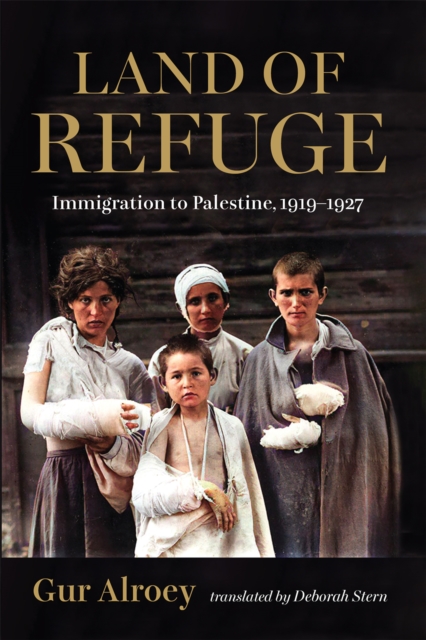
Land of Refuge
After the First World War, tens of thousands of Jews immigrated
to Palestine. They went there not to found a Zionist state but
primarily to seek refuge from the violence and persecution of the
Russian Civil War and its aftermath. Fleeing to the United States
was not an option due to heavily restrictive immigration laws
enacted there in the early 1920s.
In Land of Refuge , the experiences of this generation
of Jewish immigrants come vividly to life through a wealth of
previously unstudied archival sources. Historian Gur Alroey
skillfully weaves together the riveting and remarkable stories of
survivors of pogroms and riots in Ukraine and Uramia, including
widows, orphans, and survivors of rape and other unimaginable
violence; migrants who risked harrowing journeys by boat, only to
endure illness on the way, be detained or sent back, or have their
luggage broken into or stolen; survivors of the famine in Russia
during the Lenin and Stalin regimes; and marginalized Jews such as
the mentally ill, thieves, prostitutes, and those with falsified
entry visas.
The stories of the people at the core of Land of Refuge
form an important but little appreciated part of the history of the
Jewish settlement in the Land of Israel.
eBook

Mapping my return : a Palestinian memoir
\"Salman Abu Sitta was just ten years old when the Nakba--the mass expulsion of Palestinians in 1948--happened, forcing him from his home near Beersheba. Like many Palestinians of his generation, this traumatic loss and his enduring desire to return would be the defining features of his life from that moment on. Abu Sitta vividly evokes the vanished world of his family and home on the eve of the Nakba, giving a personal and very human face to the dramatic events of 1930s and 1940s Palestine as Zionist ambitions and militarization expanded under the British mandate. He chronicles his life in exile, from his family's flight to Gaza, his teenage years as a student in Nasser's Egypt, his formative years in 1960s London, his life as a family man and academic in Canada, to several sojourns in Kuwait. Abu Sitta's long and winding journey has taken him through many of the seismic events of the era, from the 1956 Suez War to the 1991 Gulf War. This rich and moving memoir is imbued throughout with a burning sense of justice and a determination to recover and document what rightfully belongs to his people, given expression in his groundbreaking mapping work on his homeland. Abu Sitta, with warmth and wit, tells his story and that of Palestine.\"--Page 4 of cover.
Book
Refugees, Human Rights and Realpolitik
This book presents a multidimensional case study of international human rights in the immediate post-Second World War period, and the way in which complex refugee problems created by the war were often in direct competition with strategic interests and national sovereignty.
The case study is the clandestine immigration of Jewish refugees from Italy to Palestine in 1945-1948, which was part of a British-Zionist conflict over Palestine, involving strategic and humanitarian attitudes. The result was a clear subjection of human rights considerations to strategic and political interests.
eBook