
Catalogue Search | MBRL


Are you sure you want to remove the book from the shelf?

{{itemTitle}}
634
result(s) for
"Jewish scientists."
Sort by:

Kurt Baschwitz : pioneer of communication studies and social psychology
In this study of a forgotten but noteworthy figure, the author tells the story of the life of Kurt Baschwitz (1886-1968), a scholar who fled from the Nazis. He wrote six books, never translated into English, on four related themes: the press, propaganda, politics, and persecution. Baschwitz independently developed concepts that are now seen as key to communication science and social psychology, and the author places Baschwitz's ideas in the wider context of his dramatic life and times.
Book

The Quantum Exodus
When the Nazis came to power in 1933, they immediately expelled Jewish academics, unwittingly changing the power balance of world science. When war came, these scientific refugees raced to engineer the atomic bomb, to prevent Nazi Germany getting there first.
eBook


Science in Medieval Jewish Cultures
Science in Medieval Jewish Cultures provides the first comprehensive overview by world-renowned experts of what we know today of medieval Jews' engagement with the sciences. Many medieval Jews, whether living in Islamic or Christian civilizations, joined Maimonides in accepting the rationalist philosophical-scientific tradition and appropriated extensive bodies of scientific knowledge in various disciplines: astronomy, astrology, mathematics, logic, physics, meteorology, biology, psychology, science of language and medicine. The appropriated texts – in the original or in Hebrew translation – were the starting points for Jews' own contributions to medieval science and also informed other literary genres: religious-philosophical works, biblical commentaries and even Halakhic (legal) discussions. This volume's essays will provide readers with background knowledge of medieval scientific thought necessary to properly understand canonical Jewish scientific texts. Its breadth reflects the number and diversity of Jewish cultures in the Middle Ages and the necessity of considering the fortunes of science in each within its specific context.
eBook

Lise Meitner : la física que inició la era atómica
\"En un mundo claramente dominado por los hombres, Lise Meitner se formó, investigó sin descanso y consiguió cambiar la historia de una rama de la ciencia en la que siempre fue discriminada por ser mujer. Además, sufrió la persecución de los nazis en Alemania por ser judía. Pese a todas las adversidades, logró ser una gran protagonista en el ámbito de la física y sus investigaciones dieron inicio a la era atómica. Tanto aportó a la ciencia que sin duda mereció el Premio Nobel. Sin embargo, nunca se lo concedierion.\"--Back cover.

A Chosen Calling
Questions traditional explanations for Jewish excellence in science in the United States, the Soviet Union, and Palestine in the twentieth century. Scholars have struggled for decades to explain why Jews have succeeded extravagantly in modern science. A variety of controversial theories—from such intellects as C. P. Snow, Norbert Wiener, and Nathaniel Weyl—have been promoted. Snow hypothesized an evolved genetic predisposition to scientific success. Wiener suggested that the breeding habits of Jews sustained hereditary qualities conducive for learning. Economist and eugenicist Weyl attributed Jewish intellectual eminence to \"seventeen centuries of breeding for scholars.\" Rejecting the idea that Jews have done well in science because of uniquely Jewish traits, Jewish brains, and Jewish habits of mind, historian of science Noah J. Efron approaches the Jewish affinity for science through the geographic and cultural circumstances of Jews who were compelled to settle in new worlds in the early twentieth century. Seeking relief from religious persecution, millions of Jews resettled in the United States, Palestine, and the Soviet Union, with large concentrations of settlers in New York, Tel Aviv, and Moscow. Science played a large role in the lives and livelihoods of these immigrants: it was a universal force that transcended the arbitrary Old World orders that had long ensured the exclusion of all but a few Jews from the seats of power, wealth, and public esteem. Although the three destinations were far apart geographically, the links among the communities were enduring and spirited. This shared experience—of facing the future in new worlds, both physical and conceptual—provided a generation of Jews with opportunities unlike any their parents and grandparents had known. The tumultuous recent century of Jewish history, which saw both a methodical campaign to blot out Europe's Jews and the inexorable absorption of Western Jews into the societies in which they now live, is illuminated by the place of honor science held in Jewish imaginations. Science was central to their dreams of creating new worlds—welcoming worlds—for a persecuted people. This provocative work will appeal to historians of science as well as scholars of religion, Jewish studies, and Zionism.
eBook

The only woman in the room
\"Her beauty almost certainly saved her from the rising Nazi party and led to marriage with an Austrian arms dealer. Underestimated in everything else, she overheard the Third Reich's plans while at her husband's side, understanding more than anyone would guess. She devised a plan to flee in disguise from their castle, and the whirlwind escape landed her in Hollywood. She became Hedy Lamarr, screen star. But she kept a secret more shocking than her heritage or her marriage: she was a scientist. And she knew a few secrets about the enemy. She had an idea that might help the country fight the Nazis...if anyone would listen to her\"-- Provided by publisher.
Book
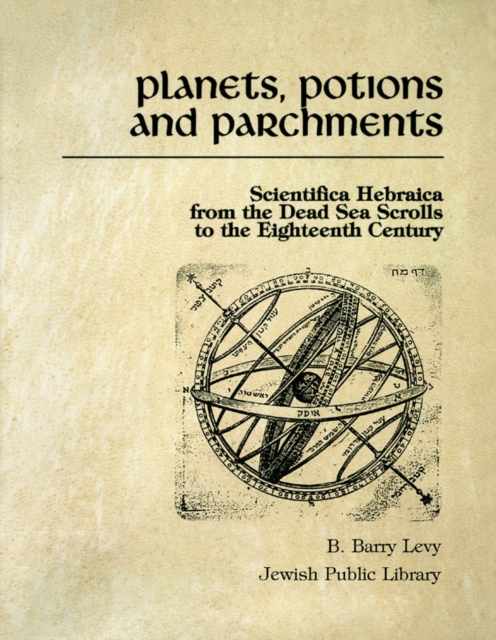
Planets, Potions, and Parchments
More than 200 rare scientific manuscripts, books, maps, amulets, and magical texts have been brought together from renowned collections in Europe, Canada, Israel, Great Britain, and the United States specifically for this exhibition. The most famous among these is a fragment from the Dead Sea Scrolls containing chapters 81 to 85 from the Book of Psalms: fragments from the scrolls have been in Canada on only two other occasions. The exhibition will have an Assyrian cuneiform tablet from the seventh century BCE that describes treatments for eye ailments, a first edition Copernicus, and several texts by Maimonides, including one with marginal notes by Martin Luther. Also featured, in a rare Latin translation, is an Arabic medical book written by a Jew, demonstrating the international and inter-faith nature of the medieval scientific endeavour.
eBook


Peer Effects in Science: Evidence from the Dismissal of Scientists in Nazi Germany
This paper analyses peer effects among university scientists. Specifically, it investigates whether the quality and the number of peers affect the productivity of researchers in physics, chemistry, and mathematics. The usual endogeneity problems related to estimating peer effects are addressed by using the dismissal of scientists by the Nazi government in 1933 as a source of exogenous variation in the peer group of scientists staying in Germany. To investigate localized peer effects, I construct a new panel data set covering the universe of scientists at the German universities from 1925 to 1938 from historical sources. I find no evidence for peer effects at the local level. Even very high-quality scientists do not affect the productivity of their local peers.
Journal Article