
Catalogue Search | MBRL


Are you sure you want to remove the book from the shelf?

{{itemTitle}}
5,185
result(s) for
"Jewish studies, literary studies"
Sort by:

Ghetto images in twentieth-century American literature : writing apartheid
\"In this comprehensive work, Tyrone R. Simpson, II, explores how six American writers--Anzia Yezierska, Michael Gold, Hubert Selby Jr., Chester Himes, Gloria Naylor, and John Edgar Wideman--have artistically responded to the racialization of U.S. frostbelt cities in the twentieth century. By using the critical tools of spatial theory, critical race theory, urban history, and urban sociology, Simpson accounts for how these writers imagine the subjective response to the race-making power of space\"-- Provided by publisher.
Book
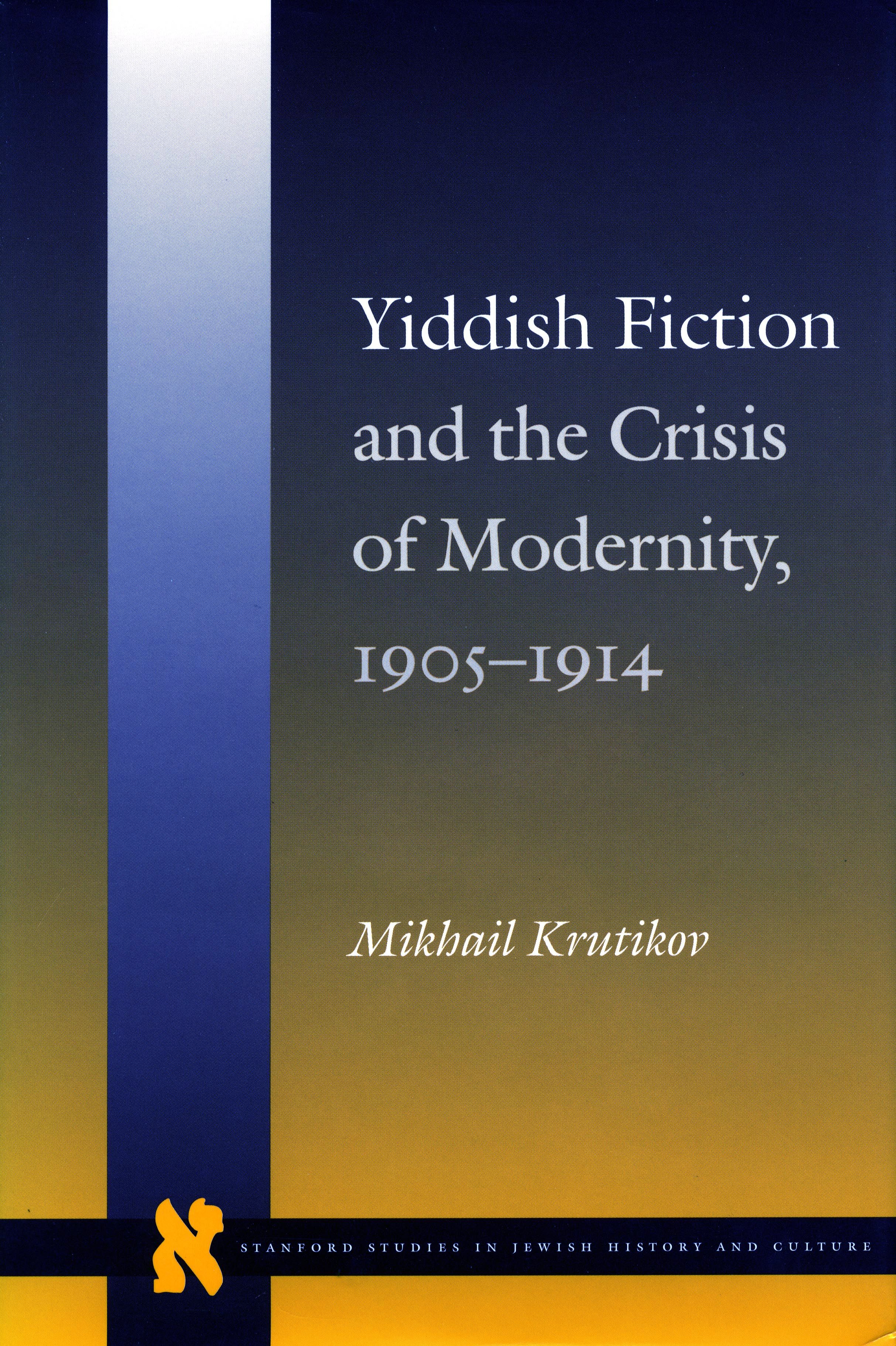
Yiddish Fiction and the Crisis of Modernity, 1905-1914
This book examines representations of modernity in Yiddish literature between the Russian revolution of 1905 and the beginning of the First World War. Within Jewish society, and particularly Eastern European Jewish society, modernity was often experienced as a series of incursions and threats to traditional Jewish life. Writers explored these perceived crises in their work, in the process reconsidering the role and function of Yiddish literature itself. The orientation of nineteenth-century Yiddish fiction toward the shtetl came into conflict with the sense of reality of young writers, who felt themselves part of a rapidly changing modern urban environment. This opposition between the generations was reflected in their principles of plot construction. The conservatives employed cyclical patterns, producing mythological schemes for incorporating the new experience into the traditional order. Modernists emphasized the uniqueness of the new, and therefore preferred a linear organization of plot with emphasis on the transformation of individual character. The texts under discussion (primarily novels and novellas) are analyzed with respect to the way they represent different aspects of the modern world: economic change, revolutionary politics, emigration, and the emancipation of women. The author’s methodology draws upon a variety of semiotic, structuralist, and psychoanalytic approaches, informed by insights derived from the Soviet Marxist tradition. The writers treated in the book include the classical figures Sholem Aleichem and Y. L. Peretz, their lesser-known contemporaries Yankev Dinezon, Mordkhe Spektor, and S. Ansky, younger authors from Russia and Poland, including Sholem Asch, David Bergelson, and Itche-Meir Weissenberg, and the American Yiddish writers Leon Kobrin, David Ignatov, Joseph Opatoshu, Isaac Raboy, and Morris-Jonah Haimowitz. Mikhail Krutikov is Associate Professor of Slavic and Judaic Studies at the University of Michigan, Ann Arbor, and the author of Yiddish Fiction and the Crisis of Modernity, 1905-1914 (Stanford University Press, 2001).
eBook

In and of the Mediterranean : medieval and early modern Iberian studies
\"The Iberian Peninsula has always been an integral part of the Mediterranean world, from the age of Tartessos and the Phoenicians to our own era and the Union for the Mediterranean. The cutting-edge essays in this volume examine what it means for medieval and early modern Iberia and its people to be considered as part of the Mediterranean\"-- Provided by publisher.
Book
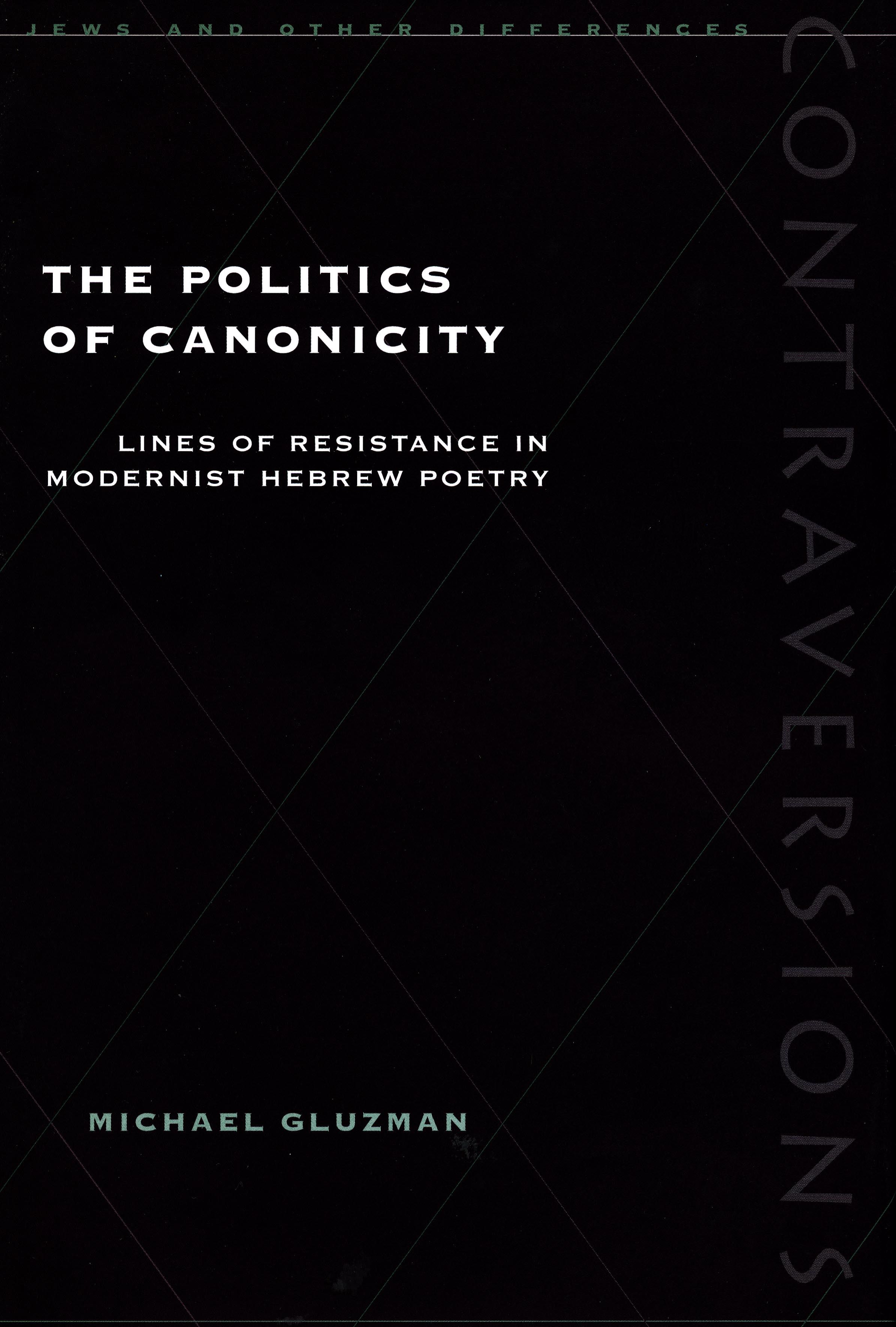
The Politics of Canonicity
The Politics of Canonicity sheds new light on the dynamics of canon formation in modern Hebrew literature. It explores the ways in which literary culture—as site and as tool—participates in the production of national identity. The aesthetic paradigms, political ideologies, and social interests that privilege certain texts and literary modes are reexamined within the framework of the conscious and deliberate practices of Zionism to formulate a national discourse. As the author shows, the suppressed, the marginal, the undesired \"others\" of the nation demonstrate the limits of both the literary canon and society's own self-understanding. The book combines the specific questions of Hebrew literature with a critical inquiry of the theoretical debates surrounding the notion of canon. It begins by examining the formative debate in both Hebrew letters and European discourses of modernity at the end of the nineteenth century which address the tension between writing the nation and writing the self. It moves on to the equally constitutive question within Jewish nationalism of the relation between diaspora and homeland in literary writing. While international modernism tends to glorify exile, Hebrew modernism demonstrated a fierce antagonism toward a \"diaspora mentality.\" In his analysis of the suppressed margins of the Hebrew literary canon, the author outlines the specific aesthetic fault lines of the new national community. In chapters devoted to the poets David Fogel and Avot Yeshurun, and the poetics of a feminine voice in Rachel Bluvstein, Esther Raab, and Anda Pinkerfeld, he analyzes the historical tensions between margin and canon, highlighting the ways in which these marginalized poets were able to speak within a discursive system that suppressed their voices. We are grateful for support from the Koret Jewish Studies Publication Program. Michael Gluzman is Assistant Professor of Comparative Literature at Tel Aviv University.
eBook

Reorienting Hebrew Literary History: The View from the East
Although Hebrew literary criticism has begun redressing the exclusion of women and minority writers from the Hebrew canon, the literary geography of modern Hebrew remains largely unquestioned. Modern Hebrew literature is still viewed as the progeny of European
maskilim
, while the concurrent production of belles lettres in Hebrew and other languages by non-Ashkenazi Jewries has been overlooked. What are the ramifications of this Eurocentric viewpoint for our understanding of the origins of Jewish cultural modernity, of modern Hebrew literature, and of contemporary Israeli literature produced by Mizraḥi and Sephardi writers?
In this essay, I call for a new approach to the study of Hebrew literature and its history on two fronts. First, I advocate exploring the relationships between Ashkenazim, Sephardim, and Arab Jews in the multilingual corpus of Jewish literature produced from the nineteenth century onward. Second, I propose investigating the full range of cultural influences that resonate in Mizraḥi literature produced in Israel. This essay focuses primarily upon the first of these two questions: the revision of Hebrew literary historiography. I begin by reviewing the state of Hebrew literary historiography in relation to Mizraḥi writing. I then suggest commencing my proposed historical revision with a multilingual, \"global\" model of Haskalah that emphasizes reciprocal channels of cultural circulation and transmission between and among Europe, Africa, and Asia. By way of example, I sketch the contours of modern Arab Jewish textual production beginning in the nineteenth century. The last part of the essay considers examples of Hebrew-Arabic interculturality in the context of Iraqi Jewry during two different historic moments. After closely analyzing a 1920 Hebrew poem from Baghdad, I conclude with a preliminary investigation of the myriad cultural influences shaping the work of the two leading Israeli writers from Iraq, Sami Michael and Shimon Ballas.
Journal Article
