
Catalogue Search | MBRL


Are you sure you want to remove the book from the shelf?

{{itemTitle}}
250
result(s) for
"Jews -- Latin America"
Sort by:

Keeping the mystery alive : Jewish mysticism in Latin American cultural production
\"This book delves into creative renditions of key aspects of Jewish Mysticism in Latin American literature, film, and art from the perspective of literary and cultural studies. The overarching question is whether the authors presented question, or reproduce literally, traditional renditions of the Jewish mysticism, and how this aspect of their literature and visual art relates to the Latin American canon to which they belong\"-- Provided by publisher.
BOOK

Dying in the law of Moses : crypto-Jewish martyrdom in the Iberian world
Miriam Bodian's study of crypto-Jewish martyrdom in Iberian lands depicts
a new type of martyr that emerged in the late 16th century -- a defiant, educated
judaizing martyr who engaged in disputes with inquisitors. By examining closely the
Inquisition dossiers of four men who were tried in the Iberian peninsula or Spanish
America and who developed judaizing theologies that drew from currents of
Reformation thinking that emphasized the authority of Scripture and the religious
autonomy of individual interpreters of Scripture, Miriam Bodian reveals unexpected
connections between Reformation thought and historic crypto-Judaism. The complex
personalities of the martyrs, acting in response to psychic and situational
pressures, emerge vividly from this absorbing book.
eBook
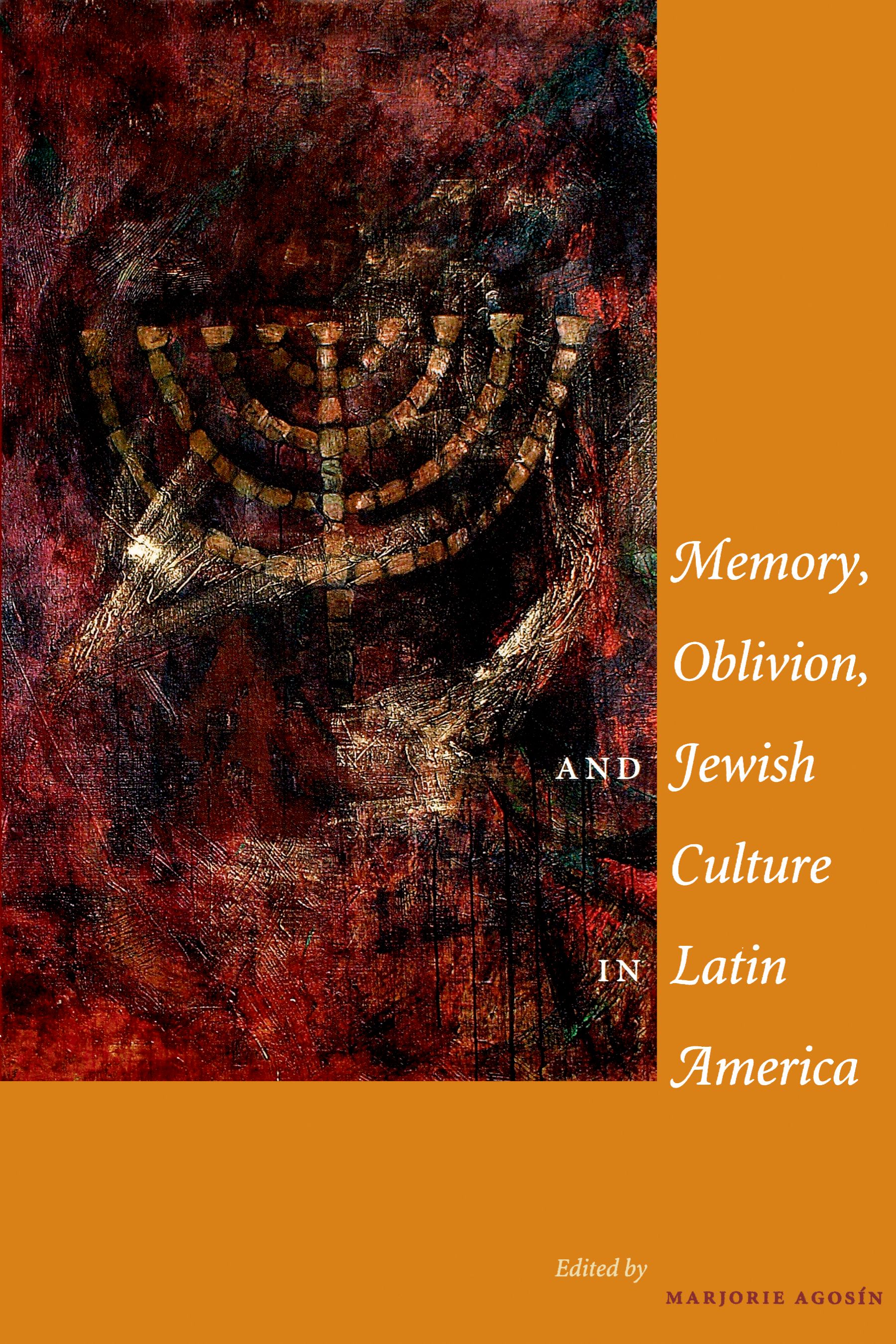
Memory, Oblivion, and Jewish Culture in Latin America
Latin America has been a refuge for Jews fleeing persecution from 1492, when Sepharad Jews were expelled from Spain, until well into the twentieth century, when European Jews sought sanctuary there from the horrors of the Nazi Holocaust. Vibrant Jewish communities have deep roots in countries such as Argentina, Mexico, Guatemala, and Chile—though members of these communities have at times experienced the pain of being \"the other,\" ostracized by Christian society and even tortured by military governments. While commonalities of religion and culture link these communities across time and national boundaries, the Jewish experience in Latin America is irreducible to a single perspective. Only a multitude of voices can express it. This anthology gathers fifteen essays by historians, creative writers, artists, literary scholars, anthropologists, and social scientists who collectively tell the story of Jewish life in Latin America. Some of the pieces are personal tales of exile and survival; some explore Jewish humor and its role in amalgamating histories of past and present; and others look at serious episodes of political persecution and military dictatorship. As a whole, these challenging essays ask what Jewish identity is in Latin America and how it changes throughout history. They leave us to ponder the tantalizing question: Does being Jewish in the Americas speak to a transitory history or a more permanent one?
eBook

Past and Present of Latin American Jewry: A Conceptual Pathway
The article aims to analyze the conceptual pathway that the author followed along her research trajectory focused on past and present trends in contemporary Jewish life, as specifically expressed in Latin America. Along a systematic reflection on axioms, theories and findings, diverse conceptual elaborations are presented, as they entail a sustained encounter with previous scientific formulations and changing times and contexts. Thus the author reflects on theory and biography as they nourished her research questions, while simultaneously committed to the stricter canon of scientific conscientiousness. Political science, sociology and contemporary Jewish studies converge in the development of research axes that found their point of departure in the prefix \"multiple,\" covering the author's multidisciplinary journey through Latin American multiple modernities; multiple collective identities; and multiple social and communal structures and praxis. Diverse thematic clues are displayed to account for the striking fact that over the course of two generations Latin American Jews have transformed from mostly immigrants and immigrant communities, to rooted communities of locally-born citizens and, simultaneously, of expatriates and emigrants. The richness of Jewish life in the region, its presence and relevance in the Jewish world, as well as in national and communal spheres, and simultaneously, its relocation in new geographies are part of their current reality marked by disjunctures and paradoxes. The research presented crosses disciplinary confines in order to reach a wider epistemic spectrum and become better equipped to deal with the complexity that characterizes Jewish life today, as well as to traverse the national borders where Jewish diasporas dwell, in an effort to understand the globality of the Jewish condition and grasp its current dynamics.
Journal Article
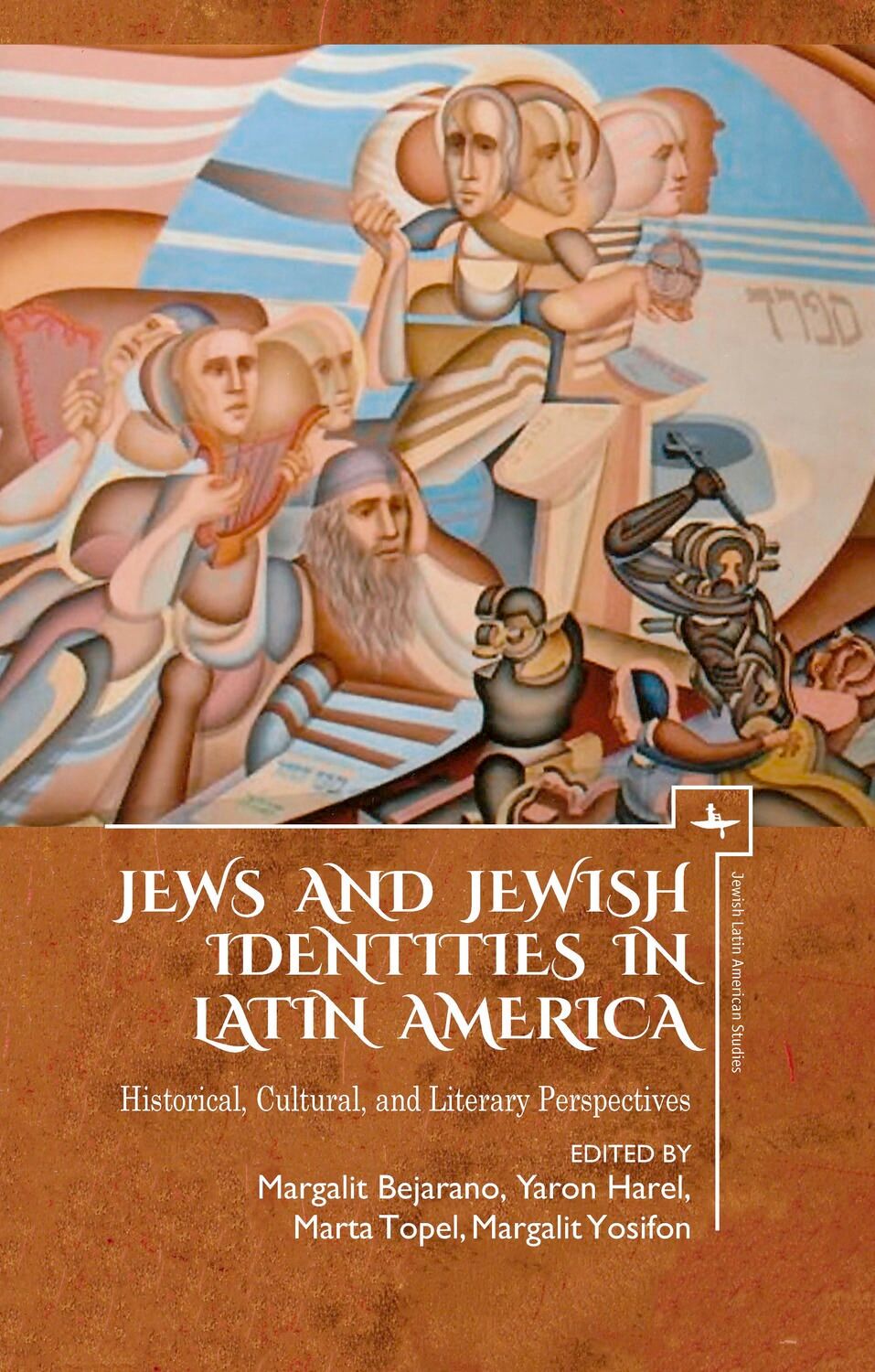
Jews and Jewish Identities in Latin America
This collection of articles constitutes a major contribution to the growing field of Latin American Jewish studies, offering different perspectives on the rich and complex phenomena in the social, political, and cultural development of Jewish communities in the area. The essays span across a wide range of subjects, from comparisons between Jewish communities from different countries and with different levels of assimilation, the effects of globalization and transnationalism on the field, the interactions between Jews and non-Jews in the area, all the way to literary criticism. Based on an international conference organized by the University of Sao Paulo, the Dahan Center of Bar Ilan University, and the Academic College in Ashkelon, this volume offers a new approach to Latin American Jewish studies: it contributes to demystifying stereotypes and raising awareness of the importance of Latin America in a global context, and it highlights the relevance of the different Jewish communities across the globe in their special relationship to the state of Israel.
eBook

Memory, Oblivion, and Jewish Culture in Latin America
Latin America has been a refuge for Jews fleeing persecution from 1492, when Sepharad Jews were expelled from Spain, until well into the twentieth century, when European Jews sought sanctuary there from the horrors of the Nazi Holocaust. Vibrant Jewish communities have deep roots in countries such as Argentina, Mexico, Guatemala, and Chile-though members of these communities have at times experienced the pain of being \"the other,\" ostracized by Christian society and even tortured by military governments. While commonalities of religion and culture link these communities across time and national boundaries, the Jewish experience in Latin America is irreducible to a single perspective. Only a multitude of voices can express it.
This anthology gathers fifteen essays by historians, creative writers, artists, literary scholars, anthropologists, and social scientists who collectively tell the story of Jewish life in Latin America. Some of the pieces are personal tales of exile and survival; some explore Jewish humor and its role in amalgamating histories of past and present; and others look at serious episodes of political persecution and military dictatorship. As a whole, these challenging essays ask what Jewish identity is in Latin America and how it changes throughout history. They leave us to ponder the tantalizing question: Does being Jewish in the Americas speak to a transitory history or a more permanent one?
eBook
Identities in an Era of Globalization and Multiculturalism
This volume offers a multidimensional and interdisciplinary exploration of contemporary Jewish identities amidst globalization processes, with special emphasis on Latin American socio-political, communal, and cultural milieu. Stretching from political science to sociology, from art to cultural studies, it provides systematic tools for understanding different aspects of the Jewish experience.
eBook
Jewish Populations, Migrations, and Identities in the Americas: The Shared and the Particular
This paper presents a macro-social perspective on Jewish populations and societies in the Americas, arguing for a broad transnational view of several different fundamental demographic and ideational processes and trends. The goal is to detect broad commonalities versus regional differences in the Jewish experience on the American continent beyond local national frameworks. Commonalities and differences between Jews in the different parts of the Americas emerge through observing Jewish population distribution and its relation to local human development levels, inter- and intracontinental migration, levels and modes of Jewish education, and patterns of Jewish identification, socialization, and assimilation. I address Jewish interactions with the majority of society by examining frequencies of antisemitism across different countries. Interactions within the Jewish collective itself are assessed by looking at mutual influences through the worldwide institutional network. Conclusions are suggested at the pancontinental level. A variety of quantitative analytical tools are used. Sources are large-scale sociodemographic surveys, compilations of annual data series, and observations of the global networks of Jewish community organizations.
Journal Article
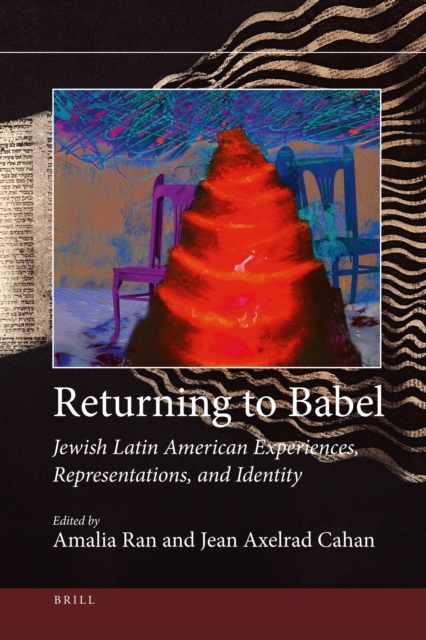
Returning to Babel
This edited volume explores multiple representations by and of Jewish Latin Americans, thus revisiting the canon of Judeo-Latin American culture. It expands the horizon of what is traditionally considered \"Jewish\" or \"Latinoamericano.\".
eBook
