
Catalogue Search | MBRL


Are you sure you want to remove the book from the shelf?

{{itemTitle}}
1,469
result(s) for
"Jews Fiction."
Sort by:


Nineteenth-century Jewish literature : a reader
Recent scholarship has brought to light the existence of a dynamic world of specifically Jewish forms of literature in the nineteenth century—fiction by Jews, about Jews, and often designed largely for Jews. This volume makes this material accessible to English speakers for the first time, offering a selection of Jewish fiction from France, Great Britain, and the German-speaking world. The stories are remarkably varied, ranging from historical fiction to sentimental romance, to social satire, but they all engage with key dilemmas including assimilation, national allegiance, and the position of women. Offering unique insights into the hopes and fears of Jews experiencing the dramatic impact of modernity, the literature collected in this book will provide compelling reading for all those interested in modern Jewish history and culture, whether general readers, students, or scholars.
eBook
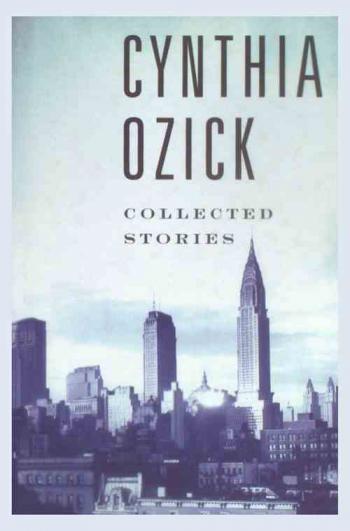
Collected stories
It is the stories upon which Cynthia Ozick's literary reputation rests. She writes about bitterness, cruelty and compulsion with brutal acuity and tenderness. She has created a timeless collection in which Greek mythology, superstition and the religious and cultural experience of the Jewish diaspora in America collide. The Pagan Rabbi is seduced by a tree sprite after seeing his daughter rescued from drowning by a water sprite. Such ecstasy is not permitted to mortals and so the scholar must die. He hangs himself with his prayer shawl as he watches the strangely beautiful nymph decay. In Envy, a Yiddish poet who watches the success of a contemporary, becomes very like a character in an I.B. Singer story entrapped by his anguish and haunted by the memory of a child. In the Doctor's Wife, the most gentle of the stories, a poor doctor not unlike Chekhov endures family life in which he is adored by his three sisters and oppressed by his family obligations. In these stories, we see Ozick defining herself and her literary territory. The stories may be read purely as evocations of Jewish experience, where time seems to have by-passed these characters. In the Butterfly and the Traffic Light, Jerusalem is seen upon a hill as only it can be in legend, and America is said not to have cities scarred by battles. This is a dazzling collection of short stories by an internationally celebrated novelist.

News from the New American Diaspora
Prize-winning novelist Jay Neugeboren's third collection of short stories focuses on Jews in various states of exile and expatriation—strangers in strange lands, far from home. These dozen tales, by an author whose stories have been selected for more than fifty anthologies, including Best American Short Stories and O. Henry Prize Stories, span the twentieth century and vividly capture brief moments in the lives of their characters: a rabbi in a small town in New England struggling to tend to his congregation and himself, retirees who live in Florida but dream of Brooklyn, a boy at a summer camp in upstate New York learning about the Holocaust for the first time, Russians living in Massachusetts with the family who helped them immigrate. In \"The Other End of the World,\" an American soldier who has survived life in a Japanese prisoner of war camp grieves for members of his family murdered in a Nazi death camp, and in \"Poppa's Books\" a young boy learns to share his father's passion for the rare books that represent the Old World. \"This Third Life\" tells of a divorced woman who travels across Germany searching for new meaning in her life after her children leave home, while both \"His Violin\" and \"The Golden Years\" explore the plight of elderly Jews, displaced from New York City to retirement communities in Florida, who struggle with memory, madness, and mortality. Set in various times and places, these poignant stories are all tales of personal exile that also illuminate that greater diaspora—geographical, emotional, or spiritual—in which many of us, whether Jews or non-Jews, live.
eBook


Alexandrian Summer
Alexandrian Summer is the story of two Jewish families living their frenzied last days in the doomed cosmopolitan social whirl of Alexandria just before fleeing Egypt for Israel in 1951. The conventions of the Egyptian upper-middle class are laid bare in this dazzling novel, which exposes startling sexual hypocrisies and portrays a now vanished polyglot world of horse-racing, seaside promenades, and elegant night clubs.
eBook
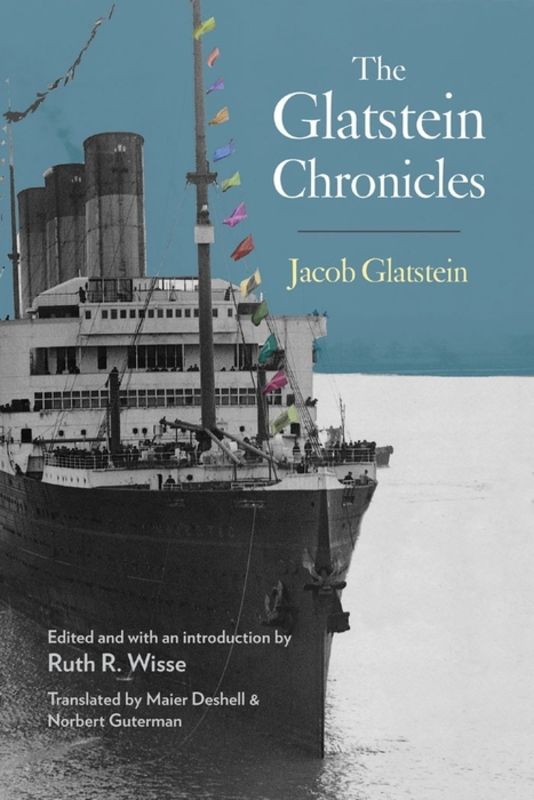
The Glatstein Chronicles
In 1934, with World War II on the horizon, writer Jacob Glatstein (1896-1971) traveled from his home in America to his native Poland to visit his dying mother. One of the foremost Yiddish poets of the day, he used his journey as the basis for two highly autobiographical novellas (translated asThe Glatstein Chronicles) in which he intertwines childhood memories with observations of growing anti-Semitism in Europe.
Glatstein's accounts \"stretch like a tightrope across a chasm,\" writes preeminent Yiddish scholar Ruth Wisse in the Introduction. In Book One, \"Homeward Bound,\" the narrator, Yash, recounts his voyage to his birthplace in Poland and the array of international travelers he meets along the way. Book Two, \"Homecoming at Twilight,\" resumes after his mother's funeral and ends with Yash's impending return to the United States, a Jew with an American passport who recognizes the ominous history he is traversing.
The Glatstein Chroniclesis at once insightful reportage of the year after Hitler came to power, reflection by a leading intellectual on contemporary culture and events, and the closest thing we have to a memoir by the boy from Lublin, Poland, who became one of the finest poets of the twentieth century.
eBook

Wide awake : a novel
\"Coming of age in 1960s Paris, Bernard Appelbaum exists in the hazy shadow of the Holocaust and on the electric cusp of the French New Wave. We find the narrator of Wide awake as he wanders the city streets in search of signs of his father, who was deported by the Nazis in 1942. Bernard's chance encounter with a former acquaintance who has become filmmaker François Truffaut's assistant leads to a spot as an extra on the set of Jules and Jim--setting into motion a series of discoveries and lost memories that crack open a hidden past. On seeing Jules and Jim, Bernard's mother is moved to divulge the secrets of her own past as a Jewish-Polish immigrant to France, which curiously mirrors that of the film's heroine. When revelations about his mother's two loves lead Bernard on a fateful journey through Paris, to Germany, and then to Auschwitz itself, he must plumb haunting depths in order to recover his own identity.\"--Publisher's description.
Book
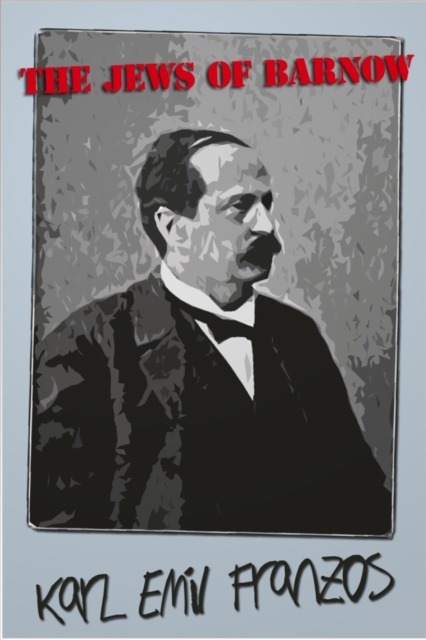
The Jews of Barnow
A fascinating look at life in the Jewish ghetto in the 19th century, written by Jewish writer and publicist Karl Emil Franzos.
eBook